
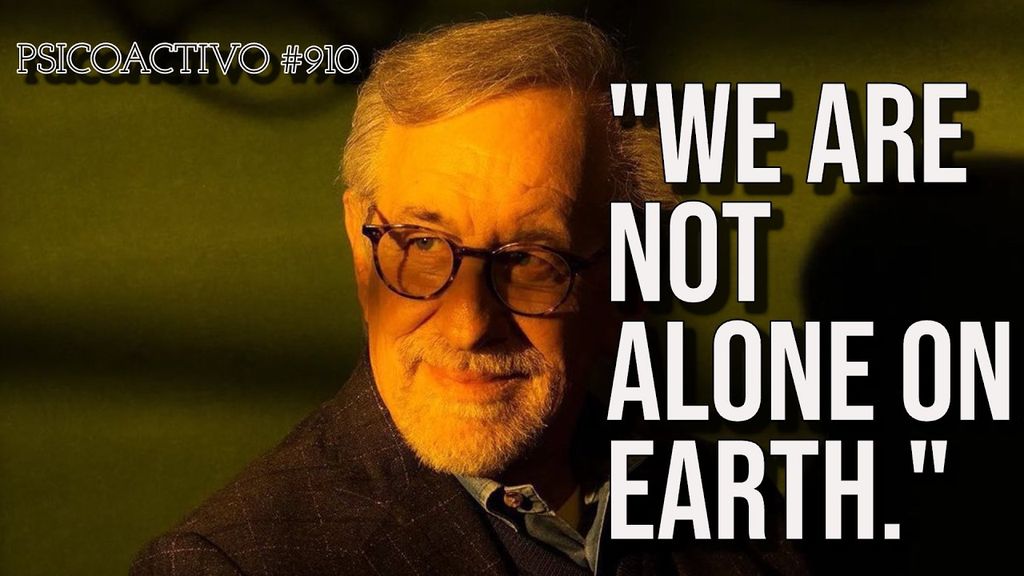
Steven Spielberg’s SXSW remarks spotlight UAP transparency, history, and cultural influence


The question of UAP data transparency has long been contentious, with experts and public figures drawing different inferences from limited, and often classified, information. During a South by Southwest conversation that quickly circulated online, director Steven Spielberg articulated a personal position that aligns with enduring public curiosity: he said he has a “very strong, sneaking suspicion” humanity is not alone on Earth. He contextualized that view within decades of cultural and governmental engagement with the topic, while stressing he does not possess exclusive information beyond what has been publicly reported.
Spielberg connected his renewed interest in UAPs to mainstream reporting and official proceedings. He referenced the 2017 New York Times coverage of Navy encounters associated with the USS Nimitz, including FLIR imagery that helped move the discussion into major media and policy arenas. He also cited a 2023 congressional subcommittee session at which witnesses from intelligence and military aviation testified under oath, a moment that sustained public attention on whether anomalous incidents warrant further scientific and governmental scrutiny.
His remarks touched on broader historical and interpretive threads, noting that debates stretch across decades and even millennia, and referencing Erich von Däniken’s ancient-astronaut theses. Spielberg emphasized belief in life elsewhere in the universe and questioned whether humanity is alone “now,” adding that he is not fearful of potential non-human intelligences. He indicated a creative impulse to return to a UFO-themed project for the first time since Close Encounters of the Third Kind, underscoring the role of cinema in shaping public understanding of anomalous phenomena.
Questions about access to high-quality data resurfaced when an official livestream of the conversation was posted and later removed, with short segments preserved by viewers. The program observing the event pointed out that producer Dan Farah, former UAP Task Force lead Jay Stratton, and journalist Leslie Kean were present, arguing this proximity suggests Spielberg is well advised. While such associations do not constitute evidence of undisclosed knowledge, their visibility illustrates how cultural figures, journalists, and former officials continue to intersect around a topic where public interest persists and definitive answers remain elusive.
Key Moments
- 00:36An official South by Southwest YouTube livestream of Steven Spielberg’s interview briefly appeared and was later removed, prompting viewers to share archived clips.
- 01:52Spielberg was asked about President Barack Obama’s comments on UFOs/UAPs and said he initially saw them as significant for “disclosure,” before Obama later clarified he was referring to life in the cosmos.
- 02:57He said he has always believed humanity is not alone and framed the core question as whether we are alone "now," citing interest across the last 80 and even 3,000 years, invoking Erich von Däniken.
- 03:31Spielberg linked his renewed creative interest in making a UFO-themed film—the first since 1977’s Close Encounters of the Third Kind—to 2017 New York Times reporting on Navy encounters.
- 03:58He referenced the 2004 USS Nimitz incident and FLIR imagery reported by the New York Times, which raised questions about possible government or military secrecy.
- 04:43Spielberg cited a 2023 congressional subcommittee session featuring witnesses from intelligence and military aviation, emphasizing that testimony occurred under oath.
- 05:08He stated he holds no exclusive information beyond what the public can access through reporting and documentaries since 2018.
- 05:36The program noted Dan Farah, Jay Stratton, and Leslie Kean were in the front row; the host argued this suggests Spielberg may be especially well-advised, while acknowledging he did not claim insider knowledge.
- 06:22Key quote: "I have a very strong, sneaking suspicion that we are not alone here on Earth right now."
- 07:02An archival Spielberg interview recalled long-running rumors of a "cosmic Watergate" and the prospect of presidential disclosures in the late 1970s, underscoring decades-long public curiosity.
- 09:06Spielberg also stated he is not afraid of aliens.
- 10:18The episode included a sponsor segment for “Anomalous Cards,” a trading-card collection documenting notable UAP cases.
Related Topics
Links & References
- Social media post sharing the circulated SXSW Spielberg clip referenced in the discussion.
- Home page for Psicoactivo Podcast at KGRA, the program analyzing Spielberg’s remarks.
- Streaming page for Psicoactivo Podcast episodes.
- Sponsor site for Anomalous Cards, a trading-card collection documenting notable UAP cases.
- Aggregator of Psicoactivo’s support and social links.
 Continue with Google