
Ron James’ ‘Accidental Truth Next’ Pushes UFO Materials and Citizen Disclosure to the Forefront


Ron James’ new documentary, ‘Accidental Truth Next,’ places UFO materials and citizen‑driven investigation at the center of ongoing efforts to understand nonhuman intelligence. In an extended preview, host Patrick Scott Armstrong describes how James combines alleged physical evidence, on‑the‑ground work in Washington, and broader philosophical questions about reality into what he portrays as a continuation of a long personal journey.
Armstrong frames ‘Accidental Truth Next’ as a direct successor to James’ earlier film ‘Accidental Truth,’ which he credits with drawing noteworthy statements from researchers such as Garry Nolan and former AATIP figure Luis Elizondo. That first project, according to James, went on to win 28 film festival awards and reach millions of viewers. For the new film, James expands the scope even further, interviewing what Armstrong characterizes as nearly every recognizable UFO personality, while enlisting actor Matthew Modine as narrator. The result, in Armstrong’s assessment, is a dense cross‑section of contemporary voices on disclosure rather than a polished, highly stylized production.
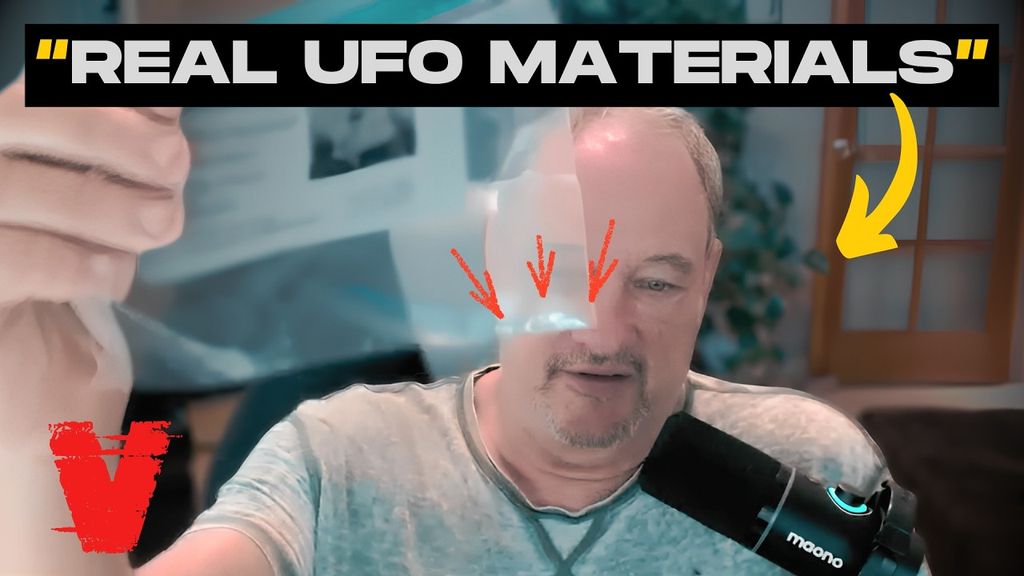
A central through‑line of ‘Accidental Truth Next’ is the status of alleged exotic materials. The trailer includes a recurring assertion that “exotic materials are the holy grail,” accompanied by a claim from a team member that they were supposed to receive such material for analysis. One voice describes the goal as placing those materials in the hands of AARO, the current Defense Department office for UAP, explicitly to test whether pieces came from a UFO. Another speaker remarks that a specimen being observed “should have liquefied like mercury” under the conditions applied, yet reportedly did not, and concedes having “no explanation for that.” While the trailer does not provide test protocols or laboratory data, it showcases the view that materials research could provide a more concrete basis for evaluating extraordinary claims.
James extends this focus on UFO materials beyond closed laboratories. In his direct message, he highlights a specific metal linked to an investigator he calls Benny Fogen, stating that actual fragments are available to any qualified party willing and able to test them. He portrays this as a deliberate push toward wider participation: rather than restricting analysis to a narrow circle, he invites independent labs, universities, or technically capable groups to conduct their own examinations. Armstrong characterizes this as a model of “citizen disclosure,” in which physical samples are distributed for open scrutiny instead of being held as proprietary artifacts.
The film’s narrative begins in Washington, D.C., where James documents hearings, briefings, and informal interactions that he believes illustrate both progress and limits in government disclosure. The trailer references ATIP, the Pentagon’s earlier UAP program, and features officials and commentators noting that the Department of Defense and intelligence community are “very comfortable saying it’s unknown” while simultaneously declining to share details in public. One whistleblower voice mentions career damage and personal risk, reinforcing James’ contention that structural constraints still inhibit full transparency on nonhuman intelligence. Armstrong adds that James has been present at hearings and has helped channel questions into official proceedings, showing his attempt to bridge independent media and formal oversight.
Beyond policy and materials, ‘Accidental Truth Next’ steps into esoteric and theoretical territory. Interview segments in the trailer explore ideas such as technology that “bled into what we call consciousness,” the possibility that nonhuman intelligence may take multiple forms, and the notion that humanity may live in a reality with a “software program” or simulation‑like attributes. Participants connect historical accounts of encounters with nonhuman entities, religious teachings about other beings, and current speculation about AI and post‑biological futures. James states that his own path forced him to confront questions about the nature of reality, spirituality, and the role of artificial intelligence, and he concludes that the journey ends not with answers but with “a lot of questions,” especially about whether researchers are even asking the right ones.
Armstrong emphasizes that James approaches these themes without, in his view, excessive theatrics. He portrays James as an “old school” investigator who was active in ufology well before the 2017 New York Times reporting on the Navy’s UAP videos, and who has remained engaged through developments such as David Grusch’s 2023 whistleblower claims. James’ work with MUFON in a leadership capacity, which Armstrong describes loosely as national‑level marketing, reinforces his embedded position in institutional ufology. At the same time, Armstrong stresses that James maintains a relatively low personal profile despite his extensive network of contacts.
The host also discloses his own collaboration with James, noting that James helped arrange interviews and locations for a psionics documentary shot in Sedona. That assistance led Armstrong and his team to credit James as an associate producer. Armstrong nonetheless presents his endorsement of ‘Accidental Truth Next’ as grounded in what he sees as James’ transparency around how alleged UFO materials are obtained, what tests have been performed, and the invitation for others to repeat or expand on those tests.
In closing, Armstrong connects the film’s themes to a broader push for citizen disclosure. He points to other initiatives, such as an upcoming interview with a pair known as “the UFO couple,” who he says are working to elevate citizen‑led data collection and analysis. He then references a prediction market asking whether aliens will formally introduce themselves by 2026, noting that more than 10 percent of participants are currently betting yes. While Armstrong does not endorse that outcome, the statistic underscores growing public engagement with concrete timelines around disclosure. Against that backdrop, ‘Accidental Truth Next’ positions alleged UFO materials, open testing, and wide‑ranging inquiry into reality and consciousness as key components of how the next phase of the disclosure process may unfold outside traditional government channels.
Key Moments
- 00:00Patrick Scott Armstrong introduces a new focus on alleged exotic materials associated with UFOs and frames them as a key topic in connection with Ron James’ upcoming documentary.
- 01:23Armstrong explains that the video centers on Ron James’ follow‑up documentary ‘Accidental Truth Next,’ set for release on June 2 across streaming platforms, and includes an exclusive message from James.
- 02:19The host praises James’ first film ‘Accidental Truth’ for capturing notable on‑camera statements from figures like Garry Nolan and Luis Elizondo, and notes that the new project features a wide range of UFO personalities and is narrated by actor Matthew Modine.
- 04:20In the trailer for ‘Accidental Truth Next,’ interviewees reference ATIP, whistleblowers, alleged suppression of information, and the idea that ‘exotic materials are the holy grail’ that some investigators sought to deliver to AARO for analysis.
- 05:01The trailer highlights claims about materials that purportedly do not behave as expected under heat, alongside broader themes of consciousness‑linked technology, nonhuman intelligence, simulation‑like reality, and a ‘dark side to disclosure.’
- 07:53Armstrong notes that the film includes a sequence in which James obtains a potential piece of a UFO, has it tested, and presents it to Senator Kirsten Gillibrand, pointing to a more direct interface between alleged materials and lawmakers.
- 08:38The host discloses that James assisted with his own psionics documentary and was credited as an associate producer, describing James as a long‑time, well‑connected participant in ufology who stays mostly under the radar.
- 10:50In his direct message, Ron James says he would not produce a follow‑up film unless it could ‘move the ball,’ citing the first ‘Accidental Truth’ winning 28 festival awards and reaching millions of viewers.
- 11:41James outlines that ‘Accidental Truth Next’ follows his journey starting in Washington, D.C., shows behind‑the‑scenes activity around disclosure, and then ‘delves into the materials aspect,’ including samples that allegedly defy conventional explanation.
- 12:02James singles out a metal associated with ‘Benny Fogen,’ stating that samples are available to anyone capable of testing them, and positions this as part of more open, participatory investigation.
- 12:23He argues that recent developments demonstrate government is unlikely to provide definitive answers on nonhuman intelligence and that researchers must engage esoteric, spiritual, and cutting‑edge science to advance understanding.
- 12:58James explains that his journey led him to interrogate the nature of reality, spirituality, humanity’s role in the universe, and the implications of AI, concluding that the most important outcome is refining what questions should be asked.
- 14:12Armstrong underscores James’ willingness to share alleged UFO material with independent testers, describing this as ‘citizen disclosure’ and an approach that emphasizes transparency over possession or exclusivity.
- 15:25The host situates James’ work at the intersection of citizen‑driven and government‑focused disclosure, noting his presence in Washington and his efforts to raise questions at hearings, while remaining active in organizations such as MUFON.
- 17:44Armstrong closes by pointing viewers to a prediction market on whether aliens will formally introduce themselves by 2026, noting that more than 10% of participants are currently wagering ‘yes.’
Related Topics
Links & References
- Official site for Ron James’ documentary series, including Accidental Truth Next.
- Prediction market asking whether aliens will formally introduce themselves by 2026.
- Website for the Vetted podcast hosted by Patrick Scott Armstrong.
- Vetted interviews playlist where discussions of Accidental Truth and UFO disclosure appear.
 Continue with Google