
Inside Peru’s ‘Tridactyl Mummies’: Exclusive Access, Disputed Evidence, and a Call for Independent Science


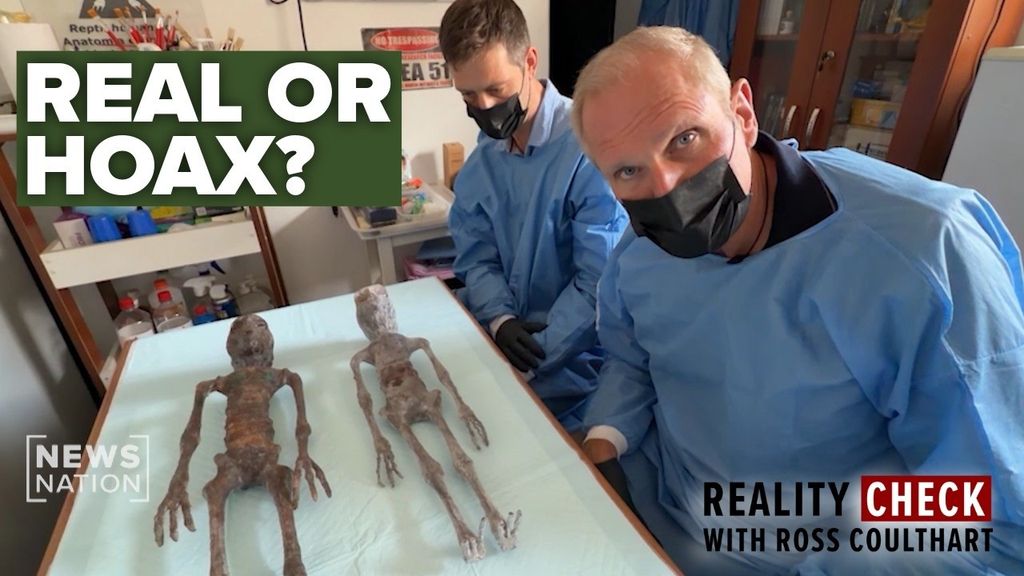
Competing claims over alleged ‘tridactyl’ mummies in Peru have rekindled longstanding tensions at the intersection of archaeology, anomalous phenomena, and public trust in science. The core dispute centers on whether small, desiccated bodies with elongated skulls and three-fingered hands and feet represent composite forgeries assembled from human and animal remains—or authentic, ancient beings with distinctive nonhuman traits. Access to several sets of specimens in Peru offers rare observational detail but also exposes critical gaps: uncertain provenance, disputed lab findings, and inconsistent chains of custody that currently prevent definitive conclusions.
Contextualizing the mystery against Peru’s Nazca Lines underscores how ancient material culture can provoke modern questions about capability and intent. The Nazca geoglyphs are only fully discernible from altitude, inviting speculation about purposes that may no longer be recoverable from the archaeological record. That same tension—between spectacular visuals and evidentiary rigor—frames the mummy controversy as well.
The public profile of the debate surged in 2023 when Mexico’s Congress hosted a hearing on unidentified anomalous phenomena. Presenter Jaime Maussan displayed two small mummified bodies, calling them nonhuman and roughly 1,000 years old. While the images captivated audiences, skepticism grew rapidly. Former U.S. Navy pilot Ryan Graves, who focused his remarks on pilot safety and UAP reporting, later criticized the display as an unsubstantiated spectacle. Mexican doctors involved with imaging asserted each body had an internally coherent skeleton not assembled from parts. Yet many international researchers countered that the specimens likely involved modified human remains or multi-species composites. Authorities in Peru, where the objects were reportedly unearthed, characterized them as pre-Hispanic cultural items. No official declaration in Mexico affirmed extraterrestrial origin.
On the ground in Peru, researchers presented multiple specimens for direct inspection and review of CT imagery. They corrected initial labeling of a principal specimen—‘Maria’ as ‘Mario’—and asserted nonhuman features and even deliberate hybridization. Anatomical details cited by proponents included unusually large, angled eye sockets; elongated crania claimed to be inconsistent with known cultural cranial-binding practices; the absence of ear canals; and three long digits on hands and feet. One set of scans was said to show desiccated brain tissue and an organ resembling a liver. Investigators also reported embedded metallic objects—described variously as gold, copper, and in one case osmium—interpreted either as trauma-stabilizing implants or as artifacts of unknown function. Such claims, if validated, would suggest intentional biological modification and material working capabilities exceeding expectations for the purported age of the remains.
Counterarguments are substantial. Bioanthropologists and radiologists who have reviewed imagery argue the bodies show signatures of fabrication, including mismatched bones and joints, excised or rearranged digits, and adhesive residues consistent with assembly. Peru’s Ministry of Culture has seized objects deemed fraudulent and cited instances, including a 2023 airport interception, where figurines were reportedly constructed from mixed parts and glue. Proponents describe these as replicas or unrelated to the principal specimens and contend that key bodies exhibit seamless anatomical integration with no cut marks. The resultant dispute is not merely technical; it is procedural, hinging on whether the most contentious items have been independently imaged under custody controls that rule out substitution, tampering, or selective data sharing.
Scientific viability hinges on rigorous and transparent methodologies. Supporters call for paleoDNA full-genome sequencing, emphasizing that partial or contaminated reads can yield false ‘100% human’ results, especially when ancient DNA is degraded or overshadowed by modern contaminants. Detractors counter that established ancient DNA protocols—such as controlled sampling in clean-room conditions, chemical damage pattern analysis, and strict negative controls—are designed precisely to distinguish authentic genomic signals from contamination. Proteomic analyses could corroborate results by identifying taxon-specific proteins resilient to diagenesis. Histology and micro-CT can assess bone remodeling, suture closure, cartilage-to-bone transitions, and growth-plate integrity—features difficult to counterfeit across an entire skeleton. Stable isotope studies may indicate diet and geographic origins inconsistent with human populations, while radiocarbon dating of collagen or associated organic residues could establish reliable age estimates, assuming well-documented chain-of-custody from in situ context to lab bench.
Implant claims—especially those referencing osmium—demand exacting materials characterization. Verified detection would require independent spectrometric confirmation (e.g., SEM-EDS, XRF, or ICP-MS), documentation of in situ positioning via high-resolution, full-volume CT reconstruction, and stratigraphic evidence that the metal is anciently embedded rather than a later intrusion. Assertions that certain implants stabilized cervical injuries invite biomechanical modeling: do placements correspond to functional load paths and healing responses observed in comparative osteology? Do the surrounding tissues display mineralization patterns or encapsulation consistent with long-term biological interaction?
Provenance remains the pivotal weakness. Accounts in the report trace initial access to grave-robbers, with the alleged discovery location withheld. This raises red flags that extend beyond academic caution: removing human or cultural remains violates Peruvian law and undermines any subsequent scientific claims. Without demonstrable findspot data, stratigraphic context, and properly recorded recovery notes, the interpretive scaffolding relies on trust rather than verifiable archaeological record. The report’s concluding appeal aligns with global heritage practice: remains and associated artifacts should remain in-country under competent oversight, with any international collaborations formalized through transparent agreements and published protocols.
The report also documents a broader catalog of forms presented by intermediaries—reptilian-like bodies with tail structures, ‘insectoid’ figures with wing-like membranes and multiple metallic inclusions, and a pregnant tridactyl subject with a purported fetus inside the torso. Forensic plausibility must be assessed case by case. For instance, the reported lack of ears or ear canals would be an extraordinary deviation from mammalian norms; explaining such an anatomy would require consistent developmental pathways across the entire skull and inner ear, observable in both gross anatomy and microanatomy. Similarly, three-digit hands and feet would necessitate congruent muscular attachments, tendon sheaths, vascular channels, and joint surfaces—features only convincingly established through high-resolution imaging, careful dissection of a subset under ethical approval, and cross-validation by independent institutions.
Beyond the mummies, the segment situates the investigation in Peru’s megalithic landscapes, such as Machu Picchu and other high-Andean sites. Observations highlight the precision of stonework, tight joint tolerances, and claims of resonant architectural features. While such engineering feats can be contentious in alternative-archaeology discourse, their inclusion here functions as contextual backdrop: a reminder that the archaeological record can hold unsolved technical questions without implying a direct link to nonhuman beings. The resonance narratives, Younger Dryas timeframes, and portal speculations discussed on-site underscore how unresolved ancient engineering techniques can become interpretive magnets—reinforcing the need to keep the mummy analysis tethered to testable, specimen-specific evidence.
Policy and ethics remain central. The segment urges that future work be led by independent, eminent scientists rather than ufologists or journalists, with full peer review, public archiving of raw imaging and lab data, and reproducible methods. It calls for Peru’s Ministry of Culture to maintain oversight while enabling research rather than seizing specimens mid-study, and for legal accountability where criminal looting has obstructed provenance disclosure. In practice, this means establishing a unified custody framework: secure curation within Peruvian institutions; controlled, documented sampling; multi-lab analyses conducted blindly when possible; and pre-registered research plans that protect against selective reporting.
If any specimen withstands this rigor—proven ancient context, nonhuman histology, genetics irreducible to contamination, and anatomy that coheres developmentally across the entire organism—the scientific implications would be profound, reframing debates about UAP and deep-time biocultural histories. If, conversely, the bodies are demonstrated to be composites, the case would join a long record of cautionary tales at the boundary of science and belief, reinforcing why protocols exist. At present, the available evidence—even with compelling imaging and interviews—remains insufficient to settle the question.
The report’s most consequential contribution is not a verdict but a roadmap. It prioritizes provenance recovery, lawful stewardship, open science, and methodical testing over spectacle. Whether these remains are cultural curiosities, elaborate fabrications, or something unprecedented, only transparent, independent research—conducted in Peru and published in full—can deliver a conclusion that will endure scientific and public scrutiny.
Key Moments
- 00:13The report frames the alleged Nazca-area ‘tridactyl’ mummies as either an elaborate hoax or a discovery with far-reaching implications for humanity’s understanding of life beyond Earth.
- 04:22The Nazca Lines are introduced as context: enormous geoglyphs visible from the air, prompting questions about purpose and capability in a society without known flight.
- 05:30At Mexico’s 2023 congressional hearing on UAP, presenter Jaime Maussan displayed two small mummified bodies claimed to be nonhuman and roughly 1,000 years old, asserting, “We are not alone,” while critics questioned provenance and prior Maussan-linked misidentifications.
- 09:42Former U.S. Navy pilot Ryan Graves, who spoke at the hearing about pilot UAP encounters, later called the display an “unsubstantiated stunt,” emphasizing aerospace safety, national security, and science over spectacle.
- 10:20Mexican doctors reportedly said imaging showed each specimen had a single, coherent skeleton; many scientists disputed nonhuman claims, and Peru’s government categorized the objects as pre-Hispanic, with no official Mexican declaration of alien origin.
- 12:09Researchers presenting the first set of bodies say ‘Maria’ is male (‘Mario’), propose DNA manipulation or hybridization, and describe ‘Albert’ as reptilian with scale-like features; CT imaging reportedly revealed organic tissues and possible implants (gold/copper).
- 16:05Local scientists allege official resistance and attempted seizures by Peru’s Ministry of Culture; they argue universities are better equipped to partner with labs for comprehensive studies.
- 19:53Proponents cite international forensic support and seamless anatomy in scans; detractors—bioanthropologists and radiologists—argue the bodies show signs of fabrication using human and animal bones, glue, and modern materials; Peru has seized objects it labeled fraudulent, including 2023 airport figurines said to be composites.
- 28:11Close examination highlights claimed anatomical differences: elongated skulls not consistent with known cultural cranial deformation, three-fingered hands and feet, large angled eye sockets, and absence of external ear structures or ear canals; alleged implants were described as stabilizing cervical injuries.
- 35:45Researchers differentiate purported ‘humanoid’ (live birth, no eggs) from ‘reptilian’ (eggs) types; they urge paleoDNA full-genome sequencing and assert three long fingers could obviate a human-like opposable thumb.
- 43:32A second cache of specimens was shown after a nighttime transfer; investigators were told to expect multiple ‘species,’ including reptilian forms with tails and an ‘insectoid’ type.
- 47:34A Canadian lab analysis was cited as reading ‘100% human’ DNA, which presenters attribute to degradation and contamination—an interpretation at odds with their claims of unidentified, nonhuman genomic elements in other tests.
- 54:56An ‘insectoid’ specimen was presented with wing-like structures, 13 metallic implants, and three abdominal eggs; one hypothesis suggested the wings served communication rather than flight—claims that prompted immediate skepticism about fabrication.
- 57:37A specimen called ‘Josephina’ was alleged to have an osmium band embedded in the chest—an anachronistic metal claim given osmium’s rarity and modern identification—though the report notes the lack of completed dating or DNA tests for that body.
- 01:00:34The investigation concludes with a call for independent, peer-reviewed, multi-institutional studies in Peru, strict chain-of-custody, and transparency—while condemning grave-robbing and emphasizing that journalists and ufologists should not control the scientific process.
Related Topics
Links & References
- How to find NewsNation on television.
- NewsNation app download link.
- Reality Check with Ross Coulthart — program hub.
- Incredible History channel noted for scientific analyses of the Nazca mummies.
- Ross & J.P. explore Egypt — related investigation content.
- Ross & J.P. explore Egypt — additional episode.
- Ross & J.P. explore Egypt — further installment.
- Ross explores Arizona (Hunting UFOs) — segment 1.
- Ross explores Arizona (Hunting UFOs) — segment 2.
- Ross explores Arizona (Hunting UFOs) — segment 3.
- Ross explores Arizona (Hunting UFOs) — segment 4.
- Alternate NewsNation guide link referenced in program materials.
 Continue with Google