
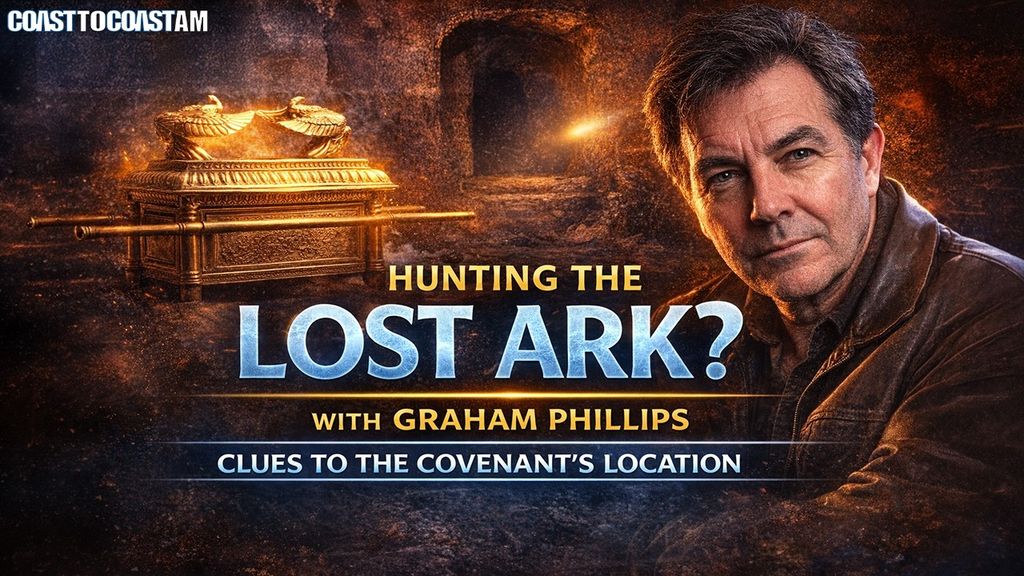
Tracing the Ark of the Covenant: Historical Parallels, Disappearance, and Claims from Sinai to Petra


The Ark of the Covenant occupies a rare intersection of religion, archaeology, and contested memory. Its depiction in scripture as a sacred chest forged to house the tablets of the law is coupled with descriptions of luminous phenomena and battlefield effects that have fueled centuries of debate. Within this landscape of tradition and inquiry, researchers continue to weigh historical evidence against miracle narratives to determine whether a tangible artifact can be traced—and, if so, what it might reveal about ancient ritual practice and power.
Material parallels provide a starting point. Portable sacred chests borne on poles were part of Egypt’s ritual vocabulary, including the Anubis shrine found in Tutankhamun’s tomb. That context makes the Ark’s form—wood overlaid with gold, a lid adorned with two figures, and strict handling rules for priests—appear culturally legible within the Late Bronze Age Near East. The convergence points to a broader regional practice of processional reliquaries that carried texts and cult objects, while the Ark’s distinctive status in Israelite religion elevated it far beyond a ceremonial container.
The Ark’s reported capabilities add complexity. Biblical passages credit it with routing enemies and toppling Jericho’s walls. Archaeology indicates that Jericho’s fortifications did collapse in the late Bronze Age, likely from an earthquake. If Israelite forces arrived in the aftermath of a seismic event, subsequent memory could readily attribute victory to the Ark’s potency. Texts also describe the ‘glory of the Lord’—a radiant manifestation above the Ark’s ‘mercy seat’—from which priests received divine instruction. Interpretations span from ritual trance and inspired prophecy to hypotheses about unknown physical effects associated with observed luminous phenomena. Such accounts have drawn attention from researchers of anomalous events, while remaining difficult to test without the object or high-fidelity contemporaneous data.
The central historical question is disappearance and provenance. The Second Book of Maccabees recounts that, prior to Babylon’s sack of Jerusalem in 597 BCE, the prophet Jeremiah concealed the Ark and other temple treasures in a cave at a mountain linked to Moses. Possible identifications include Mount Nebo and Mount Sinai. One line of inquiry places the ‘mountain of God’ not in the Sinai Peninsula’s traditional Christian locus but in southern Jordan’s Shara range, where Jebel Madaba and a longstanding Bedouin shrine (associated with Moses striking water from rock) align with several geographical cues. In this view, the Ark’s removal from Jerusalem would have redirected its custodial history toward an area frequented by later crusader forces.
Competing claims illustrate the enduring pull of the tradition. Ethiopia’s church asserts guardianship of the Ark, with access restricted to a designated keeper—an assertion consistent with medieval accounts that sometimes distinguished between an original and a copy residing in Jerusalem’s temple. Medieval chronicles also report that Knights Templar stationed near Petra explored ancient tombs and caves and claimed discovery of a golden chest. These threads are tantalizing yet remain evidentiary-poor by modern archaeological standards: neither tradition has publicly verifiable provenance, scientific access, or documentation sufficient to establish authenticity.
Related relic narratives show how sacred status can accrue to otherwise ordinary objects. Early Christian traditions linked two vessels to Christ’s blood: Joseph of Arimathea’s Last Supper cup and Mary Magdalene’s alabaster ointment jar. A privately held alabaster scent jar examined by the British Museum was dated to roughly two millennia and identified as Roman, consistent with scriptural materials for such a vessel, though not dispositive of any direct connection. The Spear of Destiny likewise has multiple claimants, reflecting a medieval religious economy that prized physical links to the sacred, even as the church maintained doctrinal boundaries around Christ’s bodily ascension.
Explaining why key locations faded from memory likely hinges on transmission. Many scholars argue that the core Exodus and wilderness traditions were passed orally and only compiled centuries after the events they describe. Over time, names change, populations move, and distant authors rely on secondhand geography. In that light, the Ark’s trail may traverse renamings and layered traditions—some liturgical, some local, some polemical—complicating efforts to reconcile texts with terrain.
For researchers, two principles emerge. First, a parsimonious hypothesis holds that a real processional chest once existed and became central to Israelite religious life, later magnified by accounts of extraordinary effects. Second, any modern identification must clear a high evidentiary bar: stratified excavation, secure provenance, unbiased laboratory analysis, and transparent publication. Luminous and voice-like phenomena tied to the Ark invite careful cross-disciplinary study—ranging from ancient religion to geophysics and the study of historical reports of unexplained aerial or atmospheric events—without conflating theological meaning with empirical claims. Whether near Petra, in Ethiopia, or elsewhere, the Ark’s story underscores how sacred objects can shape communities, mobilize armies, and outlast empires, even as the physical evidence remains just out of reach.
Key Moments
- 01:58Phillips describes how pop culture sparked a deeper inquiry into biblical accounts that depict the Ark not only as a sacred chest for the tablets but as a device associated with destructive light and oracular communication.
- 03:45Biblical framing: Moses leads the Israelites in the Sinai wilderness; the Ark—wood overlaid with gold, with carrying poles and two figures on the lid—is fashioned to house the Ten Commandments.
- 05:57Egyptian parallels: Tutankhamun’s tomb contained a portable sacred chest with poles and a deity figure (Anubis), suggesting a regional tradition of processional holy boxes that may contextualize the Ark’s design.
- 08:35Holy Grail side thread: Early Christian traditions reference two vessels linked to Christ’s blood—Joseph of Arimathea’s cup from the Last Supper and Mary Magdalene’s alabaster ointment jar.
- 10:59Artifact assessment: A family-held alabaster scent jar, examined by the British Museum, was dated to roughly 2,000 years ago and identified as a Roman piece—consistent with descriptions tied to Mary Magdalene in scripture.
- 13:16Spear of Destiny discussion: Multiple historical claimants to the lance exist; medieval veneration focused on items associated with Christ’s blood due to the belief in his bodily ascension.
- 16:20Reported battlefield effects: Non-priests who touched the Ark purportedly died; the object was carried in front of armies and credited with the fall of Jericho.
- 18:14Archaeological context: Jericho’s walls show evidence of collapse around the late Bronze Age, possibly from an earthquake—timing that could have been interpreted by contemporaries as validation of the Ark’s power.
- 21:24Copy hypothesis and Ethiopia: An early tradition (outside the Hebrew Bible) suggests a duplicate Ark existed, with Ethiopia’s church maintaining a claim to possession of the original.
- 23:13Disappearance narrative: In 597 BCE, Jerusalem fell to Babylon; the Second Book of Maccabees recounts the prophet Jeremiah hiding the Ark and other temple treasures in a cave.
- 25:10Possible hiding places: The text points to the ‘mountain of God,’ interpreted by some as Mount Nebo or Mount Sinai; Phillips favors a Sinai locale tied to the Ark’s origin.
- 27:36‘Glory of the Lord’: Accounts describe a luminous manifestation above the Ark’s ‘mercy seat’ that inspired prophetic messages and, at times, projected force—details later linked by some to theories of unknown technology.
- 29:51Templar claim at Petra: Medieval reports say Knights Templar operating in southern Jordan explored caves and tombs near Petra and claimed to have found a golden chest they believed to be the Ark.
- 33:12Locational analysis: A mountain in Jordan’s Shara range (Jebel Madaba) matches several biblical descriptors for Sinai; a Bedouin shrine marks a site associated with Moses striking water from rock.
- 35:25Why locations were forgotten: Phillips notes that core narratives likely traveled via oral tradition and were written down centuries later, allowing place names and geography to drift over time.
- 37:18On competing modern claims: Asked about Ron Wyatt’s assertions of finding the Ark in Israel, Phillips declines to assess others’ conclusions, underscoring reliance on primary-source-driven research.
Related Topics
Links & References
- Coast to Coast AM’s official Clips & News channel referenced in the program information.
- Subscription portal for live and on-demand access to Coast to Coast AM content.
- Host Dave Schrader’s program site mentioned during the broadcast.
- TV show reference for additional topics hosted by George Noory, cited during the program.
 Continue with Google