
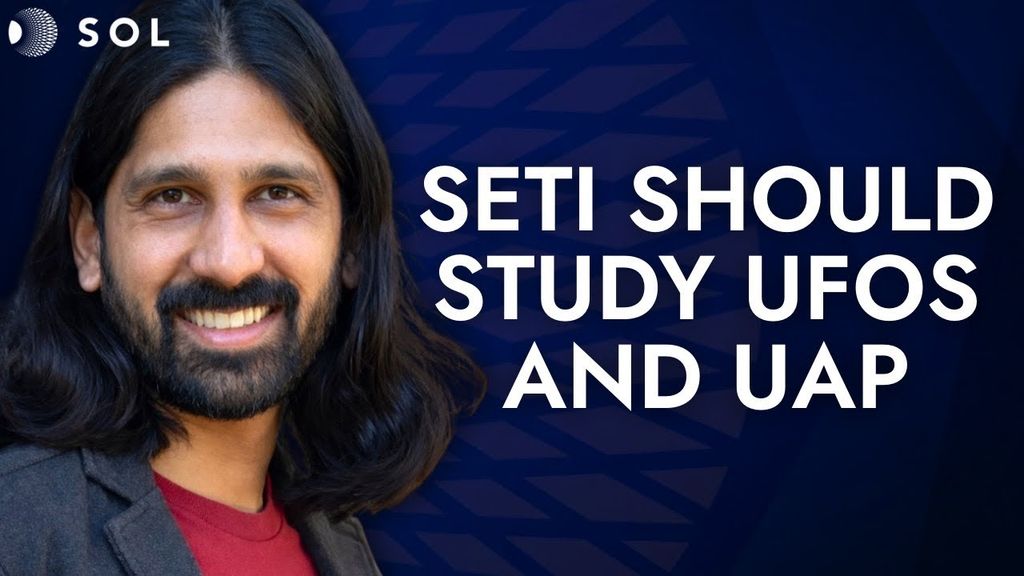
Astrobiologist urges SETI to integrate UAP data and expand technosignature searches from exoplanets to the solar system


The question of how to recognize and interpret non-human intelligence is increasingly intersecting with both the scientific search for extraterrestrial life and the modern UAP debate. Astrobiologist Jacob Haqq-Misra argues that these domains need not be siloed: robust, falsifiable approaches from SETI and technosignature research can be extended to phenomena closer to home, including our own solar system and Earth’s skies. The core proposition is pragmatic rather than sensational: treat UAP as an outstanding measurement problem, expand technosignature frameworks beyond distant exoplanets, and apply contemporary data-science tools to archives already amassed by planetary missions.
Scientific groundwork for this synthesis has matured rapidly. Where exoplanets were once considered nearly undetectable, they now dominate astronomy conferences, with thousands cataloged and many more candidates pending validation. Within this landscape, biosignature science has coalesced around atmospheric disequilibrium. Haqq-Misra underscores that the coexistence of oxygen, ozone, and methane—abundances that on Earth are sustained by biology despite chemical tendencies to equilibrate—is broadly accepted as a compelling biosignature. Yet he cautions that any detection must be vetted against non-biological processes unfamiliar from Earth, reinforcing the need for disciplined hypothesis testing rather than definitive claims from single indicators.
Technosignatures extend this same logic: if life on Earth has produced technology that changes atmospheres, emits radio transmissions, and populates near-space with satellites, then analogous external signals are reasonable targets. Candidate technosignatures range from narrowband radio beacons to industrial byproducts (such as chlorofluorocarbons), unnatural satellite belts, or engineered reflectance patterns consistent with large-scale energy capture. Importantly, technosignature research is not speculative free association; it is a structured effort to define detectable consequences of technology, anchored to what is physically plausible and instrumentally accessible through telescopes such as the James Webb Space Telescope and future platforms like the Habitable Worlds Observatory.
At the level of first principles, Haqq-Misra revisits the Drake Equation. While it has served as a conceptual scaffold for discussing life’s prevalence, he emphasizes its limitations as an estimator rather than a measurable equation. Several terms—most notably the emergence of intelligence and the longevity of technological communication—remain intrinsically uncertain. A crucial caveat is that advanced civilizations might operate in ways that are observationally indistinguishable from nature, rendering them effectively invisible to radio or optical searches. This recognition both tempers overconfident null conclusions and supports a more diversified search portfolio, including unconventional technosignatures.
Diversification, in Haqq-Misra’s view, must include the solar system. He cites the overlooked lineage of “solar-system SETI,” notably Ron Bracewell’s proposal to search for extraterrestrial probes or messaging artifacts locally, alongside traditional radio listening. For decades, such ideas were sidelined under the weight of stigma and a professional caution within radio-SETI to distance itself from topics conflated with UFO culture. Today, however, the tools and data volume exist to revisit these searches credibly. High-resolution lunar and Martian imagery, for instance, can be subjected to machine-learning anomaly detection. This approach is domain-agnostic: it will rediscover known human artifacts (e.g., Apollo sites, known crash debris), may reveal geologically interesting oddities, could relocate missing human-made objects, and, in a best-case scenario, identify signatures inconsistent with known geologic or anthropogenic explanations. Negative results are still informative, tightening bounds on what is present in the searched regions.
Methodology is central. Haqq-Misra stresses that solar-system artifact searches should leverage existing assets and data repositories before proposing bespoke missions. He also notes the complementary role of wide-field time-domain surveys, such as those planned by the Vera C. Rubin Observatory. Because potential interstellar objects or probes could traverse the inner solar system rapidly and unpredictably, cadence surveys that image the whole visible sky on sub-weekly timescales are well suited to identify and track such targets. This complements planetary-archive mining by providing a dynamic, discovery-class capability for transient objects that targeted, long-stare telescopes would likely miss.
On Earth, purpose-built observatories focused on UAP would need to be instrumented for multi-sensor corroboration. Historical case inventories frequently cite coincident radar, infrared, optical, and sometimes radio anomalies. Haqq-Misra recommends letting these empirical modalities guide design: synoptic coverage with synchronized sensors reduces reliance on single-channel interpretations, enables cross-validation, and improves the statistical significance of any claimed anomaly. The aim is not to presuppose exotic origins but to sieve unknowns from the known with sufficient rigor to merit broader scientific attention.
Cultural and institutional contexts remain decisive. The conversation reflects a palpable shift: subject-matter experts can now engage on UAP without assuming disproportionate career risk, especially when they articulate clear, testable research plans. NASA’s independent UAP panel did not analyze cases but outlined how agency assets might help, marking a symbolic departure from decades of hands-off posture. Even so, Haqq-Misra observes that internal enthusiasm within large agencies appears mixed, and sustained progress will likely require both scientific leadership and policy clarity on data access.
The policy environment itself is in flux. A contemporaneous news segment highlighted a flurry of high-profile statements and releases: remarks and clarifications from former presidents, a pledge to identify and declassify relevant files, supportive signals from intelligence authorities, and renewed interest among lawmakers with security and oversight portfolios. Journalists published additional military-collected imagery presenting challenging kinematic profiles; former leadership at the Pentagon’s UAP office referenced reports of abrupt accelerations and unconventional maneuvering; and the current office leadership has acknowledged a set of “true anomalies” that remain perplexing. These developments neither confirm nor refute extraordinary hypotheses, but they underscore why data transparency and standardized analytical frameworks matter to both national security and basic research.
Regarding eyewitness accounts that include reported “occupants,” Haqq-Misra maintains a cautious stance. He recognizes the validity of studying testimonial data through appropriate social-scientific methods while also noting the cognitive and narrative dynamics that can alter recollections over time. From a biological standpoint, he considers convergent evolution toward human-like morphology improbable, though he acknowledges that panspermia—including directed panspermia—has appeared in the astrobiology literature as a speculative framework. The key, he suggests, is to disentangle heterogeneous phenomena and evaluate them on evidentiary grounds rather than collapse them into a single explanation.
Looking forward, he articulates two practical milestones. First, the accumulation of a statistically meaningful UAP dataset with multi-instrument corroboration—whether from academic teams such as the Galileo Project or from broader sensor fusion efforts—would transform anecdata into analyzable science, regardless of the ultimate explanations. Second, within the solar system, a credible discovery would be a multi-feature anomaly in high-resolution imagery that resists geologic or anthropogenic classification—an object whose structure, composition, or contextual placement challenges existing models. He offers a deliberately stark example for clarity: a meteoritic fragment embedding recognizable microfabricated structures inconsistent with terrestrial contamination. While such a find is hypothetical, articulating what would qualify as “hard-to-explain” helps align search criteria, instrumentation, and follow-up protocols.
Haqq-Misra’s broader message is that biology and technology are not opposites in the astrobiological search, but expressions of life at different stages. The same empirical humility that guides biosignature interpretation should govern technosignature and UAP analyses. If forthcoming disclosure initiatives yield releasable datasets, the scientific community will be better positioned to test claims, design targeted follow-on observations, and either demystify puzzling measurements or confront evidence that points to genuinely new categories of phenomena. Either outcome advances knowledge. In the interim, astronomy and planetary science already possess the means to improve signal-vs-noise separation: mine existing archives with modern AI, instrument new observatories for corroboration across spectra, and normalize anomaly-focused inquiry as part of standard scientific practice.
This integrated posture has implications beyond the lab. Haqq-Misra is co-editing a multidisciplinary volume with international-relations scholars examining how UAP research interfaces with global politics, financial stability, and security policy. The premise is straightforward: if technosignatures—whether distant or local—enter the evidentiary mainstream, governance questions will move from abstract to immediate. Preparing for that contingency does not require presuming conclusions; it requires building durable, transparent, and methodologically sound pathways from observation to inference to policy. In that respect, aligning SETI, astrobiology, and UAP research under a shared standard of evidence may be less a radical departure than a long-delayed normalization of how science addresses uncertainty at the frontier.
Key Moments
- 03:03Haqq-Misra traces his path into astrobiology and SETI, crediting Jill Tarter’s influence and emphasizing that more scientists should engage with UAP as a legitimate research domain.
- 06:15He explains how climate models for Earth and exoplanets inform habitability studies, including tidally locked worlds around red dwarfs and what remote signals could reveal.
- 14:47On biosignatures, he highlights atmospheric disequilibrium—especially the coexistence of oxygen/ozone and methane—as a widely supported indicator of biological activity, while cautioning about non-biological false positives.
- 18:13Haqq-Misra reframes the Drake Equation as a philosophical tool, stressing deep uncertainties in factors like intelligence and technological longevity (L), and noting civilizations might become astronomically “invisible.”
- 24:16He differentiates SETI’s radio-astronomy roots from astrobiology’s origins in solar-system investigations and exoplanet biosignatures, recounting how stigma long kept these communities culturally separate.
- 26:18Reviewing astrobiology’s history, he describes the Allen Hills Martian meteorite episode and subsequent investment in extremophile research and biosignature detection, which shaped the field’s trajectory.
- 34:27Citing Ron Bracewell’s 1960 proposal, he advocates renewing ‘solar-system SETI’ to search for extraterrestrial artifacts or probes locally, not only distant radio beacons.
- 39:26He calls for mining existing rover and orbiter archives with modern machine learning—'don’t be afraid to look for something weird'—to set bounds or find anomalies without launching new missions.
- 40:48In a news segment, political figures including Barack Obama, Donald Trump, and Hillary Clinton issued notable UAP-related statements; journalists released a new military drone video; and former AARO leadership referenced aerospace-like anomalies.
- 01:01:10Haqq-Misra says scientific culture is shifting; NASA’s independent UAP panel outlined how agency assets could contribute, but institutional enthusiasm remains limited and the dedicated UAP role is unclear.
- 01:09:39He points to the Vera C. Rubin Observatory’s all-sky cadence as essential for detecting fast-moving interstellar objects or potential probes, complementing planetary data sets.
- 01:14:16For purpose-built Earth observatories, he suggests instrument suites be informed by historical multi-sensor UAP reports (optical, infrared, radar, radio) to maximize evidentiary value.
- 01:19:07Asked about occupant reports, he assesses convergent evolution toward human-like morphology as unlikely, while acknowledging panspermia as a speculative but discussable hypothesis in astrobiology.
- 01:21:07He is co-editing a multidisciplinary volume with international-relations scholars on UAP politics and the theoretical bridge between solar-system technosignatures and atmospheric UAP.
- 01:27:36On policy, he supports UAP disclosure efforts and stresses that scientists need access to data; classified claims are scientifically inert until released for scrutiny.
- 01:32:09Looking ahead, he hopes for statistically robust, multi-instrument UAP datasets (e.g., from the Galileo Project) and, within the solar system, high-resolution imagery that reveals anomalous artifacts.
 Continue with Google