
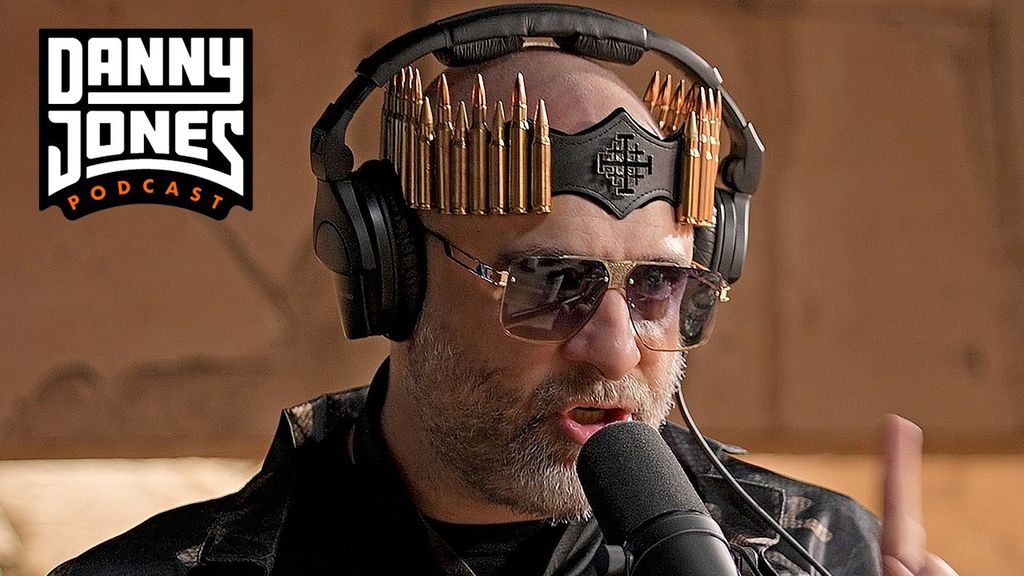
Kurt Metzger Amplifies Sweeping Allegations on Psyops, Elite Networks, and UAP–Occult Overlap


Public distrust in institutions frequently converges with claims about covert programs, elite impunity, and anomalous phenomena. In an extended exchange, comedian and commentator Kurt Metzger drew together a tapestry of allegations touching on government psychological operations, religiously inflected politics, historical intelligence programs, and a set of extraordinary assertions about Jeffrey Epstein, high-profile networks, and the nature of non-human intelligences. While Metzger’s narrative is cohesive in its portrayal of a managed public reality and interlocking elite systems, many of his claims range from unverified to widely disputed. The result is a portrait of contemporary conspiracy discourse at a moment when UAP narratives, occult histories, and information warfare are increasingly discussed in the same breath.
Information operations and the engineering of consent
Metzger’s starting point is information power: how states and aligned actors shape public perception. He invokes ‘hypernormalization’—coined to describe late-Soviet public life in which leaders and citizens mutually recognized systemic unreality—to argue that Western publics now inhabit a similarly ritualized, performative politics. He frames mass symbolism (for example, the ‘yellow ribbon’ and social-media campaigns) as collective rituals that quiet dissonance while policy elites prosecute wars and reframe failures. A U.S. Army Psychological Operations (PSYOP) recruiting video is used as a touchstone for this thesis, with Metzger emphasizing its focus on the mind of the adversary and arguing that such tools inevitably spill over into domestic opinion-shaping.
These points intersect with documented realities: militaries invest in psychological operations, strategic communication, and influence activities. States and non-state actors alike contest information space. At the same time, the extension of that reality into an assertion that most legacy media are ‘intelligence cut-outs’ is offered as a categorical claim, not as a case built from traceable funding flows, editorial chains of custody, or documentary evidence. The conversation alternates between specific artifacts—the PSYOP video, recruiting language—and broad inferences about the totalizing reach of information control.
War narratives, 9/11 skepticism, and historical memory
On foreign policy, Metzger casts the post-9/11 era as theater directed by a transnational coterie of strategists and oligarchs. He suggests U.S. alignment with jihadist leaders and depicts conflicts as levers to authorize domestic surveillance and recode public norms. He revisits familiar 9/11 anomalies—an initial lack of public awareness regarding World Trade Center Building 7, the story of recovered hijacker passports—and holds them up as indicators that official narratives are incomplete or misleading.
Context matters here: the 9/11 Commission and subsequent inquiries did not substantiate claims of widespread insider orchestration or foreknowledge, and independent reviews have repeatedly contested allegations of centrally managed deception. Yet the unresolved edges—conflicting eyewitness memories, uneven disclosure, and the constant presence of classification barriers—continue to sustain skeptics’ conviction that material facts remain withheld. Metzger’s narrative reflects that mistrust, tying wartime policy outcomes to an architecture of manipulation.
Religion, identity, and messianic framing in politics
Another throughline is the function of religious identity and apocalyptic language in legitimizing power. Metzger spotlights the phenomenon of gun-centric religious imagery in certain churches, publicized reports of military personnel who view Donald Trump in messianic terms, and debates within and around Jewish communities and organizations. He presents Chabad-Lubavitch as an intelligence-adjacent network and characterizes disparate Jewish, Christian, and Islamic traditions in the language of competing political blocks.
Those assertions flatten distinctions that are meaningful to adherents and scholars alike. Religious movements are variegated and often internally contentious; overlaying them with a single intelligence frame risks collapsing cultural, theological, and social complexities into instrumental caricatures. That said, Metzger’s emphasis on messianic idioms inside political movements captures a real trend: explicitly religious storytelling is increasingly grafted onto civic projects, including within the military and national security communities, shaping the motivational landscapes of those institutions.
From MK-Ultra to ‘Monarch’: where the archive ends and myth begins
Metzger situates several allegations within the historical record of Cold War behavioral research. Project MK-Ultra—a now-declassified CIA program that involved unethical experiments with drugs and hypnosis—did exist. Likewise, the U.S. Army explored remote viewing and related practices under programs often grouped under the ‘Stargate’ umbrella before those efforts were terminated in the 1990s. These facts underpin a pattern argument: if governments once pursued psychic research and behavior modification, they may still be doing so covertly.
He then extends that premise into ‘Monarch,’ a purported offshoot involving programmed ‘super-soldiers’ and entertainment-industry control. Unlike MK-Ultra or Stargate, ‘Monarch’ lacks declassified documentation, corroborated budgets, or formal admissions. Its core anecdotes circulate in memoirs, talk shows, and online communities rather than in FOIA releases or archived oversight hearings. Metzger’s account merges the documented (MK-Ultra) with the undocumented (Monarch) to argue for continuity, but the evidentiary standards for the latter remain contested.
Elite abuse, ‘Pizzagate,’ and the limits of inference
The conversation returns repeatedly to child exploitation claims, culminating in Metzger’s assertion that ‘Pizzagate’ is real. Law enforcement inquiries and journalistic investigations have not substantiated the original ‘Pizzagate’ narrative centered on a Washington, D.C. pizzeria; the claim is broadly regarded in mainstream reporting as unfounded. Nonetheless, the known reality of trafficking networks and high-profile offender cases sustains a general suspicion into which new documents or rumors can be readily incorporated. Metzger portrays that space as deliberately obfuscated by labels like ‘satanic panic,’ which he argues were weaponized to bury real crimes alongside urban legend. The tension here is methodological: broad societal harms are real, but drawing lines from those harms to named nodes and symbols without verifiable sourcing risks collapsing separate phenomena into a single undifferentiated conspiracy.
Epstein, Maxwell, and the persistence of unresolved questions
The most provocative portion of the exchange concerns Jeffrey Epstein. Metzger claims that email correspondence in recent court releases indicates Epstein was living in a Colorado ski chalet years after his reported 2019 death, and that a medical inconsistency exists between a statement that he had ‘no prostate’ and an autopsy reference to a normal prostate. He also points to partially released footage of a conversation with Steve Bannon—whose full cut has not been aired—and to a widely circulated photo of Epstein before a chalkboard that Metzger interprets as a schematic for narrative warfare akin to QAnon’s scaffolding.
Here, the distance between allegation and public record is stark. Officially, Epstein died in federal custody in August 2019; the New York City medical examiner ruled the death a suicide, a conclusion that Epstein’s brother’s experts have disputed. Elements of the official account—including camera failures, staffing lapses, and forensic ambiguities—have fueled public doubt. But conclusive documentary evidence that Epstein survived has not been released, and the purported email trail suggesting a ski-chalet residence has yet to emerge in a verifiable, primary-source form. Likewise, the ‘no prostate’ versus ‘normal prostate’ claim requires a clear chain of custody for both records to be meaningfully compared. The broader point stands: where court-ordered disclosures arrive piecemeal and are refracted through partisan media, narrative ‘vacancies’ persist, and speculative theories multiply to fill them.
UAP, consciousness, and the demonology debate
In a pivot directly relevant to the UAP community, Metzger situates abduction lore and high-strangeness accounts within a larger matrix of ritual, mind, and physics. He references the ‘Collins Elite’ thesis—popularized by writer Nick Redfern—that some U.S. officials interpreted UFO phenomena as demonic rather than extraterrestrial. He juxtaposes that view with Jacques Vallée’s more agnostic examinations of ‘control systems’ and liminal contact, and with discussions of plasma physics as a mechanism for anomalous manifestations.
The exchange invokes the U.S. government’s remote viewing history and recounts a striking anecdote attributed to former Army remote viewer Lyn Buchanan, who has publicly described unusual experiences during his service and in later life. In Metzger’s retelling, Buchanan confronts non-human entities and is told that ‘implants’ harvest human antibodies rather than track abductees—an extraordinary claim unsupported by medical literature. Regardless of its veracity, the story illustrates a trend within UAP and parapsychology discussions: as the evidentiary bar rises, some narratives migrate from hardware and kinematics to consciousness, ritual, and metaphysics. That migration complicates investigation but aligns with a subset of experiencer testimony.
Breakaway civilizations, Atlantis, and technological esoterica
From there, Metzger gestures toward a ‘breakaway’ elite running ahead of public science, invoking alleged obsessions with Atlantis, maritime jurisdictions, and what he calls ‘transdimensional trillionaires.’ He links Ghislaine Maxwell’s Terramare-themed rhetoric to a broader seasteading impulse and to ancient Phoenician or Greco-Roman temple motifs replicated in private island architecture. He also references ‘Ormus,’ described here as a clandestine elixir made from human tissue and monatomic gold with life-extension properties—a claim with no accepted basis in biochemistry or toxicology.
These ideas are not new in fringe discourse. They merge 19th and 20th century occult revivals, literary myth (e.g., Plato’s Atlantis), and modern libertarian or technocratic experiments in governance. The analytical challenge is to separate the cultural power of those symbols from the empirical record: maritime flags, statues, and stripes can be read as ritual language, but their semiotics are not evidence of a particular crime or capability.
Domestic controls, China analogies, and the draft specter
Turning to civil liberties, Metzger contrasts China’s social credit practices with perceived Western convergence on similar tools through informal blacklists, deplatforming, and algorithmic throttling. He claims that the United States could move toward conscription tied to an Iran war and argues that selective service obligations may be expanded. The United States has not had an active draft since 1973; adult men are required to register with the Selective Service System, and periodic proposals to change registration or conscription policy yield public debate, particularly during major conflicts. Metzger’s warning reflects a broader anxiety: that technological governance and wartime powers can normalize exceptional measures at home.
Free speech metrics and the problem of comparisons
Metzger also spotlights arrests for online speech in European countries as evidence that liberal democracies are constricting expression, and he contrasts those figures to reported numbers in the United States and Russia. Cross-national comparisons of such enforcement are methodologically tricky: statutes differ, case law varies, and reporting standards are inconsistent. Still, his framing aligns with the observation that many European states criminalize forms of expression (e.g., hate speech, Holocaust denial) that are protected in the United States. For the UAP community, the relevance is indirect but real: the scope of lawful speech sets the bounds for open-source collaboration and witness testimony.
Why these narratives persist within UAP-adjacent domains
Metzger’s throughline—that a small, ritual-bound elite shapes reality—resonates with parts of the UAP community because both domains contend with opaque authority, selective disclosure, and mixed-quality evidence. Where official channels are mute or fragmentary, interpretive lenses proliferate: demonology versus extraterrestrial hypotheses; psyops versus organic anomaly; consciousness-first models versus propulsion anomalies. The convergence of these discourses can be heuristically stimulating—prompting new research angles in anthropology, history of science, and sensor reliability—but it can also blur the line between hypothesis and assertion.
Assessing evidence: what is documented, what is debated, what is claimed
Several elements in Metzger’s narrative are matters of public record: the existence of PSYOP units and recruitment materials; the history of MK-Ultra and the Stargate remote viewing program; the official findings and controversies surrounding Epstein’s death; and the persistence of secrecy in national security processes. Others are inferential or anecdotal: that a recruiting video signals domestic targeting; that Monarch programming operates at scale; that Epstein survived and resided in a ski chalet; that implants harvest antibodies at alien direction; that architectural motifs on private islands denote specific ritual systems.
For investigators and readers, a pragmatic approach is to disaggregate the stack:
- Documented programs and records merit continued primary-source review and FOIA-informed reporting. - Anecdotal accounts—even when compelling—should be framed as testimony pending corroboration and tested against medical, physical, and archival constraints. - Symbolic readings (of art, heraldry, architecture) are context, not proof. - Recycled claims warrant literature reviews to distinguish newly surfaced material from long-circulating rumor.
Implications for UAP inquiry and public trust
The UAP field’s credibility depends on maintaining a clear evidentiary ladder while welcoming data from multiple domains. That means pairing open-mindedness about consciousness and high-strangeness with rigorous documentation standards; distinguishing verifiable program histories from speculative continuities; and resisting the lure of totalizing narratives that make sense of everything at the expense of establishing anything. Metzger’s synthesis is a vivid example of how disparate threads—from PSYOP videos to occult revivals to Epstein ephemera—can be woven into a single fabric. The reporting challenge is to separate the fabric’s durable fibers from its decorative stitching.
In sum, the exchange surfaces a familiar paradox in contemporary media ecosystems: opaque institutions and partial disclosures create a vacuum that theory rushes to fill. Some of Metzger’s claims rest on known histories that deserve renewed scrutiny; others require evidence that, if it exists, has not yet been made public. For audiences concerned with UAP, psyops, and elite accountability alike, the path forward remains the same: source documents over slogans, provenance over pattern-matching, and an investigative posture that neither dismisses out of hand nor accepts without verification.
Key Moments
- 00:19Hyung Jin Moon’s Sanctuary Church is discussed in the context of gun-centric religious symbolism and American political culture.
- 02:20Major outlets including Vice and the Washington Post are characterized as intelligence ‘cut-outs,’ a claim offered without documentary substantiation.
- 03:47The ‘yellow ribbon’ tradition around past wars is framed as a mass-ritual psyop designed to manufacture consent for conflict.
- 06:38Metzger alleges U.S. alignment with ISIS leadership and references high-level contacts, portraying the post-9/11 war on terror as managed theater.
- 08:37Reports that some U.S. military personnel view Donald Trump as divinely appointed are cited as evidence of messianic narratives in security institutions.
- 11:08Chabad-Lubavitch is described as an intelligence-adjacent global network; the characterization is speculative and conflates diverse Jewish communities.
- 14:069/11 anomalies—including the late realization about World Trade Center Building 7 and passport recovery claims—are presented as evidence of a cover-up.
- 19:25‘Hypernormalization’ is used to describe a social condition in which elite narratives and public awareness of unreality co-exist, eroding trust.
- 41:05A U.S. Army PSYOP recruitment video (‘Ghost in the Machine’) is held up as proof that information warfare targets civilian cognition as much as adversaries.
- 48:46‘Pizzagate’ is asserted to be real and part of elite child exploitation; no verifiable evidence is supplied and mainstream investigations dispute the claim.
- 01:32:12The partially released Steve Bannon–Jeffrey Epstein footage is portrayed as revealing, with unanswered questions about why the full interview never aired.
- 01:34:50Epstein’s chalkboard photo is interpreted as a ‘matrix’ map linked to QAnon-style influence operations, suggesting narrative engineering.
- 01:55:19A warning is issued that the U.S. could move toward conscription tied to an Iran conflict; the U.S. has had no draft since 1973.
- 02:04:56Metzger claims ‘it’s in the files’ that Jeffrey Epstein is alive, referencing alleged emails about a post-2019 ski chalet residence; no primary documents are produced.
- 02:05:37He cites an alleged inconsistency between a medical statement that Epstein had no prostate and an autopsy reference to a normal prostate.
Related Topics
Links & References
- Host platform for ad-free and uncensored episodes.
- Sponsor link for Shopify trial referenced during the episode.
- Sponsor link for Amanita muscaria products (code DJ22 mentioned).
- Sponsor link for nicotine-free focus pouches (code DANNY mentioned).
- Sponsor link for energy products (code DJP mentioned).
- Kurt Metzger’s official website.
- Spotify page for The Danny Jones Podcast.
- Apple Podcasts page for The Danny Jones Podcast.
- Danny Jones’ Instagram profile.
- Danny Jones’ Twitter profile.
 Continue with Google