
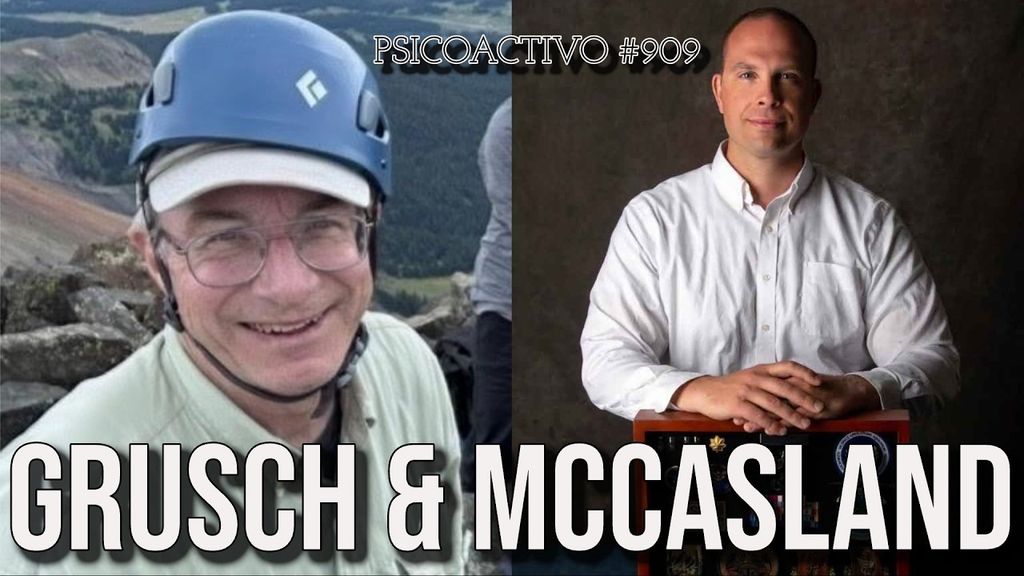
Rep. Eric Burlison Highlights David Grusch’s Attempted Outreach to Missing Gen. Neil McCasland, While Allegations Surface Over Altered UAP Hearing Record


The question of UAP data transparency has long been contentious, with lawmakers, investigators, and journalists offering divergent accounts of what the public record actually shows. In this context, Rep. Eric Burlison addressed two developments with overlapping implications for congressional oversight: allegations that an official record from a UAP hearing was improperly altered, and the growing concern surrounding the disappearance of retired Maj. Gen. William Neil McCasland, a figure some in Congress have sought to interview in connection with UAP inquiries.
Allegations about the integrity of the congressional record arose as journalist Jeremy Corbell asserted that materials from a past UAP hearing were manipulated, including the insertion of a blank page described as referencing “Immaculate Constellation.” Corbell linked the episode to staff connected to Rep. Nancy Mace and warned lawmakers against relying on journalist Michael Shellenberger, whom he accused of untrustworthiness. Burlison, for his part, said he learned of the matter after the fact and had been told a cover letter was removed for appearing promotional, adding that he prioritized the document’s content rather than its cover sheets. Corbell rejected that explanation as false and suggested the issue could hold legal significance, offering to provide evidence for review. The competing claims underscore a persistent fault line in the UAP debate: whether official proceedings and public-facing documentation have been curated or altered in ways that obscure the record. Resolving the dispute will require documentation, chain-of-custody clarity, and, if warranted, formal inquiry by the bodies that govern congressional procedure.
Parallel to the transparency concerns is the disappearance of McCasland, last seen in Albuquerque on February 27. According to law-enforcement statements cited in coverage shared during the discussion, his phone and prescription glasses were left at home, while a wallet and .38-caliber revolver were reportedly missing; New Mexico authorities issued a Silver Alert, and the FBI joined the search. Investigators have stated there is no evidence that his disappearance is connected to his past work, which included commanding the Air Force Research Laboratory at Wright-Patterson Air Force Base—an institution that frequently appears in public speculation about UAP-related research. McCasland’s wife, Susan, addressed online rumors with a wry social-media comment, attempting to defuse claims of extraordinary involvement.
Burlison said Congress has considered McCasland a relevant voice for UAP oversight efforts and that whistleblower David Grusch previously attempted to contact him. By Burlison’s account, McCasland has declined to engage, indicating he had nothing to say on the topic. While this does not establish any conclusion about the general’s knowledge, it situates him within a network of individuals congressional investigators have attempted to interview. The host added that Grusch’s outreach dated to 2020, suggesting the interest is longstanding rather than opportunistic.
Beyond process and personnel, Burlison expressed the view that recent information he has reviewed points to technology beyond current U.S. capabilities. He described the implications as “almost terrifying” and an “ontological shock,” while acknowledging that potential foreign adversaries could be responsible. Such assertions emphasize the stakes for rigorous data-sharing, classified-to-unclassified pathways, and independent validation by scientific and technical experts.
Taken together, the allegations of an altered congressional record and the unresolved search for a potentially key witness reflect the broader difficulties that have long surrounded UAP governance: uneven transparency, contested narratives, and the challenge of integrating credible leads with responsible skepticism. Further clarity will hinge on verifiable documentation regarding the hearing record, continued law-enforcement updates on McCasland’s whereabouts, and structured access to the highest-quality sensor and materials data for independent review. Until then, the debate will continue to turn on evidence—what exists, who holds it, and how it reaches the public record without distortion.
Key Moments
- 00:53Discussion centers on the latest Weaponized episode featuring Rep. Eric Burlison, with questions focusing on trust and credibility within the current disclosure environment.
- 02:39Jeremy Corbell alleges a congressional record tied to a UAP hearing was 'fabricated,' citing insertion of a blank page related to 'Immaculate Constellation' and warning lawmakers about trusting certain journalists.
- 03:12Corbell claims the alteration involved staff connected to Rep. Nancy Mace and links the episode to journalist Michael Shellenberger, whom he characterizes as untrustworthy.
- 04:25Rep. Burlison responds that he was told a cover letter was removed for appearing promotional, emphasizing he focused on the document’s substance rather than the cover materials.
- 04:53Corbell calls the explanation 'a complete and total lie,' framing the matter as potentially legal in nature and offering to provide evidence to Burlison.
- 07:53News segment details the disappearance of retired Maj. Gen. William Neil McCasland, last seen Feb. 27 in Albuquerque; phone and prescription glasses left behind, wallet and .38 revolver reportedly missing; a Silver Alert issued and the FBI joining the search.
- 08:57Context provided on McCasland’s former command of the Air Force Research Laboratory at Wright-Patterson AFB; investigators state there is no evidence his disappearance is linked to his past work.
- 09:24McCasland’s wife, Susan, publicly addresses online rumors with a tongue-in-cheek comment about 'aliens' on Facebook, attempting to tamp down speculation.
- 10:35Burlison says 'General McCasland definitely is connected to the UAP topic' and that he is someone Congress has sought to speak with; Grusch attempted to contact him but McCasland has consistently said he has nothing to add.
- 11:22Participants describe McCasland’s disappearance as disturbing and argue it merits heightened national attention, irrespective of any UAP connection.
- 12:03Host highlights a five-year-old song by Susan McCasland ('Indigo Blues') posted on YouTube; lyrics referenced as a personal artistic expression without asserting factual relevance to the current case.
- 14:07Burlison states he is certain there exists 'a level of technology that we do not have the capabilities of,' describing recent information he has seen as 'almost terrifying' and an 'ontological shock,' while noting potential foreign origins.
- 15:02Additional context asserts Grusch’s outreach to McCasland dates to 2020, indicating longstanding congressional interest in speaking with the retired general.
Related Topics
Links & References
- Weaponized episode featuring Rep. Eric Burlison, referenced for the remarks on UAP oversight and related allegations.
- Susan McCasland’s 'Indigo Blues' on YouTube, highlighted during the discussion as a personal artistic work posted years prior.
- Anomalous Cards site mentioned during the program’s sponsor segment.
- Psicoactivo Podcast on Spotify, as listed among distribution platforms.
- Psicoactivo Podcast page at KGRA, included in the provided resources.
 Continue with Google