
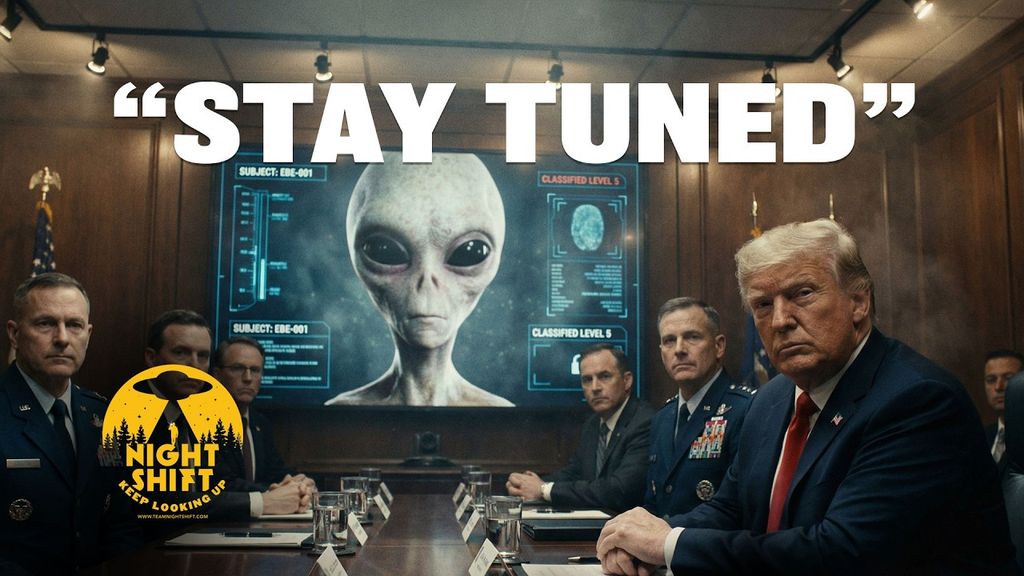
White House Registers Alien.gov and Aliens.gov as U.S. Agencies Signal Next Steps on UAP Records


Reports that the White House has registered the domains Alien.gov and Aliens.gov have intensified attention on how the U.S. government intends to handle public-facing communications about Unidentified Anomalous Phenomena. The move, coupled with a terse "stay tuned" response from a White House spokeswoman that included an alien emoji, has raised expectations that official portals could soon centralize UAP-related information, records, or reporting guidance. While the Pentagon has been under increasing pressure to clarify its posture on UAP, specifics about content, ownership, and timelines for the new domains remain unconfirmed.
Publicly accessible technical details cited in the discussion indicate that both domains are hosted on Cloudflare and, at the time of inspection, were not yet connected to live websites. The timing drew added scrutiny because the Cybersecurity and Infrastructure Security Agency has reportedly paused acceptance of new .gov domain requests due to a funding lapse. If accurate, the registrations suggest either prioritized approval mechanisms or prearranged authorizations for high-level initiatives. Pentagon spokespersons were reportedly unavailable for comment on whether these domains indicate a change in UAP reporting processes overseen by the All-domain Anomaly Resolution Office (AARO).
Beyond the mechanics of domain deployment, the discussion explores the stakes of possible disclosures. One scenario posits that any acknowledgement of historic cases—most notably Roswell—would immediately trigger questions about the disposition and stewardship of alleged recovered materials. This connects to long-standing, heavily disputed claims advanced by retired Army officer Philip J. Corso, who alleged in his book "The Day After Roswell" that ideas from recovered artifacts were discreetly inserted into private-sector research programs, purportedly accelerating advances such as fiber optics and microelectronics. Historians and technologists frequently challenge such correlations, noting independent lines of documented R&D. Still, the narrative underscores a broader public concern: who, if anyone, may have benefited from privileged access and under what legal authority.
The conversation further examines allegations—unverified and often anecdotal—that elements of recovery and reverse-engineering activity have migrated behind corporate walls, limiting both public oversight and traditional transparency tools such as FOIA. A frequently cited piece of lore, the so-called "Lockheed firefight," alleges a confrontation between a U.S. military team and private security contractors at a downed craft site. No primary documentation has publicly substantiated that account. Yet even without verification, the hypothetical legal consequences are clear: if any firm received government-derived technological advantages outside open competition, competitors could pursue litigation over market distortion, and discovery processes could expose additional records across multiple administrations.
The political dimension is also prominent. Advocates argue that UAP policy is likely to surface in future presidential debates, potentially requiring candidates to articulate positions on data transparency, safety of operations, scientific engagement, and threat assessment. Countervailing views suggest that heightened attention could serve as a distraction from other national controversies and international crises. Cultural interest—bolstered by high-profile pilots, congressional hearings in recent years, and forthcoming entertainment projects—continues to amplify public expectations for authoritative information.
What to watch next is concrete and verifiable: whether Alien.gov and Aliens.gov go live; which agencies claim stewardship; whether content includes archival records, structured reporting tools, or scientific data; and how any release aligns with AARO’s mandate and classification constraints. Clarity on these points would move the discussion from speculation toward a measurable framework for public understanding and scientific inquiry.
Key Moments
- 00:30Claim that the White House registered Alien.gov and Aliens.gov, appearing in public federal records roughly one month after President Donald Trump announced a directive to release UAP-related government records.
- 01:00Technical note: both domains are hosted on Cloudflare and, at the time referenced, did not resolve to active websites.
- 01:38White House spokeswoman Anna Kelly reportedly told DefenseScoop to "stay tuned," including an alien emoji, when asked about the domains and their purpose.
- 02:05Observation that the registrations occurred while CISA was reportedly not accepting new .gov requests due to a funding lapse, raising questions about approval pathways.
- 03:04Framing that the development marks a perceived shift in government posture on UAP, described as "crossing the Rubicon" toward sustained public engagement.
- 05:15Cultural momentum: growing audience interest in UAP topics across podcasts and late-night media; anticipation around a forthcoming Spielberg film titled "Disclosure Day."
- 09:19Scenario floated that an official rollout could begin with acknowledging Roswell-related materials, which would immediately prompt follow-up questions about disposition of alleged recovered technology.
- 09:45Recounting Philip J. Corso’s contested claims from "The Day After Roswell" that military liaisons seeded private-sector R&D with ideas from recovered materials, allegedly accelerating advances such as fiber optics and microprocessors.
- 11:51Assertion that private aerospace firms have administered elements of recovery and reverse-engineering efforts under a corporate veil, complicating public oversight.
- 12:26Unverified lore described as a "Lockheed firefight," alleging a clash between a U.S. military retrieval team and private contractors at a downed craft site in the Southwest.
- 14:20Legal angle: if certain firms benefited from privileged access to government-derived technology, competitors might explore litigation for unfair advantage.
- 15:48Prediction that UAP and non-human intelligence could emerge as explicit topics in future presidential debates, requiring defined policy positions.
- 16:45Speculative taxonomy and cognition claims referenced from figures like Eric W. Davis and Robert Dean, including telepathy and a "cognitive interface" alluded to in the so-called "Slide 9."
- 18:24Political theory posited that accelerating disclosure could serve as a distraction from other crises, including the Epstein scandal and conflict with Iran, particularly ahead of midterms.
 Continue with Google