
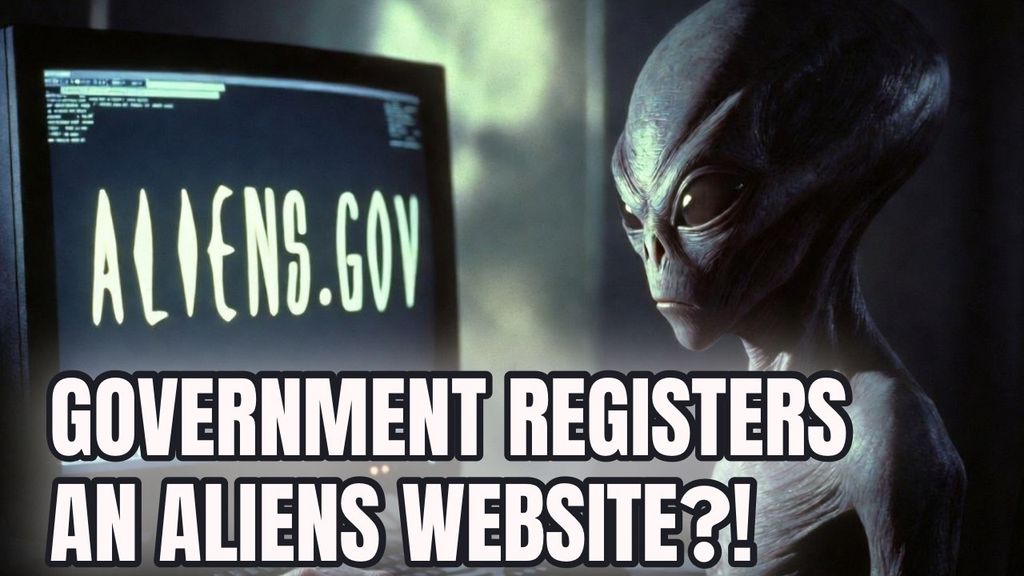
Aliens.gov Appears in Federal Domain Registry, Raising Questions About UAP Data Access


Public expectations for UAP transparency continue to intensify as records circulated online indicate that a new federal domain—aliens.gov—has been registered. The listing, attributed in those records to the Executive Office of the President, immediately drew attention because of its explicit association with extraterrestrial subject matter and its potential use as a government-run information portal. When highlighted, the domain did not yet resolve, leaving its exact purpose undefined.
Observers have speculated that the address could provide a centralized repository for unclassified or newly declassified UAP-related materials. A dedicated portal could standardize public access to reports, imagery, and historical documents, potentially consolidating resources that have previously been scattered across agencies or subject to intermittent availability. Such a hub could also clarify document provenance and update schedules, reducing confusion about where authentic records reside.
The development is being interpreted against a backdrop of heightened political interest and public messaging. Prior high-visibility remarks by national leaders about classified information fueled expectations of broader disclosures, followed by claims and counterclaims that were soon overshadowed by international crises. Rumors persist of a presidential address in May that could touch on extraterrestrial and UAP topics, yet no official agenda has been published to confirm those specifics.
Skepticism remains strong due to past transparency pledges that yielded limited or ambiguous outcomes. Conflicting explanations for drone-related incidents and uncertainty over which agencies held responsibility have compounded doubts. To build trust, any aliens.gov rollout would need to deliver primary-source materials with clear metadata, consistent curation, and unambiguous agency ownership.
Key indicators to watch include when the site becomes publicly accessible, whether it catalogs historical and contemporary UAP records, and how it documents the origin and status of each file. Absent verifiable content and clear scope, a high-profile domain risks undermining confidence; with rigorous documentation and cross-agency coordination, it could become a pivotal resource in clarifying what the government can substantively share about UAP.
Key Moments
- 00:10A post from Skywatch Signal on X flagged that the U.S. government registered a new .gov domain related to extraterrestrials.
- 00:43The listing shown in the post describes "aliens.gov" as a newly registered federal website, attributed to action by the Executive Office of the President around March 18.
- 01:08At the time it was flagged, the domain did not resolve and displayed no public content.
- 01:23The discussion references rumors of a May presidential speech addressing extraterrestrial life and unclassified UAP information.
- 02:00One possibility raised is that aliens.gov could serve as a centralized portal for declassified UAP files for public access.
- 03:00A previously cited site that purportedly hosted declassified UFO files was said to be inaccessible, prompting speculation that materials could be migrated.
- 03:47The federal domain listing identifies the site as a U.S. government property, amplifying public interest in its intended purpose.
- 04:05Past high-profile statements by national leaders about classified information were invoked as context for why the topic drew broad attention before being eclipsed by international events.
- 04:36Despite shifting news cycles, the commentary suggests the administration’s team may still be preparing toward a potential May announcement.
- 05:58Skepticism persists over earlier transparency pledges that did not materialize into clear UAP disclosures.
- 06:18Confusion over prior drone-related explanations and agency attributions (including the FAA) was cited as an example of mixed messaging.
- 07:02Expectations were set that any credible declassification effort should include primary-source files long described as restricted.
- 07:20The view was expressed that establishing an "aliens.gov" portal implies the presence of substantive records rather than ambiguous imagery.
 Continue with Google