
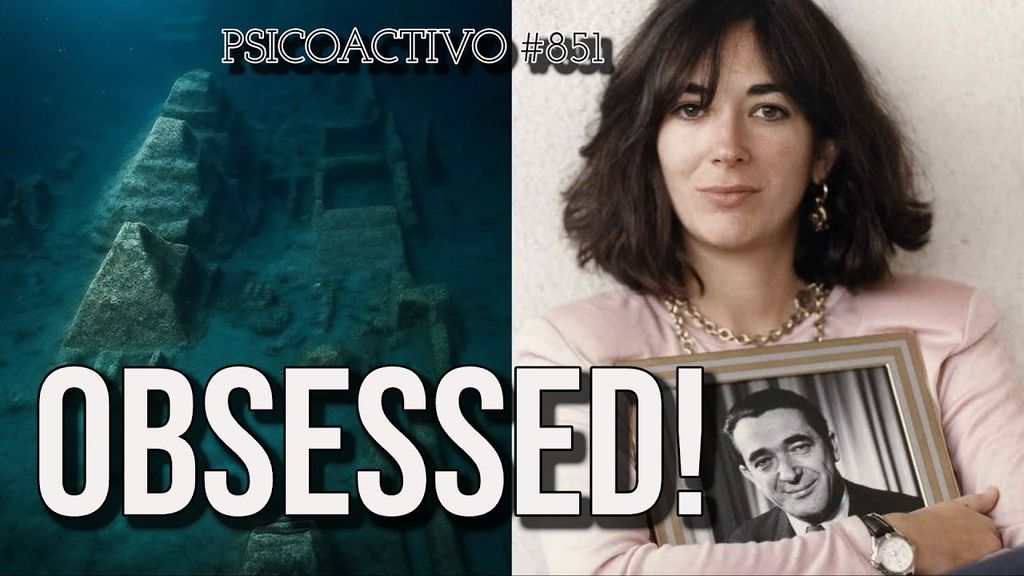
Epstein-Linked Emails Cite Cuban Underwater Structures as National Geographic Executive Shares Low-Quality Images


Claims of submerged geometric formations off Cuba continue to animate debates at the intersection of archaeology, mythology, and fringe history. The broader question is whether deep-water features detected by early-2000s surveys represent natural geology, natural formations later modified by humans, or evidence of a complex coastal culture inundated at the end of the last ice age. The issue also touches on data transparency, as researchers and the public weigh low-resolution scans and secondary visualizations against the standards typically required to substantiate archaeological findings.
Accounts from the period attribute the initial sonar detections to Advanced Digital Communications (ADC) operating near the Yucatán Channel. A stylized computer-generated image that has circulated widely is not original data but rather a visualization said to be derived from lower-resolution sonar. At claimed depths near 2,000 feet, any systematic investigation would require remotely operated vehicles, targeted multibeam mapping, and sub-bottom profiling. Without high-resolution imagery, stratigraphic context, or recovered samples, interpretations remain tentative.
A document circulated in a 2004 email chain—now publicly accessible within the U.S. Department of Justice’s Epstein files—adds a noteworthy primary-source layer. In that exchange, Gateway co-founder Ted Waitt received a Cuban geologist’s report from National Geographic executive vice president Terry Garcia. Garcia described two attached images as poor quality and lacking scale, depicting a square stone-like object and a pyramid-shaped form. The report’s translated conclusions did not assert a single explanation; rather, it proposed three hypotheses: fully artificial construction, entirely natural formation, or natural structures potentially adapted by intelligent beings. It emphasized that determining whether the site was once emergent land, and precisely when submergence occurred, would be critical to assessing any cultural attribution. The document called for detailed mapping, compositional analysis, and chronological studies before firm conclusions could be drawn.
Proponents of a deep-time, pre-Holocene origin connect the Cuban site to a broader pattern of debated locations such as the Bimini Road in the Bahamas, Yonaguni off Japan, and submerged areas off India’s west coast. These discussions are often framed alongside the Younger Dryas impact hypothesis and worldwide flood traditions, positing that rapid sea-level rise could have erased coastal settlements. Critics counter that apparent rectilinear shapes can arise from jointed bedrock, mass wasting, or other geometric but natural processes, and stress that extraordinary claims require direct, stratified evidence and reproducible survey data.
The appearance of this correspondence in a high-profile cache of emails introduces a separate line of inquiry: how philanthropic networks, media organizations, and private funders have intersected with underwater exploration. References in public commentary to Ghislaine Maxwell’s Terramar initiative, and reportage examining alleged interest in Atlantis-related themes, underscore the need for careful separation of documentary facts from interpretive leaps. The available material confirms interest and outreach but does not, by itself, validate archaeological conclusions.
Moving forward, rigorous, publicly documented fieldwork is the decisive next step. Independent expeditions employing modern multibeam sonar, ROV photogrammetry, sub-bottom profiling, and targeted coring could establish stratigraphy, material composition, and reliable dating. Comprehensive data releases—including raw sonar, navigation logs, and imagery—would enable broader scientific scrutiny. Until then, the Cuban formations remain an intriguing case study in how low-resolution signals, compelling narratives, and limited transparency can shape public perceptions of the deep past, including speculative links sometimes made to non-human intelligence and UAP-adjacent discourse.
Key Moments
- 01:20Introduction to longstanding debates over Atlantis, with acknowledgment that opinions range from myth to multiple-locations hypotheses.
- 02:34Reference to researchers who have linked Ghislaine Maxwell’s Terramar initiative to an interest in Atlantis, including the Dark Journalist and Jason Reza Jorjani.
- 03:39Description of a widely circulated computer-generated visualization said to be based on an early-2000s sonar scan attributed to Advanced Digital Communications (ADC) during surveys near Cuba.
- 04:11Clarification that the CGI image is not original data; the authentic source material was a lower-resolution sonar image from the period.
- 05:52Reading of claims that 2001 sonar surveys off Cuba detected large, geometric structures at roughly 2,000 feet depth in the Yucatán Channel.
- 06:11Assertions that the formations appeared symmetrical and possibly artificial, with implied antiquity of 10,000–12,000 years if once subaerial.
- 06:40Allegation that initial media interest faded, anticipated ROV follow-ups did not materialize publicly, and high-resolution imagery was not released.
- 07:33Contextual link to the Younger Dryas impact hypothesis and global flood traditions, suggesting potential submergence of coastal societies.
- 08:10Comparisons to other debated underwater sites such as the Bimini Road, Yonaguni, and submerged areas off India.
- 09:36A 2004 email chain in the Epstein files shows Gateway co-founder Ted Waitt receiving a Cuban geologist’s report via National Geographic EVP Terry Garcia.
- 11:05Translated excerpts outline competing hypotheses: artificial construction, natural origins, or natural structures later adapted by intelligent beings; more data urged.
- 14:22Garcia noted that two attached images were poor quality, showed a square stone object and a pyramid-like shape, and lacked scale information.
- 14:54The email exchange is framed as potentially aligning with reported Maxwell/Terramar interest in Atlantis-themed exploration.
Related Topics
Links & References
- Epstein files document containing the 2004 email chain referencing a Cuban geologist’s report and two low-quality images of the 'Mega' site off Cuba.
- Analysis by the Dark Journalist discussing Ghislaine Maxwell, Terramar, and alleged Atlantis-related interests.
- Jason Reza Jorjani’s Substack essay linking Ghislaine Maxwell to Atlantis narratives and related research themes.
 Continue with Google