
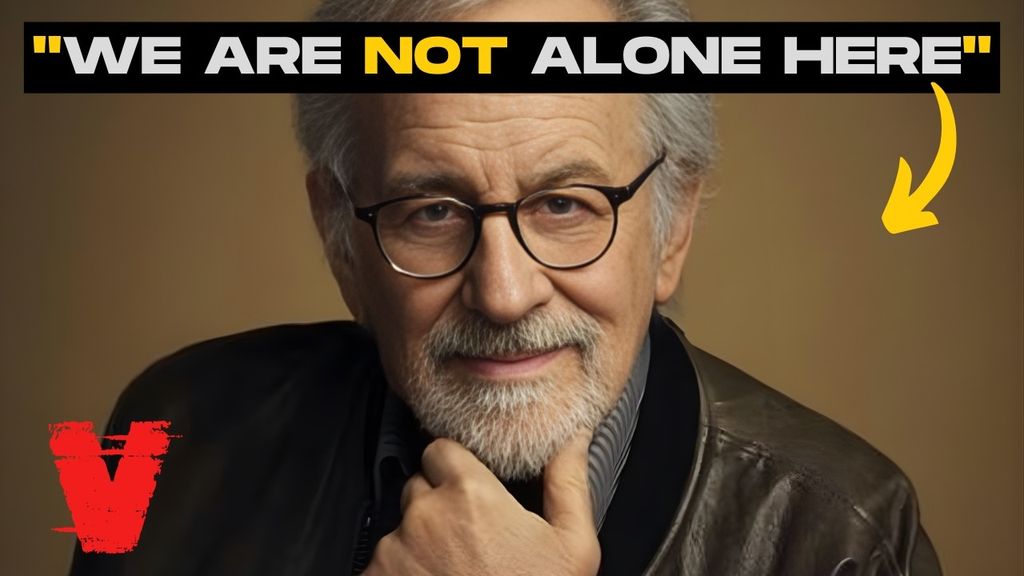
Spielberg Signals Future-Set ‘Disclosure Day’ While Emphasizing Societal Impact of Confirmed UAP Contact


The question of UAP data transparency has long been contentious, with experts and observers weighing incomplete public records against persistent reports from military and civilian witnesses. Within that backdrop, Steven Spielberg’s comments about his forthcoming film ‘Disclosure Day’ point to a narrative centered on how society might respond if longstanding interaction with non-human intelligences were officially acknowledged. His framing emphasizes social and theological reverberations over spectacle, signaling a story that treats disclosure as a civilizational stress test rather than a purely cinematic reveal.
A notable cue emerged when Spielberg discussed the eras in which his films are set. While acknowledging he rarely tackles contemporary settings, he paired ‘Disclosure Day’ with ‘Minority Report’ when citing future-oriented works. Host Patrick Scott Armstrong interprets this as a strong indicator that ‘Disclosure Day’ primarily unfolds in a future timeline. That inference challenges assumptions drawn from trailers showing a flip phone and a line about “7 billion” people—context many used to argue for a past setting. Armstrong counters that such details may reflect flashbacks, stylistic choices, or narrative devices rather than the film’s base timeline.
Spielberg also outlined the film’s core societal inquiry, noting it considers the “social dislocation” that could follow an announcement of evidence—and even decades-long interaction—related to non-human intelligences. He specifically flagged theological implications, suggesting the narrative will explore how belief systems and institutions might adapt or fracture under authoritative confirmation. Trailer imagery of advanced head-mounted technology and a controlled interaction sequence further supports an emphasis on systems, tools, and governance structures capable of managing extraordinary information and its human consequences.
Despite the gravity of these themes, Spielberg rejected the notion that he possesses privileged experiential insight. He stated he has never seen a UFO and has had no close encounter beyond the first or second kind, reinforcing that his perspective is informed by public reporting and cultural discourse. He credited the 2017 New York Times reporting on Navy encounters—covering the Nimitz case and authored by Helene Cooper, Ralph Blumenthal, and Leslie Kean—with rekindling his interest in the subject. He further distinguished ‘Disclosure Day’ as his first UFO-focused film in roughly half a century since ‘Close Encounters of the Third Kind,’ differentiating it from alien-centric titles like ET or War of the Worlds.
Historical anecdotes continue to shape public perception. A frequently cited story recounts President Ronald Reagan addressing national security advisers at a White House screening of ET, quipping—without a smile—that some in the room knew the film’s content was “absolutely true.” While such remarks are unverifiable and often retold, they illustrate how presidential lore and entertainment have long intersected in the UAP narrative space.
Speculative commentary surrounding ‘Disclosure Day’ persists, including unsupported claims that the production could incorporate authentic UAP material or align with broader governmental signaling. Armstrong presents these ideas as conjecture rather than established fact, emphasizing the absence of corroborating evidence. The program also included a caller’s 2001 account from near Flagstaff, Arizona, describing a hovering object and tree damage, along with references to reports in the Secret Mountain Wilderness area; the account remains anecdotal and unverified.
Taken together, the emerging picture suggests a film that uses a future setting to examine the institutional, cultural, and theological pressures that formal disclosure could trigger. By foregrounding social impact over insider revelation, ‘Disclosure Day’ appears positioned to engage ongoing debates about transparency, evidence standards, and how societies metabolize disruptive information about anomalous phenomena.
Key Moments
- 03:37Steven Spielberg states he has a "very strong sneaking suspicion that we are not alone here on Earth right now," framing the film’s thematic direction.
- 05:51A retold Reagan anecdote from an ET White House screening includes the line that some in the room "know that everything on that screen is absolutely true," delivered as a joke without a smile.
- 07:13Spielberg references a June 12 release date and notes he has never personally witnessed a UFO, undercutting assumptions that he holds privileged experiential knowledge.
- 08:02He clarifies he has had no close encounter beyond the first or second kind, reinforcing that his views are informed by reports rather than direct experience.
- 10:56Spielberg describes the film as considering "the social dislocation"—including theological disruption—that could follow an announcement of evidence and decades-long interaction.
- 12:01In comparing his past and future-set works, Spielberg groups ‘Disclosure Day’ with ‘Minority Report,’ implying the new film’s primary timeline is in the future.
- 13:47A trailer line referencing "7 billion" people led some to assume a past setting; Armstrong notes the UN marked 7 billion in 2011, but argues the base timeline still appears future-set.
- 16:15Trailer imagery of advanced head-mounted tech and a scene greeting "Jane" suggests speculative future technology; Armstrong theorizes possible time-bridging elements.
- 18:06Spielberg cites the 2017 New York Times UAP reporting (by Helene Cooper, Ralph Blumenthal, and Leslie Kean) and the Navy’s Nimitz case as rekindling his interest.
- 19:47He characterizes ‘Disclosure Day’ as his first UFO film in about 50 years since ‘Close Encounters of the Third Kind,’ distinguishing it from his alien-centric films.
- 22:28External commentators speculate—without evidence—that the film could incorporate real UAP material; Armstrong treats this as conjecture rather than likelihood.
- 26:25A caller recounts a 2001 Flagstaff-area sighting with snapped trees and references to activity near Secret Mountain Wilderness, presented as anecdotal.
Related Topics
Links & References
- Source clip referenced in the discussion; related to Spielberg remarks or promotional material.
- Additional source video or trailer referenced in the analysis.
- Additional source video or trailer referenced in the analysis.
- Additional source video or trailer referenced in the analysis.
- Additional source video or trailer referenced in the analysis.
- Official website for the VETTED program hosted by Patrick Scott Armstrong.
- Channel membership page linked for audience support.
- Patreon support page for VETTED.
- Merchandise store linked by the program.
- VETTED community Discord server.
- Official X/Twitter account for VETTED.
- VETTED Daily Videos playlist.
- VETTED Interviews playlist.
 Continue with Google