
Claims of a ‘Door of Light’ at Papoose Lake Resurface as Debate Rekindles Over Bob Lazar’s Testimony


The question of UAP data transparency has long been intertwined with secrecy surrounding U.S. test ranges, especially the Nevada Test Site and the dry lakes of southern Nevada. In a discussion exploring archival material and on-the-record accounts, the story of archaeologist Jerry Freeman resurfaced as a potentially notable, if unverified, episode involving alleged anomalous activity around Papoose Lake, the location linked in popular lore to Bob Lazar’s S-4 narrative.
According to reporting recounted by George Knapp and Jeremy Corbell, Freeman was not pursuing UFOs in 1997; he entered restricted areas to document remnants of 1849 pioneer routes, including an inscription he claimed to discover near Papoose. During the daytime, he described Papoose as a nondescript dry lakebed. At night, however, his account diverged sharply: Knapp says Freeman described a bluish, illuminated ‘door’ appearing briefly “in space,” with no obvious structure attached. Corbell and Knapp further assert that Freeman later died of cancer, which they attribute to radiation exposure encountered during his cross-desert passage. That link remains a claim within their narrative; no independent medical documentation was presented in the discussion.
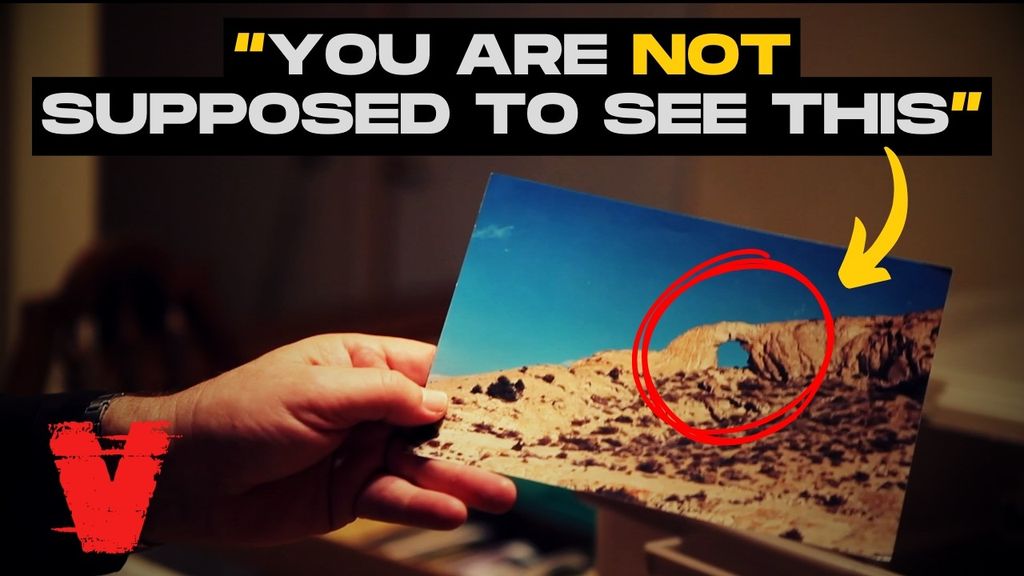
A separate, more conventional thread in Freeman’s materials centers on a natural stone arch near Yucca Mountain. Freeman reportedly photographed the formation and argued the Department of Energy had denied its existence to discourage visitation in a sensitive area long associated with nuclear waste policy. He petitioned Senator Harry Reid to acknowledge the site and allow controlled public access. If accurate, the dispute highlights a recurring point of friction: the balance between safety, classified site protection, and legitimate historical or geological interest within or adjacent to restricted federal lands.
Archived audio of Freeman’s call to Art Bell’s Coast to Coast AM adds detail but also underscores the evidentiary gap. Freeman described perimeter security lights, intermittent lights opening and closing nearer to Papoose’s center, and ground vibrations lasting up to two minutes. He openly speculated that the rumbling could stem from underground testing or potentially from Groom Lake rather than something exotic. Notably, the host reviewing these materials observes a discrepancy between the vivid ‘door in space’ phrasing reported by Knapp and what is directly captured in Freeman’s own recorded description, where the emphasis was on lights and seismic-like vibrations rather than an explicit interdimensional portal. This divergence illustrates the difficulty of reconstructing anomalous events from memory, secondhand recounting, and partial records.
The broader implications for UAP research center on corroboration. Knapp says he holds Freeman’s photos, notes, and home video, but the underlying media and provenance have not been made public for independent analysis. Without chain-of-custody documentation and accessible high-resolution imagery or instrument data, extraordinary interpretations remain speculative. Environmental factors also warrant consideration: Freeman reportedly endured heat stress and water scarcity during a prolonged desert trek, conditions that can degrade perception and judgment. At the same time, the reported security lighting and sustained ground vibration are fully consistent with a heavily instrumented test range and do not themselves confirm anomalous technology.
Whether Freeman’s claims bolster Bob Lazar’s S-4 account remains contested. Proponents view a non-ufology witness reporting unusual nocturnal activity at Papoose as circumstantial support for restricted projects there. Skeptics counter that Freeman’s 1997 timeline came nearly a decade after Lazar’s allegations became widely known, allowing for potential influence; moreover, the lack of verifiable physical evidence and the ambiguity of the audio-recorded observations leave room for conventional explanations. The question underscores a broader tension in UAP discourse: can anecdote-rich but data-poor episodes meaningfully advance understanding without transparent, testable documentation?
The conversation also revisits whether Lazar should testify under oath in a congressional setting. Knapp recounts asking Lazar about testifying and later advising against it, citing repeated personal attacks over the years and the likelihood that renewed public scrutiny would overshadow substance. Others argue testimony could clarify claims and place them on an official record. The debate reflects an enduring dilemma for high-profile claimants: testimony can elevate visibility and potentially prompt investigatory follow-up, yet it also invites adversarial challenges that may not be answered by decades-old, classified, or otherwise inaccessible materials.
Public interest in Lazar remains high. He appeared onstage at a live Austin event where a trailer for a forthcoming documentary, S4, was shown alongside a virtual reality experience designed to visualize elements of his narrative. Such projects may enhance storytelling and public engagement, but they do not substitute for the evidentiary standards required to resolve contested historical and technical questions. For researchers and policymakers alike, the priority remains primary-source records: contemporaneous documents, sensor data, authenticated imagery, and testimony from custodians of record with access to original program archives.
Going forward, the Freeman materials—photos, notes, and video referenced by Knapp—represent a discrete set of artifacts whose public release could be assessed against provenance and authenticity benchmarks. Independent geological confirmation of the arch’s location and characteristics, along with any agency acknowledgments or denials, would further clarify that facet of the story. On the policy side, the episode illustrates how historical and scientific inquiry often collides with range security and nuclear stewardship obligations; formal mechanisms for controlled access, when feasible, could help reconcile those interests.
As with many cases at the margins of UAP discourse, the Freeman narrative invites careful separation of firsthand observations from interpretive overlays, encourages rigorous publication of underlying evidence, and highlights the importance of institutional transparency. Until verifiable records emerge, the claims remain compelling but uncorroborated accounts situated within one of the most tightly controlled testing environments in the United States.
Key Moments
- 01:48George Knapp and Jeremy Corbell recount the story of archaeologist Jerry Freeman, who traversed restricted Nevada Test Site lands in 1997 while seeking 1849 pioneer inscriptions, not UFOs.
- 01:59Freeman reportedly took a seven-day, ~100-mile trek into restricted Air Force property, ultimately reaching the vicinity of Papoose Lake.
- 03:51Freeman’s daytime observations described Papoose as a dry lakebed, but nighttime activity appeared different, according to accounts.
- 04:30Freeman later died of cancer; Corbell and Knapp link this to radiation exposure during his trek, a causal claim not independently substantiated in the discussion.
- 06:20Knapp relays Freeman’s claim that at night a bluish ‘door’ or portal of light appeared “in space” near Papoose, then vanished—an account Knapp says came from Freeman, who was not a self-identified UFO enthusiast.
- 07:14Timing remains a point of scrutiny: Freeman’s trek occurred nearly a decade after Bob Lazar’s 1989 claims became public, raising questions about potential prior awareness.
- 09:53Freeman asserted the Department of Energy denied the existence of a nearby stone arch; he petitioned Senator Harry Reid to acknowledge it so the public could access the formation.
- 10:25According to Knapp, Freeman took photographs of the arch and Papoose area and lobbied officials to recognize it; Knapp says he retains Freeman’s photos, notes, and home video.
- 14:34In an Art Bell Coast to Coast AM call, Freeman described security lights, lights opening and closing near the lake’s center, and ground vibrations lasting up to two minutes; he speculated it could be underground testing or vibrations from Groom Lake.
- 16:49Knapp says he once asked Lazar about testifying and initially received a yes, but later advised him not to do so to avoid renewed personal attacks and because Lazar “does not owe ufology anything.”
- 22:06Lazar made a rare public appearance at a live event in Austin, where a trailer was shown for a forthcoming documentary titled “S4,” with a companion virtual reality experience described by participants.
- 27:37A closing clip reiterates Lazar’s longstanding claims: work on a ‘sport model’ disc at S-4, reverse-engineering efforts, and an emphasis on the technology rather than questions about origin.
 Continue with Google