
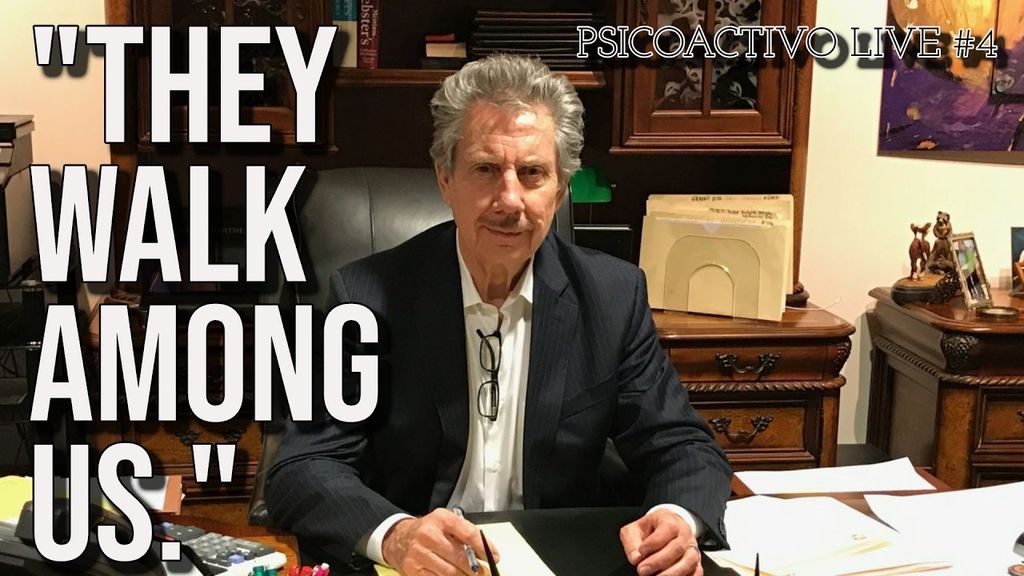
‘They Walk Among Us’: Bigelow Claim, McCasland Disappearance, and Rising Hybrid–Portal Debates Reshape UAP Discourse


The question of UAP data transparency has long been entangled with high-stakes claims about societal stability, religious worldviews, and scientific frontiers. In a multi-party discussion spanning the latest rumor mill and decades-old research threads, analysts revisited a claim attributed to aerospace entrepreneur Robert Bigelow: that non-human intelligences ‘walk among us.’ That assertion, relayed by filmmaker James Fox from an earlier private exchange, is not new to UAP discourse, but its reemergence now intersects with rumors about political-stagecraft, fresh media portrayals, and an unresolved missing-person case that has drawn mainstream attention.
Framing the stakes: from technology to social order
Participants emphasized that the greatest source of disruption may not be the existence of anomalous craft or the recovery of advanced materials but the implications for human identity and social systems. The conversation foregrounded the possibility—still unproven but persistently reported in abduction literature—of human–nonhuman hybrids living within society. Proponents of this perspective argue that such a development would outstrip the shock of hardware revelations, catalyzing profound re-evaluations in religion, finance, and governance. Even those skeptical of hybrid claims acknowledged that public reaction might hinge less on physics and more on existential meaning and control structures. In this light, transparency is not only a matter of releasing sensor data but also of preparing institutions and the public for paradigm-level challenges.
Politics, money, and the rumor economy
Political dimensions surfaced in a claim that Bigelow sought to persuade former President Donald Trump to make a disclosure-focused speech—a report linked in part to social-media postings by Mark Christopher Lee and subsequent commentary by other well-known UAP community figures. A source described as a friend of Bigelow allegedly said plans for a May 1 event were abandoned after texts circulated publicly. None of this has been confirmed by on-record statements from Bigelow or Trump, and the suggestion remains squarely in the realm of rumor. Still, the conversation underscored a wider reality: significant donors with long UAP interests have historically engaged political actors, and the community often learns of these efforts through leaked correspondence and secondary accounts long before any official acknowledgement.
A missing general and search parameters
The disappearance of retired Air Force Maj. Gen. Neil McCasland—formerly associated with advanced Air Force research—was treated with caution. A Fox News segment summarized by UAP commentators noted that McCasland reportedly left his Albuquerque home on foot on February 27, leaving behind his phone and prescription glasses but with his wallet and a .38-caliber revolver missing. A Silver Alert was issued, and authorities said there was no evidence of foul play while multiple agencies searched the area. Some participants discussed broad, population-level risk indicators and missing-person search dynamics—privacy, terrain visibility, drone and FLIR capabilities—cautioning against conflating statistical likelihoods with this specific case or inferring any link to McCasland’s past duties. Speculation that a technical X/Twitter account heavy on propulsion jargon might belong to McCasland—and that it stopped posting the day he vanished—was noted but not verified. The consensus: treat the matter as a search-and-safety case until facts emerge, and avoid imputing UAP-related causation without evidence.
History remembers: scientists, secrecy, and contested records
The dialogue revisited earlier cases in which researchers associated with cutting-edge physics or so-called ‘gravity modification’ work either died or faded from public view. Physicist Ning Li’s early-2000s research and the later scarcity of public updates led to comparisons with the present moment. Field checks reportedly revealed record inconsistencies around her case; however, absent conclusive documentation, participants urged restraint. The pattern at issue is not proof of a conspiracy but a reminder that high-energy claims, security boundaries, and personal privacy can together produce enduring information gaps.
Media’s hand on the tiller
Panelists pointed to a perceived feedback loop between media narratives and public expectations about UAPs. Claims that intelligence-linked messaging has historically shaped UFO portrayals were linked to anecdotal accounts about entertainment industry influence. Whether or not specific assertions withstand scrutiny, the broader observation is defensible: film and television prime audiences with thematic templates, from malevolent invaders to benevolent guides, that later color the reception of real-world claims. This is timely again with the arrival of a Steven Spielberg film—titled ‘Disclosure Day’—whose new trailer emphasizes telepathy/psionics, a whistleblower arc, and the idea of individuals intuitively ‘speaking their language,’ with minimal emphasis on hardware. While an entertainment product is not evidence, the depiction will help reinforce a vocabulary (psi, hybrids, intuitive communicators) that has moved from niche to mainstream UAP discourse.
Religious frameworks: demons, angels, and categorization risks
A segment of the discussion examined a viral appearance by Catholic exorcist Fr. Chad Ripperger, who argues that many abduction accounts mirror patterns seen in demonic possession and that some ‘UFO’ events may be diabolic illusions. He cited testimony that invoking Jesus can terminate abduction episodes. Participants acknowledged that religious frameworks inevitably shape interpretation—especially when phenomena defy known mechanisms—but pushed back on blanket classification. The caution was twofold: first, not to short-circuit inquiry by assigning ‘demonic’ labels that halt investigation; second, to recognize that ancient texts and pre-modern accounts may reflect earnest attempts to describe anomalous encounters through available cultural lenses, not definitive categorizations. The Catholic Church’s own scientific and archival infrastructure, some noted, leaves open the possibility of extraterrestrial life in official statements, even as individual clergy voice contrary certainties.
Abductions, hybrids, and the Jacobs thesis
David Jacobs’ work—controversial within and beyond the UFO research community—was revisited in depth. According to Jacobs, abduction narratives documented over decades display a persistent reproductive focus: sperm and eggs reportedly harvested, gestation allegedly accelerated in artificial environments, and hybrid beings at varying stages of human resemblance purportedly introduced into society. Jacobs contends the phenomenon is intergenerational, global, clandestine, and—if his interviews are taken at face value—goal-directed. The most provocative claim aired was not the existence of hybrids per se, but an asserted neurological asymmetry: that advanced ‘hubrids’ can influence human perception and behavior, whereas humans cannot reciprocate. Even among those skeptical of specific details, several analysts agreed that if anything approaching this claim were verified, it would overshadow traditional disclosure debates and recast policy priorities around biosurveillance, civil liberties, and bioethics. Until supported by independently corroborated evidence—clinical, biometric, or otherwise—the Jacobs thesis remains a high-impact, low-confirmation proposition.
Portals, psionics, and the boundaries of physics
Claims of ‘portals’—varyingly described as guarded installations, transient gateways, or engineered Einstein–Rosen bridges—surfaced repeatedly. Cited sources included the book ‘Skinwalkers at the Pentagon’ and online interviews with figures like Dan Burisch. Assertions ranged from exotic-matter devices to a fatal early human ‘transport’ attempt. Here the divide between lore and laboratory was emphasized. On one hand, a growing number of defense-adjacent documents and contractor reports reflect serious past interest in psychotronic and ‘transmedium’ concepts; a DHS-linked ‘KONA Blue’ document was mentioned as explicitly referencing remote vision and cross-dimensional transfer as aspirational goals. On the other hand, the evidentiary gap remains large: independent, instrumented demonstrations are lacking in the public domain, and key claims rest on testimonies that have not undergone rigorous, external verification. Participants recommended treating ‘portals’ as an investigatory hypothesis requiring falsifiable predictions and reproducible outcomes.
Archaeology and buried narratives
An archaeological thread garnered attention: businessman Matt Bell has reportedly obtained Egyptian government permission to conduct interior studies in the Giza pyramid complex. The significance is procedural more than probative; outsider teams rarely receive such access. Speculation about subterranean chambers, labyrinths, or anomalous objects—including the oft-repeated rumor of a ‘Tic Tac’ artifact discovered in an archaeological context—was noted as part of a cascade of interlinked stories. As with other domains covered, the appropriate posture is to watch for peer-reviewed releases, official permits, technical methods (e.g., muon tomography, ground-penetrating radar), and transparent data-sharing.
Public sentiment and the perception–evidence gap
An informal audience poll reported by the hosts found that about 70% of respondents believe hybrids already ‘walk among us.’ Popular belief, however, is not a proxy for verified fact. The broader public appears increasingly comfortable entertaining extraordinary hypotheses, a shift evident since 2017’s mainstream coverage of military encounters and congressional hearings. Yet several discussants argued that sustained progress depends on the quality of evidence and the disciplines applied—sensor fusion, biometrics, pathology, materials characterization—rather than confidence levels alone.
Policy implications and future lines of inquiry
If even a subset of the strongest claims aired in this conversation were substantiated—hybridization, neurological influence, operational portals, or long-term clandestine programs—the policy consequences would be immense. A brief, non-exhaustive map of implications follows:
- National security and civil liberties: Verification of hybrids or neuromodulatory capabilities would provoke intense debate over surveillance authorities, biomedical screening, and individual rights. Guardrails would be essential to avoid stigmatization or witch hunts.
- Bioethics and health systems: Claims of reproductive intervention would trigger ethical reviews and potentially necessitate specialized clinical protocols. Any validated biological samples would demand chain-of-custody standards and independent labs. - Scientific method and funding: High-risk, high-uncertainty research areas like psi, exotic propulsion, and cross-dimensional models would require transparent funding mechanisms and replication mandates to avoid siloed or politicized science. - Religious, cultural, and educational frameworks: Institutions would face unprecedented reinterpretations of origin narratives and authority structures. Educational curricula would need rapid updates to incorporate vetted knowledge while avoiding doctrinal overreach. - Information integrity: The rumor ecosystem around disclosure—amplified by social media and influencer networks—creates persistent challenges. A reliable, nonpartisan clearinghouse for evidence and retractions alike would be a public good.
A caution on inference and correlation
Repeatedly, the panel circled back to the dangers of conflation. The McCasland case, for instance, commands empathy and methodical search operations; absent facts, importing UAP causation may hinder rather than help. Historical references to scientists who died or faded from view can be misleading if used to imply a pattern where none is demonstrated. The same restraint applies to religious and demonological claims: they offer contexts for meaning, not confirmations of mechanism. Across topics—hybrids, portals, archaeology—the standard remains the same: extraordinary claims demand independently obtained, reproducible, and peer-scrutinized evidence.
Where the discussion leaves the field
UAP research now straddles multiple frontiers: aerospace engineering, neuroscience, anthropology, theology, and media studies. The return of Bigelow’s ‘walk among us’ line encapsulates why disclosure debates persist: the hardest questions are not merely whether unknown craft are real, but who ‘we’ are in the presence of an other—and how existing systems will absorb that recognition. Until primary-source evidence matures, careful reporting can still clarify stakes, separate rumor from record, and map testable hypotheses. In that sense, the conversation reflects a field wrestling not only with secrets, but with its own standards for truth.
Key Moments
- 10:30Filmmaker James Fox recounts that Robert Bigelow told him, without forbidding disclosure at the time, that ‘they are walking among us,’ framing the societal impact as potentially vast across religion, finance, and technology.
- 12:53Panelists explore concerns that genetics and alleged hybrids could be more disruptive than craft or bodies; references include John Burroughs, Kit Green, and speculative links to psi-related traits.
- 15:43Rumor spotlight: Bigelow reportedly encouraged Donald Trump to deliver a disclosure-themed speech; a source close to Bigelow allegedly said planned May 1 remarks were shelved after text messages leaked publicly.
- 19:03Context on Robert Bigelow: hotel magnate, Bigelow Aerospace’s inflatable habitats, funded consciousness/afterlife studies, and recurring interest in remote viewing and anomalous research.
- 29:36Missing person case update: Fox News segment summarized by UAP James reports retired Maj. Gen. Neil McCasland left home on foot without phone or prescription glasses; wallet and a .38 revolver were missing; a Silver Alert was issued; no evidence publicly linking the disappearance to past duties.
- 31:44Risk-profile discussion: a guest with clinical training lays out general statistics on missing-person outcomes and warns against drawing firm conclusions, emphasizing privacy, hopelessness indicators, and the limits of inference.
- 43:14Attention to a technical X/Twitter account rumored to be linked to McCasland due to propulsion-heavy posts; the account ceased posting on February 27, the day he reportedly vanished; attribution remains unverified.
- 53:02Historical parallel raised: physicist Ning Li’s anti-gravity research and subsequent paucity of public updates prompt comparisons; field-checked records reportedly show inconsistencies; core facts remain unclear.
- 01:09:36Archaeology tangent: businessman Matt Bell reportedly secured Egyptian government permission to conduct interior studies at the Giza pyramid, reigniting hypotheses of underground chambers and anomalous artifacts.
- 01:14:52Portal claims escalate in the UAP community; some cite Skinwalkers at the Pentagon and rumors of a guarded site in the U.S. Southwest; speakers advise caution, noting the extraordinary-evidence bar.
- 01:23:03A Dan Burisch clip is cited describing exotic-matter, Einstein–Rosen bridge devices and a failed human test; panelists treat it as an illustrative claim, not established fact.
- 01:34:51New Spielberg ‘Disclosure Day’ trailer analyzed: themes of hybrids, telepathy/psionics, suggestive whistleblowing plotlines, and minimal craft imagery; panelists note the cultural impact of such framing.
- 01:38:58Abduction researcher David Jacobs’ position is revisited: multi-decade pattern evidence, reproductive focus, intergenerational scope, and claims that late-stage hybrids integrate into society with advanced neurological influence.
- 02:01:51Religious lens: Catholic exorcist Fr. Chad Ripperger argues many abduction scenarios mirror demonic possession behaviors; panelists push back on blanket demonology, urging differentiation and evidence.
- 02:37:21Informal audience poll reported by hosts: approximately 70% of respondents said hybrids ‘walk among us’; panelists caution that public belief is not evidentiary.
Related Topics
Links & References
- Mark Christopher Lee’s post cited in rumors about a May 1 disclosure event and Bigelow–Trump outreach.
- BA Crisp’s commentary thread referenced during the discussion.
- Mark’s interview on ‘UFOs Around the World,’ part of the sourcing ecosystem for the Trump–Bigelow rumor.
- ‘Live on Vetted’ episode noted as a related venue for ongoing conversation among UAP commentators.
- Joe Murgia’s post tracking developing claims in the community.
- ‘UFOs Around the World’ scoop video linked as additional context on rumored disclosure efforts.
- Red Panda Koala clip shared as a reference point within the community’s recent exchanges.
- Ask a Pol/Laslo video cited in the discussion about current UAP narratives.
- Psicoactivo host Pavel Ibarra’s X/Twitter account for show updates and sourcing.
- Psicoactivo Podcast channel where many of the referenced analyses originate.
 Continue with Google