
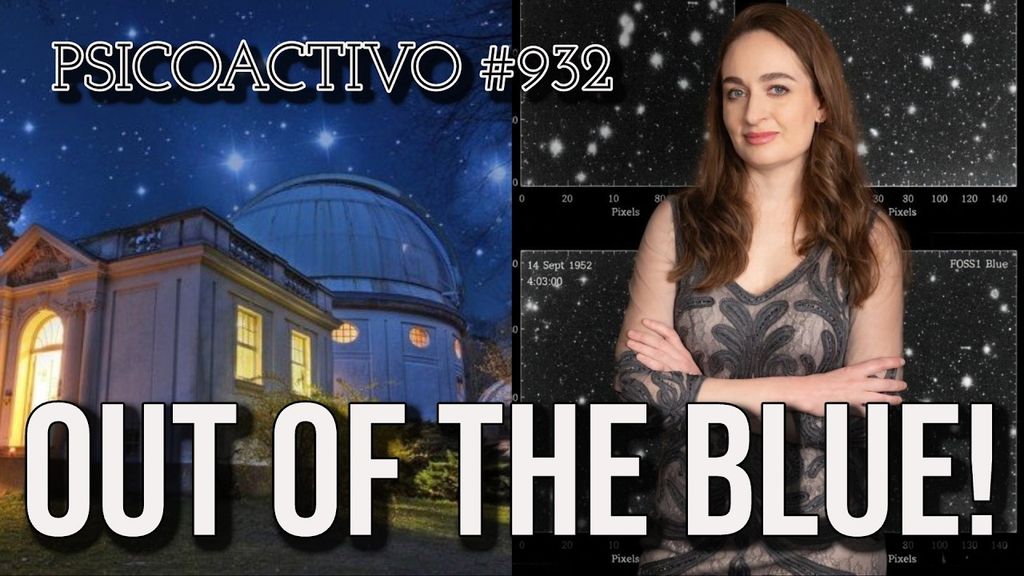
Independent Hamburg Observatory Plate Study Reports Fast Transients, Echoing VASCO/POSS Results


Independent scrutiny of archival sky photography is yielding new signals of short-duration optical transients, adding weight to controversial findings drawn from mid-20th-century surveys. A preliminary analysis by independent researcher and retired NASA developer Ivo Busko reports transient detections on 1950s-era Hamburg Observatory plates that mirror characteristics previously noted by the VASCO project, led by Dr. Beatriz Villarroel, in Palomar Observatory Sky Survey material. The emergence of comparable signatures in a separate European archive advances an essential scientific step: cross-validation across instruments, emulsions, and curation pipelines.
Busko’s draft, posted to arXiv, examines digitized plates from Hamburg’s 1.2 m Schmidt camera provided by the APPLAUSE archive. By comparing paired exposures roughly 30 minutes apart over the same fields, the analysis identifies candidate events analogous to VASCO’s earlier POSS reports. Notably, the candidates exhibit systematically narrower full width at half maximum than nearby stellar point-spread functions—an imaging signature consistent with subsecond optical flashes. The study emphasizes an interpretation compatible with reflections from flat, rotating objects in Earth orbit, situating these signals within the realm of space hardware or debris rather than distant astrophysical sources. The author describes the work as ongoing and preliminary.
Public reactions from within the research community have focused on the value of independent detection. Supporters characterized the Hamburg findings as the kind of cross-archive confirmation needed to separate genuine signals from plate artifacts and processing biases. Dr. Villarroel welcomed the work and encouraged further replication, underscoring the importance of surveying additional historical collections beyond Palomar and Harvard to establish rates, refine selection criteria, and quantify false positives.
These results intersect with broader UAP discourse, where historical data and ambiguous signatures often prompt divergent interpretations. While the draft favors an Earth-orbit explanation for the flashes, the analysis also highlights enduring methodological challenges: heterogeneity across archives, emulsion behavior, digitization artifacts, and confounders such as satellites and aircraft. Participants in the field continue to call for transparent data releases, reproducible pipelines, and coordinated multi-observatory searches to adjudicate competing hypotheses.
The next phase relies on systematic replication: expanding plate-by-plate searches across additional archives, applying standardized metrics such as FWHM comparisons, and pairing archival analyses with modern sky-monitoring to triangulate causes. If convergent results persist across instruments and archives under rigorous controls, the case for a well-characterized class of fast optical reflections linked to orbiting objects will strengthen, clarifying a portion of the transient landscape often entangled with UAP narratives.
Key Moments
- 00:18Announcement of additional corroboration for a peer-reviewed transients paper associated with Dr. Beatriz Villarroel.
- 01:10Identification of Ivo Busko as an independent researcher and retired NASA developer behind the new study.
- 01:33Dennis Åsberg reaction: "Independent detections of similar transients in European plate archives... It’s no longer just Palomar... This is how a signal begins to emerge from the noise."
- 02:04Dr. Villarroel’s public note: "What a lovely surprise this morning."
- 02:26Paper cited: "Searching for fast astronomical transients in archival photographic plates" (draft, March 24, 2026) by Ivo Busko.
- 03:02Study uses Hamburg Observatory archival plates from the mid-1950s taken with the 1.2 m Schmidt camera.
- 03:16Data source: Plates digitized by the APPLAUSE archive, providing images and detection tables.
- 03:29Method: Analysis of plate pairs about 30 minutes apart over the same sky regions to identify fast transients.
- 03:41Result: Evidence of transients similar to those previously reported by the VASCO project for Palomar POSS plates.
- 03:53Key metric: Transients show systematically narrower FWHM than stellar point-spread functions, supporting subsecond optical flash interpretation.
- 04:03Interpretation noted in the draft: Signals are consistent with reflections from flat rotating objects in Earth orbit.
- 04:27Dr. Villarroel’s comment: "It’s super exciting to see Ivo’s work. I hope more astronomers follow his footsteps and replicate the papers."
- 04:53Call for additional observatories worldwide to search their historical plate archives for comparable events.
- 05:16Reported concerns about pushback, including alleged counterintelligence-style pressure and gatekeeping within segments of the community.
- 06:54Anecdote: A European scientist reportedly encountered roadblocks and dismissals when seeking input on aerial photographs of unusual phenomena.
Related Topics
Links & References
- Dr. Beatriz Villarroel’s post acknowledging the independent Hamburg plate detections.
- Draft arXiv paper by Ivo Busko reporting fast transients in Hamburg Observatory archival plates.
- Dennis Åsberg’s reaction emphasizing cross-archive validation.
- Sponsor link mentioned during the program; a UAP-themed trading card project.
 Continue with Google