
Inside the 'Fastwalker' Files: Claims of Space-Based UFO Tracking From Skylab to the DSP Era


The term “fastwalker” has long circulated in military and aerospace circles as shorthand for uncorrelated objects transiting from space into Earth’s environment. Within U.S. defense lore, the code has been associated with North American Aerospace Defense Command (NORAD) and the Defense Support Program (DSP), systems built to detect missile launches and other strategic threats. The larger question is whether these same systems have, over decades, recorded incidents that defy routine classification and whether the underlying data has been adequately examined by independent experts.
A frequently cited case involves the Skylab 3 mission in 1973. Astronauts Jack Lousma and Owen Garriott described observing a bright red object above Earth’s horizon whose luminosity oscillated roughly every 10 seconds. The crew indicated they photographed the object over approximately 10 minutes before both Skylab and the object crossed into darkness, after which it was lost from view. Subsequent documentation raised tensions rather than resolution: NASA’s catalog reportedly indexed four related frames as “satellite unmanned,” while NORAD’s space object catalog was said to show no nearby satellites or debris. Crew recollections, an in-flight diary, and questions about whether internal “Channel A” voice tapes were recording at the time added further ambiguity. The episode remains an instructive example of how critical orbital sensor data, when not fully aligned with astronaut testimony, leaves room for debate without delivering conclusive answers.
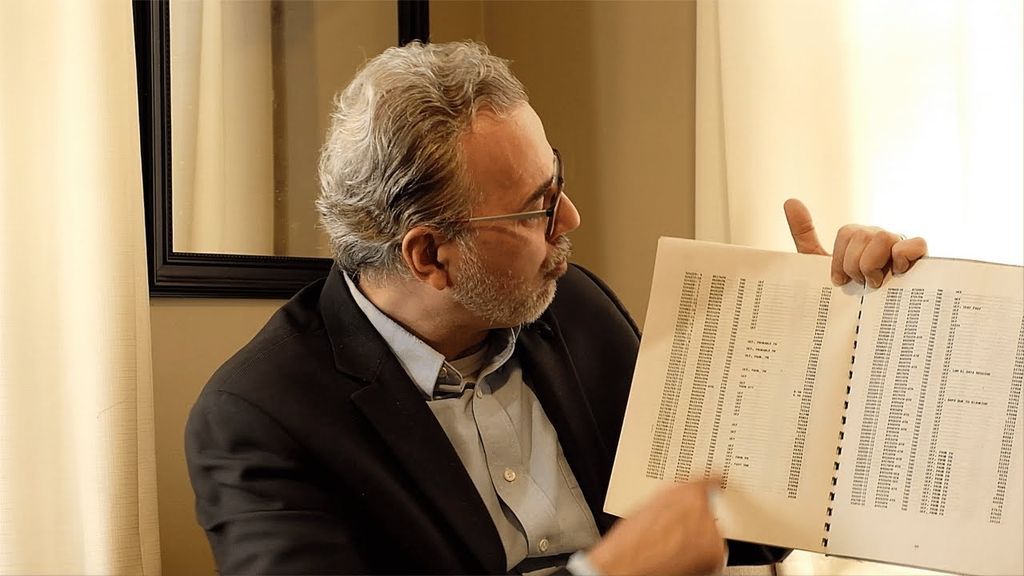
Beyond crewed missions, attention turns to the Cold War’s space-based early warning network. Veteran engineer and investigator Ron Regehr is cited for work involving DSP satellites and an associated Individual Target Event database. According to Regehr, these systems registered hundreds of uncorrelated “fastwalker” detections from the early 1970s through 1991—on the order of three per month—suggesting recurrent events that operators could not match to known spacecraft or debris. One notable entry from May 5, 1984, describes an object that reportedly passed within about three kilometers of a DSP satellite over nine minutes, a proximity that raised questions among analysts about its maneuverability and origin. Such anecdotes, while fragmentary and seldom accompanied by fully declassified datasets, are central to arguments that more thorough scrutiny is warranted.
Correlative evidence is also alleged for the September 1976 Tehran incident, a case widely discussed in UAP literature. Iranian F-4 interceptors attempted to engage a luminous object over the capital, with pilots reporting instrument disruptions during the encounter. Advocates of the DSP-fastwalker connection argue that an infrared detection contemporaneous with this event appears in the satellite records, implying that overhead sensors and airborne reports captured facets of the same occurrence. While this alignment does not by itself establish the nature of the object, it underscores the potential value of cross-domain data—radar, infrared, visual, and telemetry—when assembled into a coherent analytic picture.
The Space Shuttle era added another layer of evidence and contention. NASA missions carried extensive imaging suites, including far-ultraviolet cameras referenced publicly as part of “hitchhiker” payloads and a “GLO” camera described by Mission Control during Endeavour operations. Proponents argue that some Shuttle-era recordings show formations or point-like objects maneuvering beyond what meteorological or orbital debris explanations can easily account for, though such claims are often disputed. Allegations of unusual Shuttle communications—such as a purported code phrase reporting an “alien spacecraft” and the phrase “we have a fire”—have been publicly denied or remain unverified due to limited voice-print quality. These disputes illustrate the evidentiary challenges of parsing archived downlinks, compressed audio, and mission commentary divorced from the full engineering context.
Dolan and Weir further contend that specialized sensors—infrared, ultraviolet, and precision optical star trackers—were capable of detecting anomalies entering or operating in near-Earth space. If older-generation platforms could register such events, they argue, contemporary systems with superior sensitivity and multi-spectral coverage should be even more revealing. Requests for clarity often run into classification barriers, however, leaving the public record dominated by secondhand documentation, debriefing summaries, and catalog annotations rather than raw, high-fidelity collections.
Skeptics point to alternative explanations that must be ruled out decisively: untracked debris, sensor glints, satellite maneuvers, ionospheric or auroral phenomena, and processing artifacts. The Skylab inconsistencies—differing duration estimates, terminator crossing order, and ambiguous catalog labeling—demonstrate how even high-profile cases can resist tidy conclusions. Conversely, advocates maintain that repeated, multi-decade reports of uncorrelated targets across independent platforms justify targeted declassification and scientific review, ideally with chain-of-custody imagery, calibration data, and synchronized timelines across sensors and commands.
The broader implication is clear: without transparent access to raw sensor data and rigorous cross-validation, assessments of “fastwalker” incidents will continue to hinge on partial records and contested interpretation. A structured release of historical DSP event logs, associated spacecraft health and calibration files, and full-resolution mission imagery—along with contextual engineering notes—would enable independent analysts to test naturalistic and prosaic hypotheses against claims of extraordinary maneuvering or origin. Until then, the fastwalker narrative will remain an assemblage of intriguing signals, notable witness accounts, and unresolved gaps in the public evidentiary trail.
Key Moments
- 01:42NORAD used the code name “fast walker” to designate unidentified objects entering Earth’s atmosphere from space, a terminology reportedly employed since the late 1970s.
- 02:44Skylab, launched May 14, 1973, provided a platform for Earth and solar observations, eventually hosting the Skylab 3 crew that reported an unusual red object.
- 05:47Skylab 3 astronauts Jack Lousma and Owen Garriott observed and photographed a bright red object with a 10-second oscillation in brightness for about 10 minutes before losing sight at orbital sunset.
- 09:00NORAD’s space object catalog reportedly showed no known satellites or debris near Skylab during the event; NASA later indexed four frames as “satellite unmanned,” while crew accounts and tape-recording status appeared inconsistent.
- 11:30Dolan frames the inquiry as constrained by secrecy, urging careful, evidence-led inference while acknowledging uncertainties and the need for better public access to high-resolution data.
- 12:04Dolan asserts that NORAD has tracked objects arriving from deep space and parking in Earth orbit, citing the case of Simone Mendez, who he says encountered restricted NORAD data and faced subsequent investigation.
- 13:59Aerojet engineer and UFO investigator Ron Regehr is cited regarding Defense Support Program (DSP) satellites as effective detectors of “fastwalkers,” with a notable May 5, 1984, event where an unknown object allegedly passed within ~3 km of a DSP platform over nine minutes.
- 16:02Regehr’s access to an Individual Target Event (ITE or “itty bitty”) database reportedly showed about 283 fastwalker events tracked from 1973 to 1991—roughly three per month—described as uncorrelated targets.
- 18:07One DSP-recorded event is said to correlate with the September 1976 Tehran incident involving Iranian F-4 interceptors, during which pilots reported system failures near a luminous object.
- 26:23NASA’s Space Shuttle program executed 135 missions, carrying extensive imaging systems, including exterior and robotic-arm cameras capable of capturing high-contrast phenomena.
- 31:17STS-29 is associated with contested claims of unusual communications, including an alleged code phrase “we have a fire” and a purported statement about an “alien spacecraft,” which NASA is said to have denied.
- 35:02Weir emphasizes the Shuttle fleet’s use of specialized cameras—including far-ultraviolet systems—arguing that several disputed spaceborne “UFO” videos originated from government-operated, mission-integrated sensors.
- 38:57Mission Control described a “GLO” camera in Endeavour’s payload bay as part of an extreme ultraviolet experiment suite, with footage showing multiple objects moving above Earth.
- 39:44Canadian broadcaster Martin Stubbs reportedly intercepted NASA downlinks in the 1990s, compiling Shuttle-era footage that UAP researchers consider anomalous.
Related Topics
Links & References
- Author page for Richard M. Dolan’s books referenced as background to his research.
- Membership site cited for accessing Dolan’s exclusive analyses and archives.
- Channel membership link supporting ongoing independent UAP research.
- Richard Dolan’s X (Twitter) profile for updates related to UAP investigations.
- Facebook page for the Intelligent Disclosure channel’s content and announcements.
- Instagram profile with program highlights and research-related posts.
 Continue with Google