
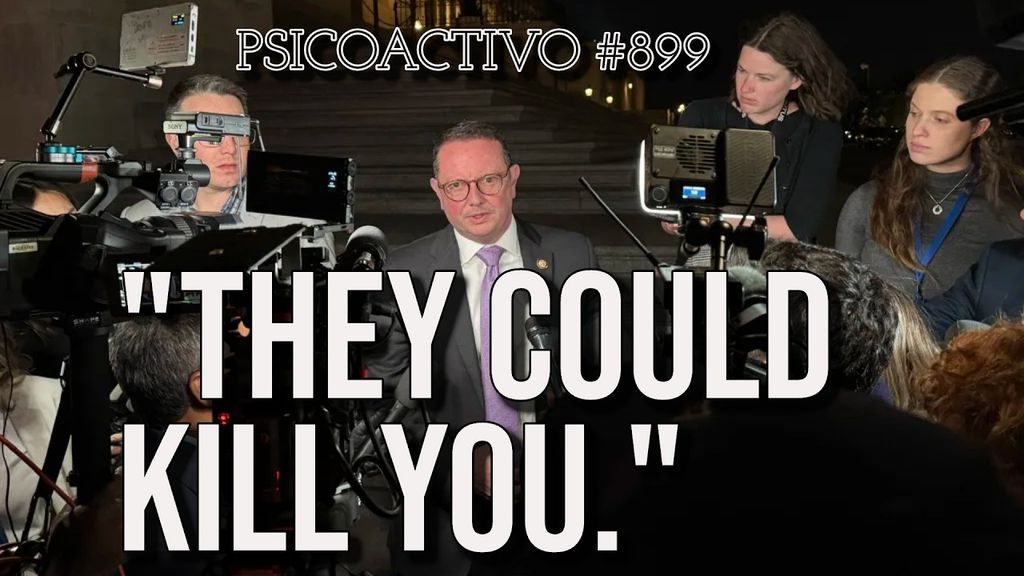
Rep. Eric Burlison Announces Bipartisan Push for Specific UAP Files, Cites Warning Against Naming Alleged Program Gatekeepers


Congressional oversight into Unidentified Anomalous Phenomena has intensified, with Rep. Eric Burlison announcing a bipartisan request for specific UAP files and metadata while also recounting a warning he says he received against publicly naming alleged gatekeepers tied to legacy programs. The twin themes—formal demands for records and concerns about intimidation—underscore the ongoing tension between transparency efforts and the guarded nature of special access programs.
According to Burlison, House members have sent a letter seeking defined UAP materials, including file names, dates, and associated metadata, from senior figures across government and the Department of Energy. He described the request as bipartisan, listing signatories from both parties and noting that two signers sit on the House Intelligence Committee—a detail that signals targeted institutional interest rather than a purely activist push. Burlison also linked his optimism to a recent social media statement on UAP by former President Donald Trump, saying conversations with intelligence personnel suggested a perceived green light for greater engagement. He added that public hearings would occur as needed, implying a strategy focused on document acquisition and interviews before formal proceedings.
The pursuit of possible legacy programs ran headlong into safety concerns during a public Q&A when a question named several individuals as potential gatekeepers, including Lt. Gen. Donna Shipton, Randall G. Walden, Russell E. Wiler, Terry Phillips, and Lee M. Russ. Burlison said he maintains his own contact list for outreach and vetting. He then recounted that a former special operations and intelligence professional advised him to remove two names and never speak about them again, claiming those individuals would have no problem resorting to lethal means. The remark, presented by Burlison as a warning rather than a direct threat, nonetheless raised alarms about potential intimidation in an area where whistleblower protections and due process are already a focal point of reform efforts.
Outside researchers have attempted to map the institutional terrain around such programs. In separate remarks, the researcher known as UAP Gerb outlined an alleged career timeline for security official Terry Phillips, describing roles in the Air Force Office of Special Investigations and its Special Projects element responsible for safeguarding Air Force special access programs, followed by senior security leadership positions at major defense contractors. Gerb further alleged reprisals against prospective whistleblowers associated with AFOSI/PJ and referenced past FBI collaboration with Air Force security elements to protect sensitive projects. These assertions remain allegations; they underscore why investigators emphasize sworn testimony, document trails, and clear chains of custody before drawing conclusions about the existence or handling of nontraditional aerospace materials.
The broader community dialogue also touched on accountability in public-facing research. Questions were raised about whether high-profile storytellers should address substantive critiques from other investigators, illustrating the field’s push for rigorous source evaluation even as new claims surface.
What happens next will likely hinge on formal responses to the congressional letter and whether agencies provide the requested materials or negotiate access terms. Clear documentation standards, coordinated interviews, and protections for witnesses will determine whether the inquiry yields verifiable evidence suitable for public oversight. As with prior government engagement on UAP, progress will depend on balancing national security equities with a credible path to transparency, ensuring that allegations of intimidation are reported and investigated, and that any claims—whether technical, historical, or institutional—are tested under oath and against the record.
Key Moments
- 01:48Accountability within the UAP community is raised, with criticism that filmmaker James Fox did not address researcher Ronnie Vernet’s claims about the Varginha case when prompted.
- 03:22Burlison expresses optimism after a UAP-related post by former President Donald Trump, stating he has spoken with intelligence community sources who view it as a 'green light' and predicting near-term changes; he adds hearings will occur 'when we need to have a hearing.'
- 04:28A public forum question names potential 'legacy program gatekeepers,' listing Lt. Gen. Donna Shipton, Randall G. Walden, Russell E. Wiler, Terry Phillips, and Lee M. Russ, citing affiliations with AFOSI, Special Projects, SAP security, NRO, and defense contractors.
- 05:50Burlison says he maintains a list of people to contact and recounts being told by a former special operations/intelligence figure to remove two names and 'never talk about those two people ever again,' adding they 'would have no problem' with him being killed; he declines to identify the source.
- 07:20The need to report threats to authorities is emphasized, underscoring concerns about potential intimidation surrounding alleged legacy programs.
- 08:57Researcher 'UAP Gerb' outlines Terry Phillips’s purported career trajectory: Air Force officer; AFOSI and AFOSI/Special Projects (PJ); Air Force SAP security director; later at SAIC and then Northrop Grumman as VP for security.
- 11:48Gerb alleges reprisals against prospective whistleblowers around AFOSI/PJ, including threats to livelihoods and legal pressure, and references historical FBI cooperation under a 'Guardian Angel' program; these claims are presented as allegations.
- 12:26Burlison indicates he recognized some names from the gatekeeper list but does not specify which.
- 13:43Burlison announces a letter sent to Sen. Marco Rubio, Pete Hegseth, Tulsi Gabbard, and Chris Wright at the Department of Energy seeking UAP-related files.
- 14:07He lists signatories as bipartisan House members including Nancy Mace, Eli Crane, Scott Perry, Anna Paulina Luna, Tim Burchett, 'Subramanyam' (Democrat), and Andre Carson, noting that two are on the Intelligence Committee.
- 14:38According to Burlison, the letter requests specific file names, dates, and metadata on UAP materials believed to exist, seeking congressional access to the underlying videos and documents.
- 15:20The host questions whether geopolitical priorities could delay responses to UAP records requests, while reiterating the importance of continuing oversight.
Related Topics
Links & References
- Anomalous Coalition event featuring a public Q&A in which Burlison addressed gatekeeper questions and announced a bipartisan UAP records letter.
- Ask A Pol coverage on claims that a Trump statement signaled a 'green light' for intelligence community engagement on UAP.
- Area 52 discussion where 'UAP Gerb' outlines allegations about AFOSI/PJ, Terry Phillips, and historical security programs.
- Clip highlighting Burlison’s announcement of a bipartisan letter seeking specific UAP files and metadata.
 Continue with Google