
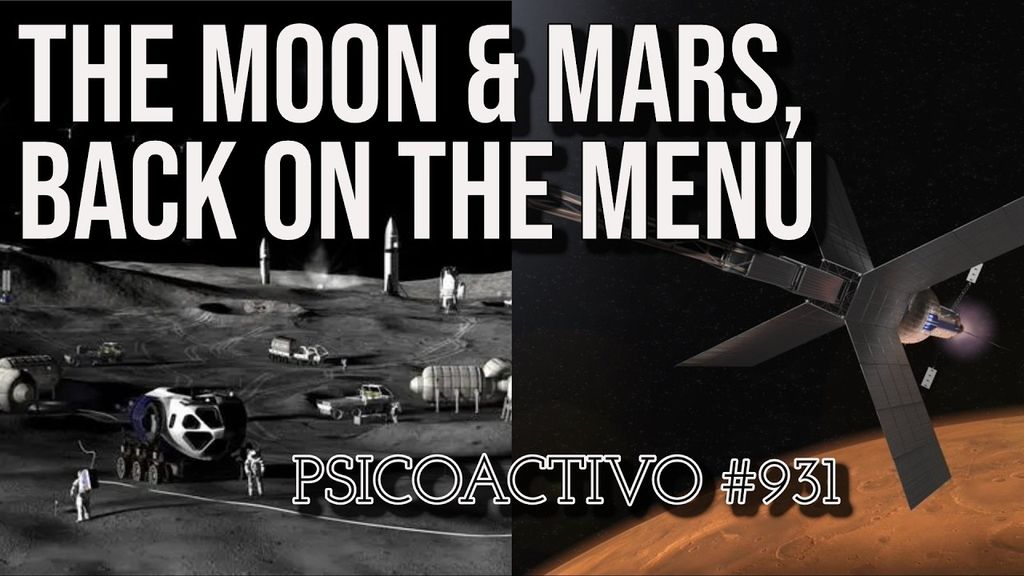
NASA Sets $20 Billion, Seven-Year Course for a Permanent Lunar Base and Nuclear Mars Craft, Scrapping Gateway Outpost


NASA’s strategic posture toward human exploration is shifting from short-duration sorties and orbital staging to a sustained surface presence, with the agency announcing a $20 billion investment over seven years to establish a permanent lunar base. The decision includes cancelling the Lunar Gateway orbital outpost and redirecting its components and funding toward the Moon’s surface, with the program framed as a proving ground for technologies needed for eventual Mars expeditions. The announcement places renewed emphasis on cislunar infrastructure, resource utilization, and international and commercial collaboration under a reconfigured Artemis architecture.
The technical plan is organized into three phases designed to scale capability and reduce risk. Phase one focuses on expanding the cadence and scope of Commercial Lunar Payload Services and the Lunar Terrain Vehicle program to stress-test mobility, power, communications, navigation, and surface operations while increasing science return. Phase two transitions to semi‑habitable infrastructure and routine logistics, with anticipated contributions such as a pressurized rover from Japan’s JAXA. Phase three leverages high-mass cargo deliveries via Human Landing System variants to emplace permanent infrastructure, including an Italian-proposed habitation module. Isaacman underscored the staged approach, stating that “the moon base will not appear overnight” and that approximately $20 billion would be invested through dozens of missions executed with international and commercial partners.
NASA’s surface-first pivot is justified as both a scientific imperative and a policy response to mounting geopolitical competition. Establishing power systems, habitats, and logistics chains on the Moon enables in‑situ resource utilization—particularly extracting ice for water and propellant—which can reduce deep-space mission costs and anchor a broader cislunar economy. The agency also previewed a nuclear-powered spacecraft concept geared toward Mars operations, with promotional material highlighting rotorcraft as part of a persistent robotic presence. Taken together, the Moon base and Mars concepts position the lunar surface as a practical testbed for life support, autonomy, and propulsion technologies needed for interplanetary exploration.
The reallocation away from Gateway carries implications for international coordination and industrial planning. Repurposing hardware and commitments may smooth the transition, but it will require detailed integration to preserve partner roles and mission objectives. The plan names specific partner contributions, suggesting a continued coalition approach despite architectural changes. Commercial providers are expected to play a major role across cargo delivery, mobility, and surface systems, consistent with recent procurement models that seek to distribute risk and accelerate timelines through private-sector innovation.
Security, transparency, and UAP discourse intersect with the exploration agenda. Isaacman stated he is unaware of NASA holdings that would merit declassification regarding UAPs and reiterated that the agency has no evidence of extraterrestrial civilizations. He further suggested many UAP encounters may reflect misidentifications or classified test programs, noting historical precedents when advanced aircraft were mistaken for anomalous objects. The discussion also referenced a Politico report characterizing NASA’s evolving intelligence alignment and a retired general’s unverified claim that China is mining helium‑3 on the Moon’s far side, highlighting the need for cislunar domain awareness—such as lunar relay and observation satellites—to independently validate activities beyond direct line of sight.
While the goals are ambitious, the schedule, budget discipline, and technology maturation remain critical variables. Power generation, radiation protection, autonomous construction, dust mitigation, and closed-loop life support each represent significant engineering hurdles. Nuclear propulsion for Mars could reduce transit times and expand mission envelopes, but it entails regulatory, safety, and flight‑test complexities. If realized, the combined approach could normalize operations beyond low Earth orbit, deepen scientific return, and establish governance and industrial norms for sustained human activity off Earth. Conversely, underperformance against timelines or costs would revive longstanding debates over program stability, opportunity cost, and transparency in both exploration and national-security contexts.
Key Moments
- 01:02The host cites a Politico article asserting NASA was officially designated an intelligence agency, framing concerns about secrecy.
- 01:44Historic Apollo 11 press conference footage is referenced to contextualize NASA’s legacy and public perceptions from the first lunar landing era.
- 05:26The host claims the U.S. 'lost' the capability to return to the Moon and notes the long gap since Apollo, raising questions about programmatic continuity.
- 05:36A retired general on the Shawn Ryan Show is cited alleging China is mining helium‑3 on the Moon’s far side—an unverified claim presented as a strategic concern.
- 08:14On UAPs, Isaacman is quoted: "We don't have any evidence of any civilizations beyond Earth, let alone advanced civilizations," adding he is not aware of NASA having material to declassify.
- 10:48Isaacman suggests many UAP reports may involve national-security programs or misidentifications, asking why alleged visitations would focus near U.S. naval bases.
- 11:20NASA unveils a $20 billion plan to build a permanent base on the Moon within seven years, positioning it as a pivot to sustained surface operations.
- 11:42Plans for the Lunar Gateway orbital outpost are cancelled; resources and components are to be repurposed to support the surface base.
- 12:24NASA ties the base to in‑situ resource utilization, such as extracting lunar ice for water and fuel, and to establishing a cislunar economy that underpins eventual Mars missions.
- 14:32Isaacman outlines a three‑phase approach: expand CLPS/LTV payloads and testing (Phase 1), transition to semi‑habitable infrastructure and routine logistics with partners like JAXA (Phase 2), and deploy large cargo HLS capability and permanent infrastructure including an Italian habitation module (Phase 3).
- 15:37Quote: "We will invest approximately $20 billion over the next seven years… The moon base will not appear overnight," emphasizing a deliberate, multi‑mission build‑out with commercial and international partners.
- 16:10Speculative topics surface, including Ingo Swann’s remote‑viewing claims about the Moon, presented as conjecture rather than established fact.
- 16:46A NASA promo highlights a nuclear‑powered spacecraft concept to support Mars exploration and rotorcraft operations, framed as converting 'science fiction' into operational reality.
- 19:48The host anticipates major roles for commercial providers like SpaceX, while expressing personal skepticism about public disclosures on propulsion and program aims.
- 21:39Additional science missions are listed by Isaacman, including the Nancy Grace Roman Space Telescope, Dragonfly to Titan in 2028, future Venus missions, and Mars payloads.
Related Topics
Links & References
- NASA Moon Base project announcements and updates referenced in the discussion.
- NASA post associated with the Mars nuclear-powered spacecraft concept.
- Statement attributed to Administrator Jared Isaacman regarding the lunar base and program pivot.
- Apollo 11 press conference used for historical context.
- Shawn Ryan interview with a retired general citing unverified claims about lunar helium‑3 mining.
- Politico article referenced regarding NASA’s intelligence-related role.
- Sponsor link for Anomalous Cards documenting notable UAP events.
- Psicoactivo Podcast on Spotify for additional episodes and context.
 Continue with Google