
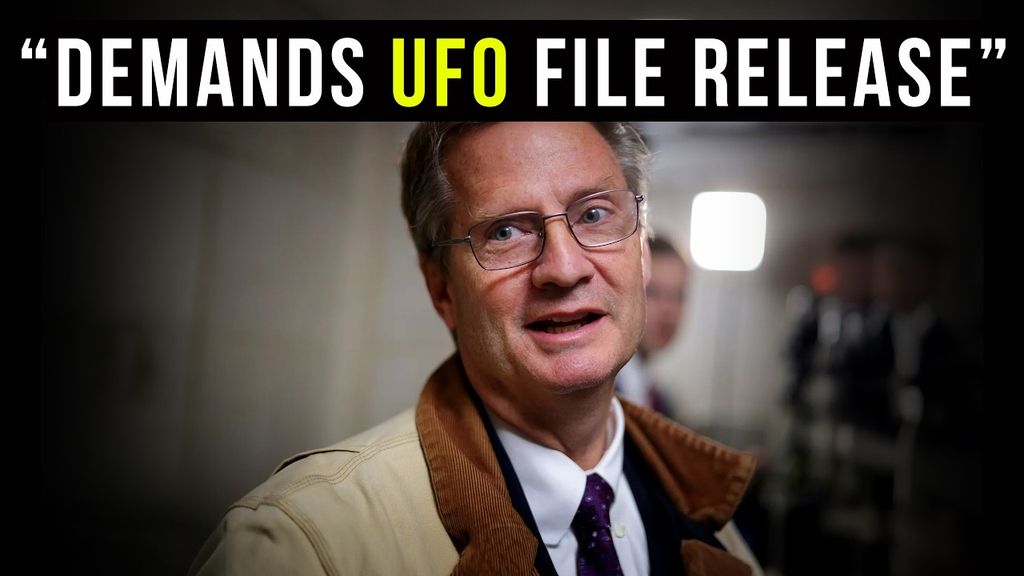
Congressional Push for UAP File Release Converges with Defense-Tech Analysis and Shifting Scientific Views


The question of UAP data transparency has long been contentious, intersecting national security, politics, and science. Current debates reflect a broader reassessment of longstanding assumptions, as policymakers push for clarity, defense-focused analysts weigh the evidence against known capabilities, and scientists recalibrate expectations about life beyond Earth.
Rep. Tim Burchett’s appeal for a targeted presidential declassification order underscores a practical barrier long cited by researchers: potential placement of relevant materials within private defense contractors. Such holdings may be insulated from Freedom of Information Act requests, making a broad directive insufficient. Burchett maintains the authority to declassify exists but says effective action will depend on precisely identifying what to request and where to find it. Within national security circles, a data-driven critique of the adversary hypothesis emphasizes consistency and consequence. A venture investor with experience across U.S. defense programs argues that reported performance characteristics—extreme accelerations and high-G maneuvers—do not fit historical patterns of human technological development. If a foreign power possessed such capabilities since the mid-twentieth century, the geopolitical landscape would likely reflect that dominance. The investor also recounts a personal sighting near Joshua Tree, mirroring reports of unconventional motion profiles. Concurrently, scientific perspectives have shifted markedly. Decades of discoveries—from exoplanets to extremophiles—have broadened the plausible habitats for life. Physicist S. James Gates Jr. notes that most scientists he encounters now consider intelligent life beyond Earth a reasonable likelihood. Work highlighted by MIT’s Sara Seager advances the case that microbial life could exist in Jupiter’s atmosphere, signaling how incremental, evidence-based steps are redefining the bounds of inquiry. Taken together, these developments intensify calls for coherent, transparent access to high-quality UAP data and records.
Key Moments
- 01:14Rep. Tim Burchett says he urged President Trump to “release everything that I’ve seen” following classified UAP briefings.
- 01:27Burchett recounts telling the president, “Something’s going on… We’re spending billions of dollars on something,” citing a military pilot’s report of an object 14 feet from the canopy.
- 02:06Burchett highlights a structural hurdle: if materials are held by private defense contractors, a broad declassification order or FOIA may not reach them; specificity will be required.
- 02:45He asserts the president has the authority to declassify but may need guidance on what exactly to request; he and others are working to define the scope.
- 03:59National security investor Jake (Mark Ventures) cites data of accelerations and turns beyond known survivable limits, calling the adversary explanation less compelling than a nonhuman origin.
- 04:24He argues the observed characteristics appear consistent from the 1940s to the present, lacking a human-like technology curve.
- 04:39He adds that if Russia or China had fielded such capabilities for decades, global power balances would likely look different.
- 05:29Jake describes a personal sighting near Joshua Tree, observed with his spouse, moving diagonally at unusual speed; he says this is his first public account.
- 07:02Contextual shift: from zero confirmed exoplanets before 1992 to billions of potentially habitable worlds and the discovery of extremophiles expanding where life could exist.
- 07:53Physicist S. James (Jim) Gates Jr. states most scientists he knows consider intelligent life beyond our solar system likely.
- 08:29Gates references MIT’s Sara Seager presenting observational and chemical arguments for not ruling out microbial life within Jupiter’s atmosphere.
- 10:17Gomez frames the convergence of politics, defense-tech data, and evolving science as raising questions about continued institutional resistance to UAP disclosure.
Related Topics
Links & References
- Interview segment featuring Rep. Tim Burchett discussing UAP briefings and declassification.
- Founder’s Story interview with national security investor addressing UAP technology interpretations.
- Conversation with physicist S. James Gates Jr. on scientific perspectives regarding extraterrestrial life.
- UFO breaking news website associated with the report’s publisher.
- Membership page for exclusive content from the publisher.
- Publisher’s X (Twitter) account for updates.
- Publisher’s Instagram account.
- Community Discord server related to the publisher’s content.
 Continue with Google