
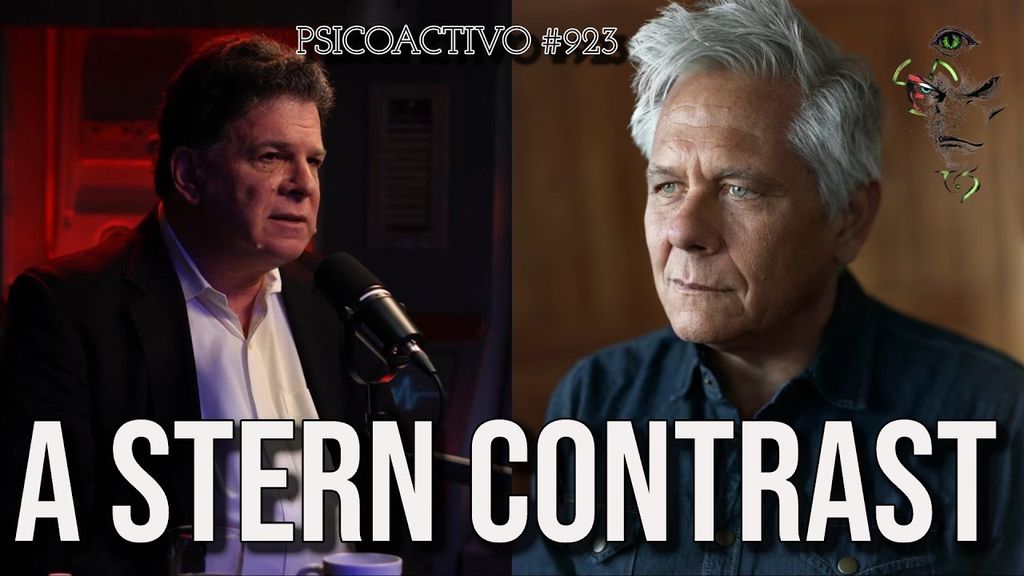
Contrasting UAP Narratives: Walter Kirn’s Optimism, Eric Weinstein’s Skepticism, and Claims of Launch-Adjacent Anomalies


The question of UAP data transparency has long been contentious, with experts and commentators drawing sharply different conclusions from fragmentary evidence and limited access to sensor records. A new exchange underscores this divide: author Walter Kirn expresses confidence in sources who describe persistent anomalous observations, while scientist Eric Weinstein asserts he is being misled about the subject. The disagreement reflects broader challenges in assessing claims that hinge on classified data, unverifiable testimony, and inconsistent public narratives from government and industry.
At the center of the discussion are assertions attributed to a satellite-intelligence professional who allegedly reported recurring detections of objects entering and leaving the upper atmosphere. According to this account, activity intensifies around periods of conflict, historic nuclear testing, and contemporary rocket launches. Kirn adds that launches by commercial providers such as SpaceX purportedly draw particular interest from these objects and that signatures can be observed on instruments. He acknowledges, however, that he has not viewed the underlying recordings and must rely on the credibility of those providing the information. While proponents argue that such reports align with past military-era observations, independent verification remains the crucial missing element.
The industrial dimension is equally important. Commercial space firms and Elon Musk have consistently maintained that their operations are not accompanied by extraordinary aerial activity, at least in public statements noted by observers. Reconciling these denials with claims of classified detections requires transparent mechanisms for controlled data release—an approach that would allow independent analysts to evaluate radar, infrared, optical, and telemetry streams without compromising proprietary systems or national security. Absent such mechanisms, assertions and counterassertions are likely to persist without resolution.
Policy signals add another layer. References to high-profile domain acquisitions and media appearances rekindled debate over whether official channels are inching toward a fuller accounting or simply managing public expectations. Journalists and researchers frequently argue that institutions have developed sophisticated information-control practices over decades. Calls for disclosure are therefore matched by appeals for methodological rigor: concrete data, chain-of-custody documentation, and reproducible analyses are prerequisites if the public is to move beyond hearsay and inference.
Competing frameworks further complicate interpretation. Weinstein emphasizes systemic deception and entertains the possibility of undisclosed terrestrial technology programs rather than non-human intelligence. Kirn, by contrast, is more optimistic about the integrity of his sources and about the value of continued inquiry. Advocates for a comprehensive research agenda contend that progress depends on examining three pillars in parallel: reported craft and performance characteristics; potential biological or material evidence; and firsthand experiencer testimony, including claims of psi-related phenomena. Because the latter occupies a controversial space in mainstream science, standardized research protocols and pre-registered studies would be needed to test such claims objectively.
Speculation also extends to historical and archaeological contexts, with some suggesting that vestiges of prior civilizations or ancient technologies might account for portions of the mystery. References to recent paleoanthropological discoveries and to difficult-to-replicate artifacts are used to argue that human technological lineages may be more complex than assumed. These ideas remain hypotheses and would require robust, peer-reviewed evidence to gain traction. Their prominence nonetheless illustrates the breadth of explanations being entertained in the absence of definitive data.
Pathways to clarity are well known: release of declassified, high-fidelity sensor datasets; cross-correlation of multi-sensor tracks from defense, civil, and commercial platforms; and transparent, peer-reviewed analyses that can be replicated by independent teams. Clearer public statements from space launch providers and government agencies regarding any verified launch-adjacent anomalies would further help adjudicate claims. Until such standards are met, the public conversation will continue to reflect the asymmetries of access and trust that currently divide even well-informed observers.
Key Moments
- 00:16Author Walter Kirn, identified as a contact of David Grusch, is cited for new comments made during an interview with Dr. Drew about the UFO topic.
- 00:42Reference is made to the General McCaslin case and to historical disappearances or deaths of scientists linked to exotic technology (ETH) projects.
- 01:03Following reports that the Executive Office of the President acquired the domains aliens.gov and alien.gov, and after Matthew Brown’s Weaponized interview, Kirn posted a notable tweet about UAP.
- 01:47Eric Weinstein publicly states, “I’m being lied to about this UFO thing constantly,” framing his growing distrust of information he receives.
- 02:00Walter Kirn replies, “I don’t think I’m being lied to… I’ve spent years on the matter,” adding, “Let the ships fall where they may,” and arguing that more knowledge is preferable to less.
- 03:03Kirn recounts a conversation with a satellite-intelligence professional who allegedly said anomalous ‘craft’ are seen entering and leaving the outer atmosphere, especially during wars, nuclear tests, and rocket launches.
- 03:44Kirn claims interest from these objects occurs during SpaceX launches led by Elon Musk and that such activity can be detected on instruments, while acknowledging he has not personally viewed any underlying tapes.
- 04:05Kirn emphasizes he has vetted sources and, in aggregate, believes “there’s something here,” while conceding limits on what he can independently verify.
- 04:38The host argues Weinstein is targeted by conflicting inputs due to his scientific prominence, which may contribute to his skepticism.
- 05:40A working hypothesis attributed to Weinstein is that hidden advanced terrestrial technology—not non-human intelligence (NHI)—may explain UAP, amid claims of institutional secrecy.
- 06:47The discussion advances a ‘trifecta’ research approach: craft, potential biological evidence, and experiencer/psi reports, asserting progress requires examining all three.
- 08:21The claim about anomalous interest near SpaceX and NASA launches is reiterated as originating from high-level sources, including Grusch among Kirn’s contacts.
- 09:50An alternative speculation is raised: that some phenomena or technologies could be ancient, with references to archaeology (e.g., Denisovans) and allegations of institutional gatekeeping.
- 12:35A sponsorship segment promotes ‘Anomalous Cards,’ a 100-card set cataloging notable UAP events of 2025, citing examples tied to hearings and media releases.
Related Topics
Links & References
- Walter Kirn’s appearance referenced in the discussion.
- Public exchange between Eric Weinstein and Walter Kirn regarding UAP credibility.
- Anomalous Cards product site mentioned in the sponsorship segment.
- Psicoactivo Podcast home at KGRA.
- Listen to Psicoactivo Podcast on Spotify.
- Consolidated support and social links for the host.
- Host’s account on X.
- Psicoactivo Podcast account on X.
- Membership page for Psicoactivo on YouTube.
- Direct support via PayPal.
 Continue with Google