
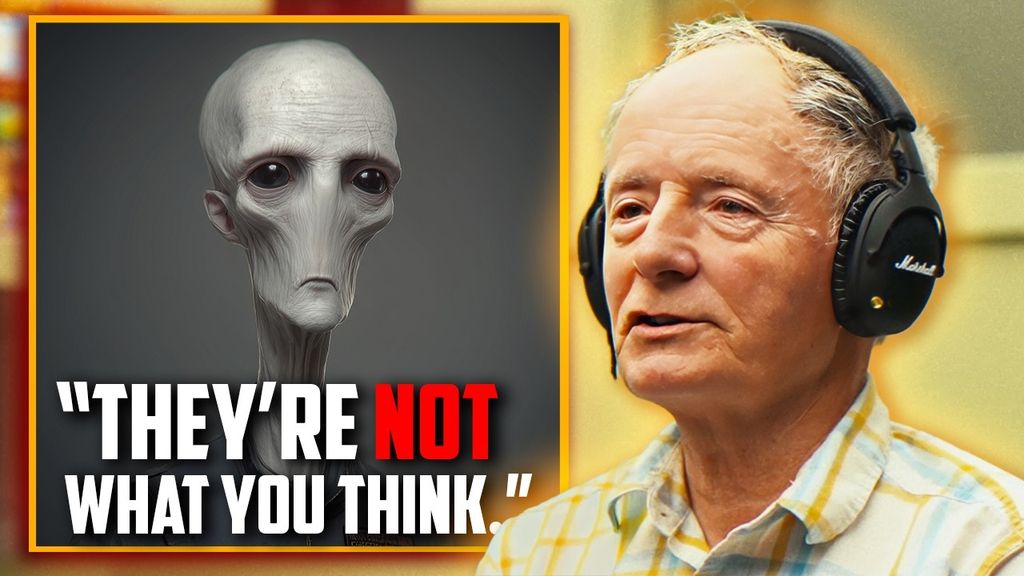
Grant Cameron Advances Consciousness-Centered UAP Hypothesis, Recounts Holloman Film Controversy, and Calls Human Potential the Real Secret


The question of UAP data transparency has long been entangled with deeper disputes about what the phenomenon is and how it presents itself. Researcher and author Grant Cameron argues that the persistent framing of UFOs as recoverable craft is mismatched to evidence patterns that often look less like hardware and more like tailored encounters with mind and meaning. In his view, the most instructive cases are neither controlled demonstrations nor conclusive proof events; instead, they are moments designed to provoke the very curiosity that fuels long-term inquiry.
Cameron’s framework is built around what he calls the Theory of Wow—the idea that many anomalies are intentionally staged to inspire and disrupt. He applies this lens to disparate threads: legacy North American cases, isotopic oddities, claims of purposeful “apports” and manifestations, contested government films, and the proliferation of creative downloads among artists, engineers, and experiencers. Rather than a final answer, he sees a composite that pressures assumptions about physics and mind alike.
Scientific viability and the ‘wow’ pattern
Cameron revisits Canada’s 1967 Falcon Lake incident, a cornerstone of Canadian ufology. He recounts how witness Stefan Michalak suffered a distinctive grid-pattern burn after approaching a landed disc-shaped object and how metallic traces were later collected from fissures in the bedrock at the remote site. Such residues, he argues, may be better understood as deliberately placed prompts than as parts that “fell off” an interstellar machine. This interpretation parallels his account of historical anomalies, including the famed Ubatuba magnesium fragments that reportedly exhibited unusual isotope ratios in one sample but not another—a pattern that, in Cameron’s telling, seemed crafted to defy tidy metallurgical categorization.
A consistent point in Cameron’s narrative is that the phenomenon appears to prefer ambiguity over closure. In his view, the most common outcome of empirical probing is not a dispositive answer but a new layer of contradiction—a dynamic that keeps investigators engaged while preventing premature, overly literal conclusions. He connects this quality to the cognitive signature of meaning-laden events, where symbols, coincidences, and timing often matter more than traces that can be archived and reverse engineered.
Government relevance, narrative control, and the Holloman film dispute
If anomalies are partly symbolic, Cameron contends, official handling has often been political. He points to the 1970s case of filmmaker Bob Emenegger, who was encouraged by U.S. officials to produce a documentary that, he says, initially included an extraordinary sequence: a prearranged landing at Holloman Air Force Base in which personnel greeted non-human visitors at dawn. According to Cameron, the promised footage was withdrawn before release. The finished film instead relied on reconstructions and imagery later criticized as misattributed, including an eight-second clip that high-definition review reportedly showed to be a jet rather than a craft, and storyboard images that mirrored a museum sculpture rather than any confirmed witness description.
Cameron acknowledges that these contradictions have fueled skepticism. Yet he maintains that a genuine Holloman film exists, citing private conversations he says occurred between physicist Eric Davis and former CIA Director George H. W. Bush and former President Gerald Ford, in which both purportedly affirmed prior viewing of such material. No official documentation has been publicly released to substantiate those claims, and the original negatives remain undisclosed. In Cameron’s telling, that is emblematic of a long-standing “leak and retract” strategy: permit a story to surface, surround it with deniability or discrediting details, and reabsorb it into ambiguity.
Another film looms large in his account: an alleged Vandenberg test footage from the 1960s in which a fast-moving object reportedly circled and disabled a dummy warhead. Cameron says a top-secret copy was retained for years by producer Allan Sandler. He further claims that documentary filmmaker James Fox engaged members of Congress to help secure it lawfully, with the expectation that a verified provenance chain could finally bring a clear public release. As with Holloman, the status of any official retrieval or verification has not been disclosed.
Beyond films, Cameron broadens the policy conversation to recent programs. He says AAWSAP leadership sought to expand research investment beyond propulsion-focused inquiries to include phenomena traditionally labeled paranormal—poltergeists, medical effects, and other high-strangeness—because that is where the data were converging. He links that proposed pivot to historical documents like the 1950 Wilbert Smith memo indicating U.S. officials privately connected flying saucers to “mental phenomena,” and he notes how, within months in Canada, early MK-Ultra meetings focused on cognition began—though causality and intent remain debated by historians.
Experiencers, healings, and the interface hypothesis
Cameron places experiencers at the center of his evidentiary model. He describes a series of encounters around North Carolina experiencer Chris Bledsoe, including a dramatic episode where a family dog began bleeding profusely without an evident wound, only for the bleeding to stop with no injury later found. He interprets this “movie-ready” moment as an engineered wow event designed to be unforgettable and to draw investigators deeper into the case’s interior logic. He also recounts a separate claim that Bledsoe facilitated a hearing improvement for a woman after a stroke, coincident with a text from an alleged insider encouraging him to proceed—an exchange Cameron says may have been enabled by a live transmitter handset.
These accounts sit alongside a cluster of claims about technologies that blur the line between machine and organism. Cameron reports that multiple experiencers independently described craft controlled by direct mental interface, vast internal volumes that dwarf exterior dimensions, and an ever-present guardian-like presence instructing them not to turn around or to keep their eyes on a panel. In some versions the craft feels “alive,” with hexagonal surface textures and responsive materials that record palm placements like a luminous memory. However symbolic or literal, these consistent motifs, he argues, suggest that any eventual theory must address the role of consciousness not as an observer add-on but as a functional part of the system.
Insiders, downloads, and disputed infrastructures
Cameron devotes significant attention to an elusive figure he identifies as Tim Taylor, described as a biomedical innovator holding numerous patents, who follows strict sleep and hydration protocols to induce problem-solving states he believes yield technical insights. In Cameron’s telling, Taylor engaged with well-known experiencers, attempted to standardize logs of visions and impressions from contact cases, and on one occasion hinted that a Los Angeles site near the airport aligned with stories about a “jump room.” The interview makes clear that such claims are controversial, that independently verifiable documentation has not been presented publicly, and that aspects—such as the transmitter phone—have alternate, mundane explanations.
Creativity, flow states, and the ‘download’ pattern
The conversation widens into how ideas surface in art and science. Cameron catalogues musicians and writers who describe compositions arriving fully formed—or nearly so—in dreams or in what athletes and artists call the flow state. He notes that Paul McCartney attributed Yesterday to a dream and later searched to ensure it wasn’t already extant, and that Coldplay’s Chris Martin has publicly framed several songs as arriving almost intact. He references John Lennon’s reported sighting over Manhattan and other artist encounters to argue that creative “downloads” are cross-domain: artists, engineers, and experiencers all describe similar phenomenology when the analytic mind quiets and associative networks organize solutions.
Ramsay, who is also a professional magician, bridges this theme to performance, describing how flow states can produce seemingly preternatural timing and outcomes during live shows. He notes parallel accounts from comedians about uncanny crowd work when “on fire” and from fighters who speak of sensing attacks in slow motion—each anecdotally echoing a cognitive mode in which pattern-recognition and prediction intensify. Cameron responds that in his reading, the right hemisphere and non-linear cognition may be unusually engaged in these states, making them akin to the conditions under which experiencers report contact and inventors report breakthroughs.
Psi claims, testing standards, and necessary skepticism
The debate turns to psi research, including remote viewing and recent claims regarding so-called “telepathy tape” children and blindfolded reading. Cameron highlights reports of triple-blind telepathy demonstrations conducted at U.S. universities. Ramsay presses for rigorous, public datasets and methodologically watertight controls, emphasizing that magicians understand covert cueing and misdirection better than most scientists and that any serious test should incorporate their expertise without allowing them to alter procedures during trials. He recounts asking, in a public demonstration, to remove parent-held target materials and to mount them to prevent inadvertent signaling—requests denied at the time—and explains why such choices, while perhaps logistically convenient, leave room for alternative explanations.
Both agree that the path forward requires transparent experimental protocols that are pre-registered, peer-reviewed, and designed with input from practitioners who know how illusions are constructed. Cameron acknowledges that without such evidence, extraordinary claims remain vulnerable to dismissal regardless of their private impact. He also argues that, given historical hostility to psi within parts of academia, the validation curve may be long, and that culture tends to change “one funeral at a time.”
Historical memory, partial disclosure, and what officials may not know
In evaluating the current disclosure cycle, Cameron separates two issues: whether UAP exist and whether officials fully understand them. He believes that elite circles may possess recovered materials and legacy programs but remain fundamentally uncertain about mechanisms. He cites officials who allegedly reported interiors showing no obvious engines or control surfaces and suggests that a purely hardware-centric model might be obstructing understanding. The short-term policy outcome, he anticipates, is limited to formal acknowledgment of anomalous events and perhaps curated archival releases, not a unified theory that satisfies public demand.
Consciousness primacy and human potential
Cameron ultimately anchors his argument in consciousness. He points to patterns among experiencers—high incidences of out-of-body states, near-death experiences, and anomalous cognition—and to historical work in spiritual regressions that propose developmental “levels” of awareness. He does not claim that these models are final or uncontested. Rather, he argues they provide a scaffolding for approaching testimony that otherwise appears contradictory. Where the public discussion often seeks craft schematics, he urges a complementary track: rigorous study of human potential as both a research object and a key to interaction.
Practical implications and next steps
If phenomena are as responsive and meaning-laden as Cameron suggests, then future inquiry faces three practical imperatives. First, data integrity must improve. That includes provenance-tracked archives for metamaterials and films; open metadata on collection contexts; and independent labs integrating physical assay with neurocognitive measures when possible. Second, human-subjects research should be systematized. Rather than accumulate isolated anecdotes, investigators could implement standardized questionnaires across experiencers, artists, and inventors to detect replicable patterns in cognition, physiology, and environment around “download” events. Third, psi testing must satisfy both scientific and practical skepticism. That means registered protocols, magicians on design teams, and complete audiovisual records released with minimal redaction to permit independent reanalysis.
Meanwhile, historical questions remain unresolved. The status of any authentic Holloman film, the Vandenberg missile footage’s chain of custody, the precise contours of past government media outreach, and the current location of relevant archives are all matters that could be clarified through lawful congressional processes and transparent custodianship. Absence of disclosure on these points does not, by itself, confirm or debunk the larger thesis; it does, however, perpetuate the conditions under which speculation grows.
Cameron’s position is unapologetically interdisciplinary. He sees continuity between religious miracles, seance-era materializations, modern UAP encounters, remote viewing, artistic inspiration, and scientific breakthroughs. To skeptics, such breadth risks category error. To proponents, it reflects recurring features—timing, symbolism, interaction with belief—that resist reduction to single-variable explanations. The most constructive way to adjudicate these claims, the discussion suggests, is neither to defer entirely to authority nor to romanticize personal conviction, but to build protocols that honestly confront methods of error while remaining open to effects that current models cannot yet absorb.
In response to a final question about what is more tightly classified—advanced technology or human potential—Cameron chooses human potential. The answer fits his throughline: that the most difficult secrets may not be alloys and engines but the conditions under which minds interface with a reality not yet fully mapped. Whether or not one accepts the whole of his argument, the implications are clear. If even a fraction of the reported interactive effects, downloads, or controlled anomalies prove robust under properly controlled conditions, the center of gravity in UAP research—and perhaps in several sciences—would shift from what machines can do to what minds are wired to perceive and co-create.
Key Moments
- 05:29Cameron recounts the 1967 Falcon Lake case in Manitoba and presents a rock from the site, describing recurring burns on witness Stefan Michalak and metallic residues later recovered from cracks at the landing area.
- 10:53Introducing his “Theory of Wow,” Cameron argues that anomalous materials and manifestations may be deliberately seeded to provoke curiosity rather than function as recoverable hardware, citing the Ubatuba magnesium fragments and odd isotopic results debated by researchers.
- 16:18Cameron contrasts scientific hypothesis-building with the ‘knowing’ reported by experiencers, describing his own 2013 “download” that redirected his focus from nuts-and-bolts to consciousness.
- 22:37Referencing AAWSAP, Cameron says program leadership aimed to scale funding to study broader paranormal effects rather than chase ‘fluttering UFOs,’ aligning with claims that UAP phenomena interlace with high-strangeness.
- 27:18He outlines the Holloman AFB landing narrative and the 1950 Wilbert Smith memo asserting U.S. officials viewed flying saucers as highly classified and linked to ‘mental phenomena,’ situating later MK-Ultra meetings in Canada in that context.
- 32:37Detailing producer Bob Emenegger’s 1970s documentary access, Cameron says officials dangled a promised Holloman landing film, only to withdraw it; he alleges the version released included storyboards and unrelated footage misattributed as UFO evidence.
- 45:41Cameron relays that Eric Davis privately told him former CIA Director George H. W. Bush and former President Gerald Ford had seen a real Holloman film, though no official record has been released.
- 50:02On a separate Vandenberg missile test film allegedly showing a UFO disabling a dummy warhead, Cameron claims a top-secret copy remains in producer Allan Sandler’s vault, and that filmmaker James Fox engaged Congress to lawfully obtain it.
- 01:01:03Cameron describes early, personal involvement with experiencer Chris Bledsoe, recounting an unexplained injury to a family dog that ceased bleeding and reportedly left no wound—an event he interprets as a consciousness-targeted ‘wow’ moment.
- 01:11:57He adds that Bledsoe later performed an impromptu healing for a woman who had suffered a stroke, with a coincident text from alleged insider Tim Taylor urging him to proceed; Cameron says Taylor’s phone may have been a live transmitter.
- 01:17:05Cameron portrays Tim Taylor as an inventor with many patents who follows strict protocols to elicit ‘downloads’ and once hinted at a ‘jump room’ location near LAX, while maintaining relationships with prominent experiencers.
- 01:35:05Cameron links creativity and contact, citing musicians and artists who describe songs arriving fully formed in dreams or flow states, framing such episodes as cross-domain ‘downloads’ akin to scientific insights.
- 01:52:26Discussing claims of ‘telepathy tape’ children and blindfold vision, host Chris Ramsay presses for rigorous, public lab data and magician-informed controls to exclude covert cueing; Cameron agrees that transparent testing is essential.
- 01:57:43Summarizing multiple accounts, Cameron reports that some experiencers say craft are flown by direct mental interface, appear larger on the inside, and feel ‘biological,’ with a guardian-like presence guiding them.
- 02:23:20On disclosure, Cameron argues the policy environment now acknowledges UAP reality while grappling with non-physical dimensions; he quotes officials who found ‘nothing’ inside retrieved craft, raising fundamental questions about assumptions of hardware.
- 02:40:00Asked what is more classified today—technology or human potential—Cameron answers human potential, asserting that understanding consciousness may be the larger, more sensitive frontier.
Related Topics
Links & References
- Sponsor link mentioned for data removal service Incogni with a discount code.
- Area52 shop for channel merchandise.
- Patreon page for exclusive content supporting Area52 Investigations.
- Community Discord server for Area52 discussions.
- Area52 Investigations Instagram profile.
- Spotify link to the Debriefed with Chris Ramsay podcast.
- Apple Podcasts link to Debriefed with Chris Ramsay.
- Goodreads listing for books authored by Grant Cameron.
- Goodreads entry for Robert Lanza’s Biocentrism, recommended in the conversation.
 Continue with Google