Australian Survivor Alleges Organized Ritual Abuse and Esoteric Networks, Urges Community ‘Ley Line’ Healing


Content note: The account includes allegations of child abuse and violence that are deeply distressing. The claims described below are presented as the speaker’s testimony and interpretations; independent corroboration is not provided in this discussion. Some assertions—such as adrenochrome harvesting, architectural symbolism as intentional occult infrastructure, and the physics of “ley lines”—are not accepted by mainstream science, and relevant authorities have not publicly confirmed the criminal conspiracies alleged.
Allegations of organized ritual abuse and covert protection
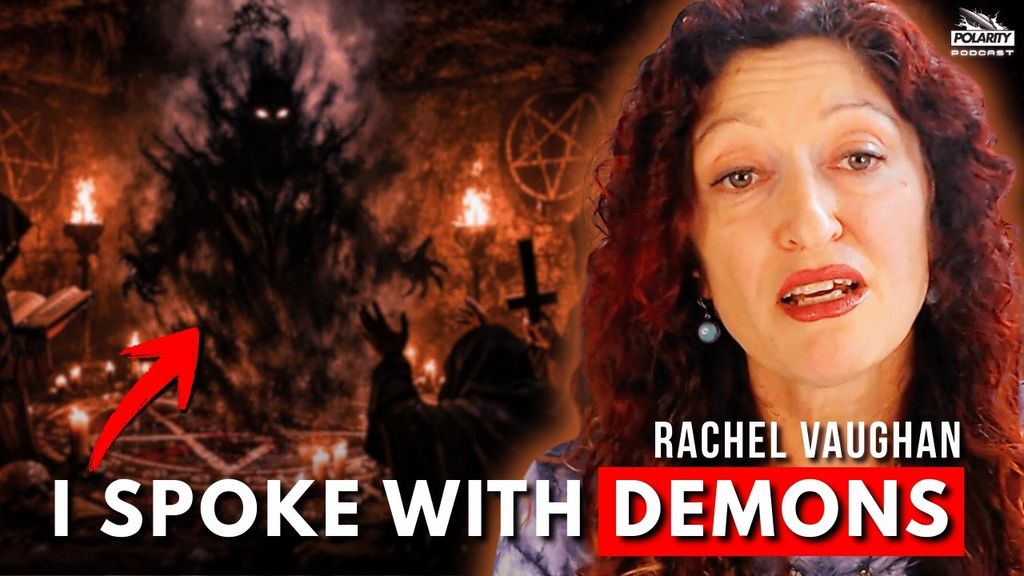
Rachel Vaughan describes a childhood in South Australia marked by coercion, violence, and ritualized practices. She characterizes her late father as a telecom line tapper and a Navy reservist who leveraged access to communications systems and local infrastructure. According to her account, efforts to obtain his military reserve records were unsuccessful, and she interprets these gaps, along with his self-described policing ties, as signs of covert work with domestic intelligence. She alleges he enjoyed impunity through senior law-enforcement relationships and engaged in crimes including the production of ‘snuff’ media and child exploitation material. Vaughan places these activities within a wider system of blackmail and control, asserting that children were trafficked through tunnel networks linked to older civil-defense and utility works beneath suburban Adelaide.
Mechanisms of control: hypnosis, isolation, and underground spaces
Vaughan emphasizes psychological manipulation as a central tool, describing rapid-induction hypnosis used to immobilize adults and children. She depicts a home environment with concealed spaces—including a converted brick kiln and cellar—linked to tunnels, claiming night-time extractions and movements while caretakers were unaware. These elements form part of a broader narrative in which access to infrastructure, ritual spaces, and fear-based conditioning were used to isolate victims and shield perpetrators.
Ritual framework, ley lines, and the invocation of entities
A distinctive component of the account is the ritual context. Vaughan asserts that certain ceremonies were conducted outdoors at the crossing points of ‘ley lines’—a concept often found in esoteric literature that posits latent geomagnetic pathways across the Earth. She contends that violent acts at these nodes opened ‘doorways’ that attracted non-human entities. She references the contested ‘adrenochrome’ narrative as part of this ritual logic, though scientific and investigative bodies have not substantiated claims of organized extraction or use of this compound in conspiratorial contexts. In Vaughan’s telling, ceremonies were often led by women in white robes associated with the Order of the Eastern Star, with men forming a supporting perimeter.
Non-human intelligences: hostile communication and compulsion
Beyond the physical setting, Vaughan describes being used in childhood as a conduit to communicate with non-human entities. She reports hearing audible, painful voices rather than telepathic impressions, conveying messages like “I don’t want to be here” and “I will not do what you want.” She claims adults sought predictive information and power from these interactions, placing a premium on pre-cognition and energy extraction. Her interpretation stands in contrast to common parapsychological discussions of telepathy or clairaudience; she situates her experiences in a deliberately antagonistic framework in which summoned entities resisted human demands.
Symbolism, architecture, and cultural signaling
The discussion extends to claims that public symbols, media logos, and city plans encode esoteric motifs—especially the all-seeing eye, Egyptian iconography, and pyramidal layouts. Vaughan argues that such symbolism serves both as an internal language of allegiance and as a component of ritual ‘spellcasting’ that anchors and channels energy across urban landscapes. She asserts that Adelaide’s central grid and certain civic emblems subtly echo these themes. While architectural symbolism is an established field of cultural analysis, direct causal links between civic planning, occult ritual, and the operational goals she describes have not been demonstrated by independent investigations.
Health, psychology, and contested energetic models
Vaughan introduces a concept she calls ‘chronic reversed polarity,’ alleging that severe lower-body trauma can invert the human chakra system—supposedly elevating base drives and undermining empathy. She relates this to a spectrum of behaviors centered on sex, money, and power. These assertions draw on an alternative energetic model of human physiology; they are not recognized in mainstream medicine or psychology. She nonetheless frames the paradigm as explanatory for patterns of control and blackmail that reward predation while severing healthy family bonds.
Law enforcement and accountability
A significant portion of Vaughan’s narrative focuses on her efforts to report crimes. She describes hostile interactions with authorities, alleges misrepresentations in official correspondence, and claims that credible leads—including purported burial sites—were ignored or compromised. These allegations, if accurate, raise serious questions about investigative standards and the treatment of complainants in historical abuse cases. At the same time, allegations of systemic protection or willful neglect require careful, evidence-based scrutiny, including documentary, forensic, and testimonial corroboration.
Attachment, altered states, and substance use
Vaughan distinguishes between ‘evil’ intent and what she frames as spiritual ‘attachments’ that can manifest through people without their conscious knowledge. She recounts witnessing a person’s eyes appear as vertical slits during an everyday interaction, characterizing it as a transient attachment event rather than a stable metamorphosis. She warns that alcohol and certain drugs degrade personal energetic defenses, making individuals more susceptible to such influences and behavioral disinhibition. These ideas align with longstanding spiritual cautionary themes while diverging from empirically validated models of addiction and neurobiology.
Cycles, frequency, and collective consciousness
The latter half of the discussion turns to broad metaphysical claims about human ‘soul frequency,’ solar cycles, and a putative planetary transition. Vaughan asserts that around 2015—and more dramatically in 2020—collective human frequency increased, despite attempts by ‘control structures’ to suppress it. She suggests that disclosures surrounding high-profile sex trafficking cases simultaneously perform a vital exposure function and a temporary dampening of public morale. Her remedy is to ‘lift frequency’ through outdoor activity, sunlight, and conscious kindness, advocating an optimistic orientation as a counterweight to despair.
Ley lines, ‘permanent harmony,’ and a fifth-dimensional thesis
Vaughan claims that by the end of 2024, earth energy lines entered ‘permanent harmony,’ which she associates with a transition to a ‘fifth dimension’ that is inhospitable to dark entities. In her view, this shift is forcing attachments to disengage and is undermining the viability of malevolent networks. She prescribes community-level practices—humming, singing, and the use of 432 Hz and 528 Hz tuning forks in nature—to rebalance local energy and strengthen personal resilience. She also promotes a weekly, synchronized ‘12:12’ guided meditation and a volunteer initiative aimed at restoring natural balance along waterways and presumed energy nodes. These practices are spiritual in nature; their claimed geophysical or interdimensional mechanisms are not supported by peer-reviewed research.
Historical, theological, and non-human lineages
Vaughan situates her experience within a longer arc of myth and religion, citing Kabbalistic motifs, biblical narratives, and ancient cultures’ references to non-human beings. She entertains concepts of bloodline continuity, interbreeding elites, and possible human–non-human splicing in deep antiquity, invoking the Anunnaki and reptilian archetypes found in various traditions. Such claims frequently appear in alternative-history discourse but remain unverified in archeology and genetics. Within the narrative, however, these frameworks provide a cosmology that links ritual practice, elite identity, and the pursuit of power.
Countervailing supports: guides, protection, and altruism
Offsetting the darker material, Vaughan emphasizes experiences of protection by spirit ‘guides’—described as humanoid lights without wings—and credits them with survival during multiple life-threatening incidents. She argues that a practical path forward involves simple, daily acts of altruism, time in nature, and intentional gratitude, all of which she believes strengthen communities and individuals while degrading predatory systems. She encourages those curious about psychic development to prioritize protection, avoid occult experimentation without safeguards, and refrain from forcing traumatic recall, which she considers dangerous without specialized therapeutic training.
Points of contention and need for verification
The discussion includes multiple serious allegations that, if substantiated, would have significant legal and public-policy implications. These encompass organized child abuse, the manipulation or neglect of investigations, the existence of covert tunnel systems used for trafficking, ritual killings, and the strategic use of hypnosis. Independent corroboration—through records, forensic examination, and testimony vetted under evidentiary standards—would be necessary to move these claims from assertion to established fact. Additionally, the broader esoteric and cosmological frameworks invoked—ley lines, dimensional transitions, frequency harmonics—fall outside mainstream scientific consensus and should be treated as faith- or belief-based, rather than empirical descriptions of nature.
Implications for UAP and high-strangeness discourse
Although not centered on conventional UAP casework, the account intersects with high-strangeness themes: non-human intelligences, interdimensional models, and claims of ancient contact lineages. The portrayal of entities as coercively summoned, hostile, and resistant contrasts with narratives of passive observation or benevolent guidance sometimes reported in anomalous phenomena studies. For researchers examining the overlap between esoteric ritual, consciousness, and anomalous encounters, the testimony raises testable questions about common geospatial features in reported events, the psychosocial impacts of belief systems, and the role of altered states—volitional or coerced—in shaping perception and memory.
Community response and harm reduction
Vaughan’s practical recommendations are oriented toward individual and local agency: time in natural settings, supportive social bonds, sober living, and non-coercive spiritual practices that emphasize safety and consent. Regardless of one’s stance on the cosmology presented, these measures broadly align with established mental-health guidance for trauma recovery and community resilience. For institutions, the allegations underscore the need for trauma-informed reporting pathways, rigorous evidence handling, and the avoidance of secondary victimization. For the public, they highlight the importance of critical evaluation: distinguishing between testimony, interpretable symbolism, and claims that require robust, transparent proof.
The wider picture
The question of how societies handle extraordinary allegations is perennial. Credible investigation demands humility, methodological rigor, and care for those who come forward. Equally, responsible reporting requires clear attribution, caution with unverified claims, and respect for the line between belief and evidence. This account presents a worldview in which ritual power, non-human agency, and symbolic control strategies coexist with systemic failures of accountability. Whether readers approach it as testimony seeking justice, a spiritual cautionary tale, or a lens into alternative cosmologies, the material invites sober reflection on how communities can protect the vulnerable while pursuing truth with discernment.
Key Moments
- 00:06Opening warning of graphic allegations involving child sexual abuse, ritual practices, and human killings attributed to organized satanic groups, asserted to have occurred in Australia.
- 01:34Vaughan describes her late father as a telecom line tapper and Navy reservist, alleging he leveraged access to communications systems and infrastructure.
- 02:16She says Freedom of Information requests failed to yield her father’s reserve records and believes, based on his activities, that he worked with Australia’s domestic intelligence service.
- 03:25Vaughan alleges her father enjoyed impunity through high-level policing contacts and was involved in criminal activities including ‘snuff’ production and child exploitation material.
- 04:22She describes a brick kiln converted into a communications bunker beneath her childhood home and a network of tunnels she says were used to traffic her at night.
- 05:29Vaughan claims her abusers used rapid-induction hypnosis techniques to control family members and children.
- 09:25She contends that outdoor ceremonies were held at ley line crossing points to exploit presumed ‘interdimensional doorways.’
- 09:41Vaughan references the contested ‘adrenochrome’ narrative, alleging torture was used not solely for blood chemistry but to attract entities via extreme distress.
- 17:15She says she was used as a child conduit to communicate audibly with hostile non-human entities during rituals, relaying messages to adults.
- 19:24Ceremonies were described as being led by women in white associated with the Order of the Eastern Star, with men forming an outer circle.
- 28:33Vaughan introduces a concept she calls ‘chronic reversed polarity,’ alleging knife trauma to the lower body can invert the chakra system and drive base instincts.
- 36:50Vaughan claims a broad rise in human ‘soul frequency’ around 2020 despite global upheaval, which she frames as an attempted ritual of control that ultimately failed.
- 48:55She alleges institutional resistance and mistreatment when reporting crimes, citing hostile responses and misrepresentation in official correspondence.
- 54:22She recounts once seeing a person’s pupils appear as vertical slits, framing it as a non-ritual, attachment-related event rather than evidence of inherent malice.
- 01:04:22She asserts that by late 2024, earth energy lines entered ‘permanent harmony,’ associating this with a transition to a ‘fifth dimension’ inhospitable to dark entities.
- 01:16:52As a remedy, she advocates humming, singing, or using 432/528 Hz tuning forks in nature to ‘rebalance’ ley lines, and she promotes a weekly 12:12 meditation.
Related Topics
Links & References
- Rachel Vaughan’s website offering readings and writings on consciousness and psychic development.
- Community initiative co-founded by Vaughan promoting guided meditations and local efforts to ‘rebalance’ ley lines.
- Compiled materials Vaughan presents as evidence for Edwardstown tunnel networks and related claims.
- Rachel Vaughan’s X (Twitter) account for updates and commentary.
- Rumble channel where Vaughan shares longer-form content and presentations.
- Polarity’s UAP-related playlist exploring anomalous phenomena and disclosure themes.
- Polarity Community Discord for discussion of UAP, consciousness, and related topics.
 Continue with Google