
Former USAF Thunderbird Pilot Details Triangular Close Pass, East Coast Orbs, and a ‘Pulsing Square’ UAP, Citing ATC Report


Accounts from experienced military aviators continue to complicate the boundary between exotic aerospace hypotheses and advanced but terrestrial programs. Former U.S. Air Force fighter pilot Ryan “Max Afterburner” has described several encounters that he says stood out across a career spanning combat in the F-15E and precision demonstration flying with the F-16 Thunderbirds. The testimony raises familiar questions about sensor interpretation, pilot workload, and the extent to which classified platforms might explain unusual observations—and where they do not.
One of the most detailed incidents involved a small, triangular or diamond-shaped object executing a close, high-speed pass beside his jet near Nellis Air Force Base. The pilot characterized the maneuver as akin to a dogfight “dust off,” a technique used to rattle an adversary before a merge. He described the craft as lawnmower-sized, built for speed, with an angular, aggressive nose and visible surface features like welding marks, lacking any apparent cockpit. He estimated the closure at roughly 700 knots or more. The flight lead did not report seeing it; the pilot noted that single-seat cockpit workload and formation responsibilities can limit what others observe in the moment. The location—within the Nellis airspace and not far from the Nevada Test and Training Range—naturally raises the possibility of classified flight activity, a factor he acknowledged while underscoring the object’s unusual profile and behavior.
A separate pattern emerged earlier in his career over the Atlantic training ranges. He and other crews repeatedly observed small spherical objects—about half the size of a car—while egressing from missions in the Whiskey Areas. Using targeting pods, backseaters attempted to track these orbs, which appeared to move irrespective of prevailing winds. At the time, crews sometimes assumed the spheres could be ship-launched drones given the volume of maritime traffic below, yet the pilot emphasized the frequency of sightings and their distinctive behavior. The description echoes accounts that later surfaced publicly from Navy aviators operating off the East Coast, including references to objects traveling against strong winds.
Sensor use and limitations were central to the discussion. The pilot explained that multifunction cockpit displays can pipe in the backseater’s imagery, allowing the front-seater to view thermal or electro-optical feeds when available. However, the line of sight can be broken by the aircraft itself, momentarily losing contact. He also addressed a common debunk, noting that weapons system operators do not typically lock onto birds, given their size and signatures. He reported familiarity with imagery consistent with well-known Navy UAP videos, including the Gimbal case, further contextualizing the kinds of tracks military sensors can capture and the interpretive challenges that follow.
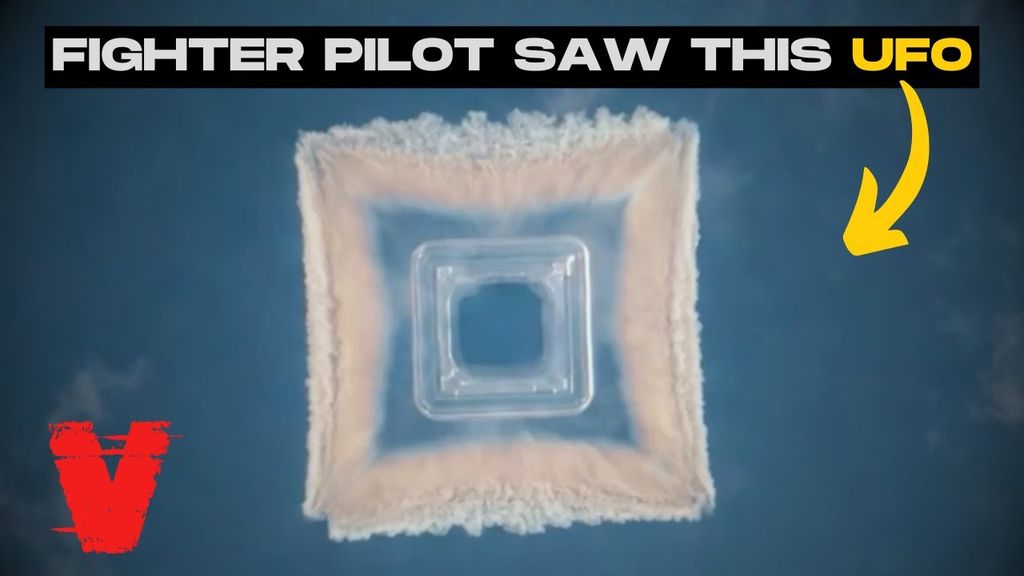
Another event, distinct in form and scale, involved a large “pulsing square” with bright white edges, interior gradients toward cream tones, and a transparent center. The pilot estimated a height of 40–50 feet. He and a nearby pilot watched as it moved steadily before disappearing from their line of sight. The observation was formally reported: a pilot report (PIREP) was relayed to air traffic control, which requested clarifying details, marked the area for following traffic, and treated the information seriously. According to the account, there were no subsequent confirmations from other aircraft in the immediate days that followed. The episode illustrates that standard reporting pipelines exist and can be engaged, even if downstream visibility remains limited.
The conversation also compared these observations with triangle reports gathered near the Nevada ranges by aviation watchers and with historical photographs from Wichita and Amarillo. Analysts have long cautioned that some triangle appearances can be artifacts of viewing angle or depictions of known platforms, such as B-2s or other blended-wing aircraft. The juxtaposition highlights an enduring ambiguity: certain sightings likely align with advanced, conventional aerospace programs, while others retain characteristics that resist straightforward classification.
On intent and risk, the pilot argued that the phenomena he observed did not present as overtly hostile and suggested that technology of such apparent sophistication would have manifested a kinetic threat long ago if that were the objective. He floated a speculative scenario in which future human actors transfer technology backward to mitigate catastrophic conflict, framing it as one of several possibilities rather than a conclusion. That view contrasts with more cautionary interpretations inside defense circles, where the absence of hostile action does not preclude intelligence collection or strategic signaling by unknown actors.
The broader implication is less about definitive answers and more about process: how militaries document, deconflict, and analyze anomalous observations. Proposals surfaced for convening a centralized, pilot-focused forum to catalogue firsthand accounts under consistent standards. Public reaction underscores the need for careful framing; responses ranged from technical curiosity to religious and political narratives that sit outside empirical evaluation. For investigators and policymakers, the near-term path remains clear: normalize reporting, protect aircrew professionalism, compare sensor data across services, and rigorously test prosaic explanations before entertaining extraordinary ones.
Key Moments
- 02:35Pilot identification: Ryan “Max Afterburner,” a former F-15E combat and F-16 Thunderbird pilot, explains past reluctance due to stigma and decision to speak publicly.
- 03:54Background and credibility: Over 70 combat missions in the F-15E; later flew precision demonstrations with the F-16 Thunderbirds.
- 08:03Triangular ‘dogfight’-like encounter near Nellis: A small, fast, triangle/diamond-shaped object executed a close “dust off” pass beside his jet during a Thunderbird recovery.
- 09:07Description of craft: Aggressive, copperhead-like nose, visible “welding marks,” unfinished-metal appearance reminiscent of a Cybertruck; no cockpit observed.
- 09:48Estimated dynamics and size: Roughly 700+ knots closure; object “lawnmower-sized,” maneuverable, built for speed.
- 11:36Deconfliction and corroboration: The flight lead did not see the object; single-seat workflow and high workload may explain limited corroboration.
- 12:50Proximity to test ranges: Encounter occurred in the Nellis airspace, not far from the Nevada Test and Training Range; comparisons drawn to triangle sightings and potential classified platforms.
- 17:20Sensor operations: Multifunction displays and targeting pods can maintain tracks, though line-of-sight obstructions break contact; backseat operators’ imagery is viewable in the front cockpit.
- 18:31Familiarity with Navy UAP videos: The pilot recalls imagery akin to the Gimbal/Tic Tac cases and notes that weapons system operators do not typically lock onto birds.
- 21:33Recurring East Coast orbs (circa 2010–2012): Small spherical objects, about half a car in size, repeatedly observed in the Whiskey Areas and tracked with targeting pods, often indifferent to wind direction.
- 23:34Operational assumptions at the time: Aircrews sometimes attributed orbs to ship-launched drones given maritime traffic below, though the behavior remained notable.
- 24:20Call for structured testimony: A proposal is raised for a public forum or press-style event featuring military pilots to centrally document and contextualize encounters.
- 25:23‘Pulsing square’ event: A bright, square-edged object with cream-toned interior gradients and a transparent center approached, then departed on a steady track; visually striking and unusual.
- 27:43Estimated size and reporting: The square was 40–50 feet tall; a PIREP was made to ATC, which asked clarifying questions and alerted following traffic; no subsequent corroborations were reported.
- 31:34Speculation and risk framing: The pilot posits a non-hostile interpretation and floats a time-forward technology-transfer hypothesis intended to deter catastrophic conflict.
- 36:35Audience reaction: A viewer message links potential disclosure timelines to biblical prophecy, illustrating the range of public interpretive frames surrounding UAP.
Related Topics
Links & References
- Naval Air Systems Command FOIA documents repository cited for broader official records context.
- Referenced long-form interview featuring pilot testimony about UAP encounters.
- Aviation-spotting content noting a triangular aircraft near the Nevada ranges, raising classified vs. conventional explanations.
- Northrop Grumman promotional material highlighting advanced aerospace platforms often compared in triangle-UAP discussions.
- Sponsorship link mentioned during the segment.
- Program’s official site for additional materials and contact information.
 Continue with Google