
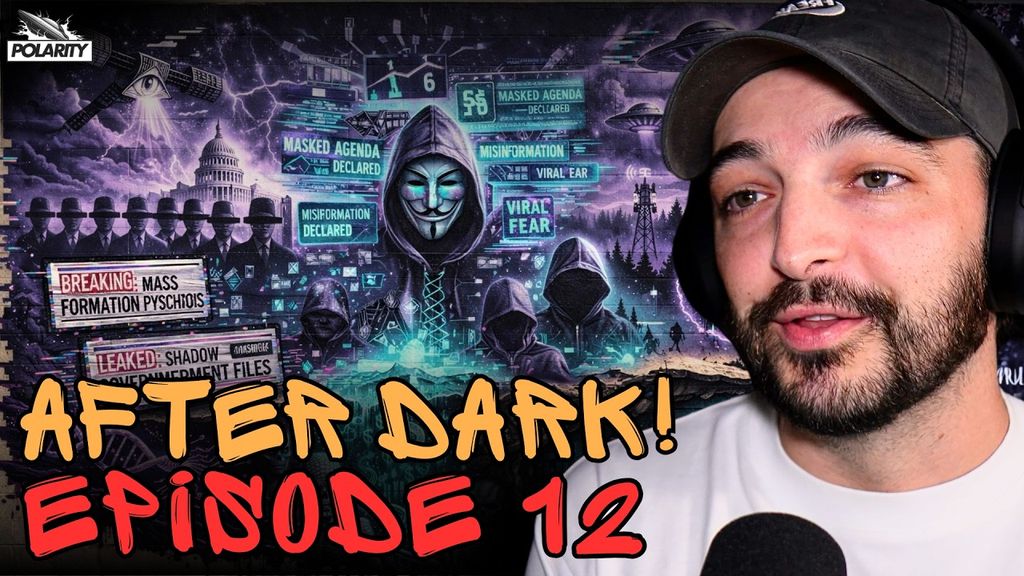
Polarity Host Weighs Artemis Mission, UAP Evidence Standards, and Community Investigations Amid Transparency Debates


The question of UAP data transparency has long been contentious, with discussions typically unfolding at the intersection of science, public trust, and a rapidly evolving online culture that scrutinizes extraordinary claims in real time. Within that landscape, Polarity’s latest live Q&A underscored both the appeal and the challenges of community-driven inquiry: a space where official spaceflight audio can play alongside crowd-sourced investigations, where historical allegations are revisited with new eyes, and where the drive to keep an open mind must be balanced against the need for verifiable, primary-source evidence.
Spaceflight as a Transparency Test
The program opened by situating the audience within a live context: NASA’s Artemis mission—framed as a long-awaited crewed return to lunar orbit—was placed on-screen. The feed briefly featured mission control audio that mentioned Orion’s portable, laser-based Anomaly Gas Analyzer (AGA), a device designed to detect trace contaminants. While the technical language exceeded the host’s expertise, the exchange served as a reminder that space programs generate a tremendous amount of instrument data, often publicly documented but not always widely contextualized for general audiences. That gap between sophisticated telemetry and broader public comprehension can unintentionally fuel speculation, especially when live feeds pause, switch to visualizations, or carry extended periods of silence.
In this regard, the Artemis broadcast stood in as a microcosm of a larger issue: modern spaceflight provides more windows than ever into the operational side of exploration, yet the signal-to-noise ratio often frustrates viewers hoping for definitive, high-resolution visuals that match cultural expectations. When those expectations are not met—or when social media amplifies gaps in a broadcast’s continuity—claims flourish. The presence of mission control audio and specific instrument references such as the AGA offered tangible grounding for viewers. However, the show also illustrated how quickly conversations can slide between verified engineering details and speculative cultural narratives when official communications are lean.
Open-mindedness Versus Evidence in UAP Discourse
The host repeatedly argued for a wide aperture on ideas, referencing a recent interview with author Dana Kipple as deliberately positive and unconventional. The case was made that not all valuable conversations must be constrained to proven mechanisms; thought experiments and philosophical or spiritual frames can prompt useful questions that later guide empirical work. That stance—common across large swaths of UAP and consciousness-adjacent communities—benefits from candor about what is known, what is hypothesized, and what is purely anecdotal. Throughout the program, the host often labeled such segments as theory or intuition, which helps preserve the boundary between narrative and evidence.
At the same time, the conversation exemplified how easily unverified claims become sticky in collective memory. Bill Tompkins’s deathbed descriptions of reptilian encounters associated with early lunar activity, for example, were invoked as fascinating but unproven. These stories occupy an enduring niche in UAP folklore precisely because they are dramatic, difficult to falsify, and tied to figures positioned near defense or aerospace communities. The program did not attempt to validate Tompkins’s assertions but presented them as part of the broader cultural archive that continues to influence expectations about what a full disclosure might one day reveal.
Community-Led Investigations and Hoax-Resistant Practices
The show highlighted a recurring theme in contemporary anomalous research: the effectiveness of concentrated online attention in resolving dubious claims. The host cited earlier, internally popular investigations—for instance, alleged anomalous “tubes” or a so-called “dread sphere”—as examples where crowd-sourced scrutiny, motivated by curiosity rather than cynicism alone, helped surface counterevidence or inconsistencies. This is a promising development for a field historically vulnerable to hoaxes and misinterpretations. When ad hoc teams distribute tasks (e.g., geolocation, metadata checks, object modeling, and historical lookups), weak narratives tend to unravel quickly.
Translating that ethic to formal best practices suggests a few durable habits: capture original media with full-resolution files, preserve unedited source material, publish sensor specs and viewpoints, and log contextual variables (time, location, weather, instrument modes). This is the same evidentiary hygiene that professional investigators emphasize, and it can be adopted by enthusiasts with surprisingly little friction. The host’s acknowledgment that rigorous attention sometimes leads to disappointing outcomes is an important cultural cue: debunking is not the enemy of wonder; it is the partner that protects future discoveries from being dismissed out of hand.
Rumor, Virality, and Engineered Attention
The program briefly critiqued the phenomenon of sudden internet fame, framing one recent, unrelated personality’s rise as likely orchestrated rather than organic. Without endorsing specific allegations, the point underlined a broader research challenge: modern platforms can fabricate the appearance of consensus and momentum. For UAP researchers, this means extra caution when virality is invoked as a proxy for credibility. Organic traction does not validate a claim’s substance, but manufactured reach should be treated as an especially strong signal to pause, request primary materials, and perform provenance checks before further amplification.
Historical Claims: Dulce, Phil Schneider, and the Allure of Underground Narratives
Audience prompts steered discussion toward the Dulce base lore and Phil Schneider’s public talks—key motifs in late-20th-century UAP-popular culture that allege clandestine underground facilities, exotic materials, and conflicts involving nonhuman entities. Though the show did not present new documentation, it suggested returning to Schneider’s additional recorded talks. From a research standpoint, these narratives should be engaged with methodically: extract concrete claims, identify alleged dates, locations, and participants, then prioritize what could, in principle, be corroborated (e.g., contracting records, construction logs, publicly accessible geological surveys, or employee rosters). While absolute proof may remain elusive, a process-driven approach can at least separate internally consistent claims from those that collapse under basic scrutiny.
Directed-Energy Tropes and the Earthquake Template
In a highly speculative segment, the host floated a satirical “playbook” in which natural disasters are reinterpreted as covert actions enabled by directed-energy systems, followed by clandestine retrieval operations using advanced craft. The framing was not presented as evidence-based assertion; rather, it illustrated how swiftly such templates can be applied to breaking news, particularly when trust in institutions is strained by unrelated geopolitical crises. For analysts, the takeaway is structural: rapid sensemaking environments will opportunistically attach anomalous explanations to ambiguous events. Having prebuilt criteria—ask for sensor data, seek independent geophysical records, verify satellite taskings and air traffic logs—helps inoculate communities against narrative drift when emotions are high.
Congressional Pressure and Institutional Limits
The program cited U.S. Representatives such as Tim Burchett as examples of elected officials pressing for greater UAP transparency. The discussion acknowledged a recurring reality: individual lawmakers can question, hold hearings, and request briefings, yet secrecy regimes and classification authorities often sit outside their immediate reach. This mismatch between public expectation and institutional capacity feeds an enduring suspicion that “real answers” remain inaccessible. Constructive next steps include continued legislative pushes for standardized reporting pathways, secure data repositories accessible to cleared overseers, and mechanisms to declassify historically distant incidents where sources and methods are no longer at risk.
Contact in the Desert and Field Engagement
Looking ahead, the host described plans to attend Contact in the Desert and to join a guided skywatch in Sedona led by researcher Melinda Leslie. Events of this kind serve dual roles: they are community touchpoints for sharing case histories and method workshops, and they are field opportunities that, when properly documented, can produce new datasets. If night-vision or thermal imaging is used, publishing camera models, lens specs, gain settings, and exact times can significantly elevate the evidentiary value of any observations. Even when no anomalies are recorded, open protocols build a library of null results that refine future deployments.
Evidence Chains and the Importance of Possession
A viewer question about purported footage of a “gray” entity prompted a concise chain-of-custody reflection: if a researcher claims dramatic visual evidence, they typically present it or explain why they cannot. In the absence of direct possession or verifiable provenance, compelling stories remain that—stories. This reasoning does not discredit interview-based researchers who collate case reports, but it does clarify why the community consistently asks for primary media, metadata, and unbroken custody. Standardizing these expectations across platforms would raise the floor on discourse quality without stifling exploratory conversation.
The Role of Online Communities
A notable throughline was the sheer persistence of the Polarity community, exemplified by a members-only voice chat that reportedly surpassed the 100-hour mark. Sustained, moderated discussion spaces can provide accountability loops, distribute analytical labor, and create informal peer review. When such communities establish norms—credit original sources, annotate edits, and separate hypothesis from claim—they become not only gathering places but functional research collaboratives. The show’s promotion of a clips channel to surface substantive moments from long-form streams also speaks to the value of making complex discussions more searchable and citable.
Geopolitical Context and Trust Headwinds
The broadcast occasionally drifted into global politics and domestic policy—territory relevant here not for the substance of those debates but for the trust dynamics they reveal. In environments where audiences perceive selective disclosure, preemptive rationales for conflict, or politicized intelligence, anomalous claims can appear more plausible than they otherwise might. While the program did not resolve these tensions, its blend of earnest inquiry and satirical skepticism captured a common mood: the sense that institutions must earn credibility with clear, consistent, and timely data-sharing if they hope to anchor public understanding when reports of unusual phenomena arise.
Cognitive Frames and Lived Experience
The show also spent time on personal reflections—travel plans, creative projects, and even candid stories about altered states—elements seemingly far afield from UAP. Yet these interludes illuminate a pragmatic reality: interpretation of anomalous events is inseparable from human cognition and context. Proponents often cite introspective or transformative experiences as catalysts for new questions; skeptics highlight how perception and expectation can mislead. A healthy research culture acknowledges both truths: subjective experience inspires inquiry, but objective documentation must adjudicate claims.
What Best Practice Looks Like from Here
Taken together, the session outlined a path that many UAP-interested communities are already attempting to walk: - Anchor live commentary to verifiable technical references (e.g., Orion’s AGA) to ground broader speculation. - Encourage expansive conversations while labeling conjecture as such and preserving a bright line between anecdote and evidence. - Use community energy to test claims, sharing methods for geolocation, trajectory modeling, and media forensics so others can replicate outcomes. - Elevate fieldwork by publishing sensor details, locations, and unedited files, including null results. - Interface with policymakers while recognizing the limits of individual offices; press for standardized, durable, and auditable data pathways. - Archive both historical lore and modern incidents with clear metadata, so future researchers can trace lineages of claims without relying on memory or screenshots.
Looking Ahead
Programming notes signaled continued momentum: a long-form interview with a guest named Chris is slated for release, and the host intends to stage a special stream aligned with Easter-week themes before relocating to Thailand and then traveling to the United States for UAP-focused events. Regardless of schedule, the guiding premise remains consistent: that communities can hold open a space where unconventional ideas are heard, while simultaneously cultivating the evidentiary discipline needed to separate signal from noise.
The tension between openness and rigor is unlikely to disappear. But as the Artemis mission advances and public UAP debates evolve, the approach on display here—curiosity tempered by process—offers a workable template. It neither forecloses extraordinary possibilities nor accepts them uncritically. Instead, it asks for the kinds of details that make anomalous claims testable and, when appropriate, falsifiable. That is the posture most likely to produce durable knowledge in a field where wonder and skepticism must continually, and productively, meet.
Key Moments
- 03:27A NASA live feed of the Artemis moon mission played in the background; later, mission control audio referenced Orion’s portable laser-based Anomaly Gas Analyzer (AGA), used to detect trace contaminants.
- 04:57Discussion framed Artemis as the first crewed return to lunar orbit in decades; the host questioned why the mission was not a larger global story.
- 07:00The host defended platforming speculative and philosophical ideas, highlighting a recent interview with author Dana Kipple as intentionally positive and thought-provoking rather than strictly empirical.
- 11:21Citing prior internet-led inquiries (e.g., the 'James' tube and 'Alistister dread sphere' cases), the host argued that concentrated online attention can help resolve questionable claims by surfacing counter-evidence.
- 13:11Mission control audio captured astronaut Victor Glover discussing AGA readouts aboard Orion; the host acknowledged not understanding the technical jargon but monitored for updates.
- 16:12Bill Tompkins’s late-life claims of reptilian encounters linked to early lunar missions were referenced as provocative but inherently unverified anecdotes.
- 17:41A viewer asked about reported footage of a 'gray' peering into a camcorder; the host reasoned that researcher Nathaniel Gillis likely does not possess the video, inferring this from how such evidence would normally be presented.
- 31:51Speculative claims tied natural disasters to directed-energy attacks and covert retrievals by clandestine craft, offered rhetorically to illustrate how conspiracy narratives can form in fast-moving news cycles.
- 47:11Audience suggestions steered toward classic underground base lore and the 'Dulce papers,' with the host linking the thread to Phil Schneider’s talks and indicating interest in revisiting that material.
- 01:34:30Plans were aired to join a Sedona night-vision skywatch tour guided by Melinda Leslie, positioning it as part of broader UAP field engagement.
- 01:37:00The host confirmed an itinerary built around Contact in the Desert, signaling intent to report from one of the most visible public UAP events.
- 01:40:05Broader distrust in institutions surfaced via speculation about the Port Arthur massacre’s historical role in Australian gun policy—a claim presented without new evidence and flagged as contested territory.
- 01:42:58Members of the U.S. Congress, including Tim Burchett, were cited as examples of elected officials pushing for answers who nonetheless face structural limits on transparency.
- 01:57:28Programming notes included a planned special stream aligned with Easter-week discussions and an upcoming long-form podcast with 'Chris,' underscoring a mix of investigative and community content.
- 01:59:06The Polarity Discord community’s members-only voice channel surpassed 100 hours of continuous conversation, illustrating persistent, crowdsourced engagement around anomalous topics.
Related Topics
Links & References
- Channel memberships for access to members-only content and community features.
- Direct support link for the Polarity channel.
- Polarity merchandise store.
- Polarity 2.0 channel for edited clips and highlights.
- Polarity’s Twitch channel.
- Polarity’s playlist of UAP-focused deep dives.
- Invite link to the Polarity community Discord.
- Music credit: Contra – Everything We Ever Wanted (Polarity Mix).
- Polarity’s Instagram profile.
- Polarity’s TikTok account.
- Polarity’s X (Twitter) account for updates and commentary.
 Continue with Google