
Energy-Secrecy Claims Tie Tesla’s Papers, UAP Technology, and Trump Family Connection


Energy secrecy remains a recurring theme in debates over Unidentified Anomalous Phenomena and advanced propulsion. Recent commentary revisits long-standing allegations that the United States has withheld breakthroughs, including so‑called zero-point energy and directed-energy systems, while integrating select advances into defense programs. The conversation places these claims within a narrative that spans nearly a century, from Nikola Tesla’s final papers to contemporary references to UAP encounters.
Central to the discussion is the claim that the government maintains opacity around revolutionary energy technologies. Historical anecdotes are used to build the case: Charles Pogue’s purported 200‑mpg carburetor in the 1930s, Tom Ogle’s 1970s fuel‑efficiency system, and Stanley Meyer’s 1990s ‘water car.’ Each story is presented as an instance of promising innovation curtailed by market pressures, legal constraints, or mysterious circumstances. The 1951 Invention Secrecy Act is cited as a mechanism for suppressing disruptive patents, though the conversation’s description of a blanket efficiency threshold is not reflected in the statute’s public text and remains a contested characterization.
The narrative then shifts to devices said to tap vacuum energy or exhibit anomalous performance, such as toroidal configurations and the late Floyd “Sparky” Sweet’s reported solid-state generator. Supporters argue these prototypes demonstrated high power output relative to minimal input, occasionally under the supervision of engineers. Critics counter that independent replication and open documentation are limited, and several of the most dramatic claims rely on anecdotal accounts or incomplete records.
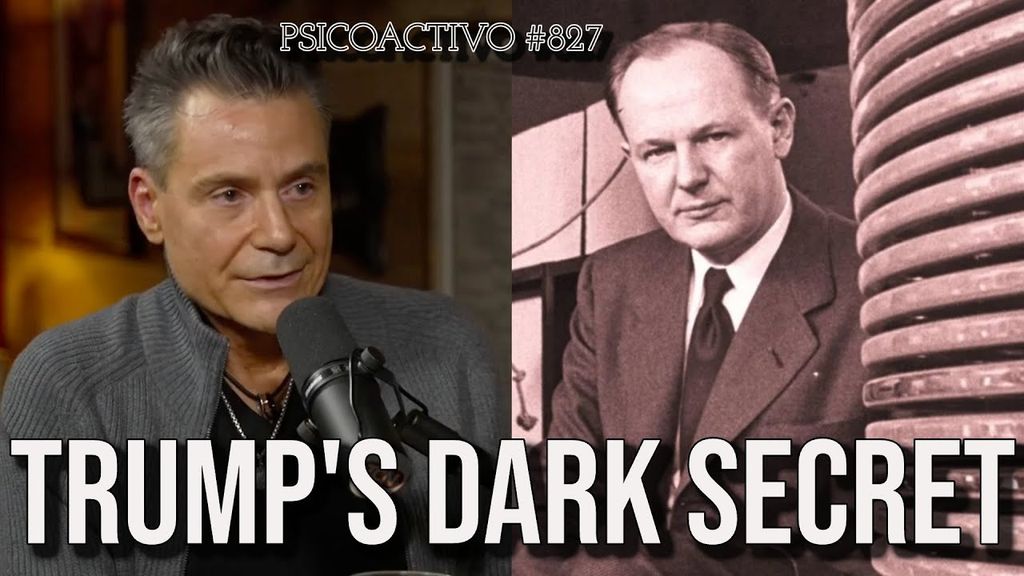
Policy relevance is reinforced through the Tesla connection. The discussion recounts that Tesla’s effects were seized by the Office of Alien Property in 1943 and reviewed by MIT professor John G. Trump at Wright‑Patterson Air Force Base, historically associated with Project Blue Book. The allegation that approximately 20 boxes remain missing adds a contemporary wrinkle: if verifiable, questions would arise about provenance, chain of custody, and the status of any derived research. Whether such materials informed defense programs is unknown, and no public, conclusive documentation has linked them to current systems.
UAP considerations surface through two vectors. First, the suggestion that some observed craft—such as those in the Navy’s ‘Tic Tac’ and ‘Go Fast’ footage—could reflect hyperefficient propulsion remains speculative, given unresolved sensor limitations and classified data. Second, the conversation cites an allegation of directed‑energy use in a recent operation, alongside references to Tesla’s early explorations of wireless power and beam concepts. Absent official confirmation, these assertions sit within a broader set of unverified claims that require independent evidence.
The discussion broadens further to include reported suppression in adjacent domains, including consciousness research, and references newly released ‘Epstein files’ as evidence of elite interest in unconventional science. Additional claims by Dylan Borland about a pivotal ‘power source’ and an archaeological Tic Tac–shaped object fold ancient‑influence narratives into the modern UAP discourse. While such accounts are noteworthy, they remain unproven without primary data, test results, or reproducible demonstrations.
If corroborated through transparent releases, peer‑reviewed studies, or verifiable chain‑of‑custody documentation, these claims could reshape understandings of energy, propulsion, and national-security research. For now, they underscore enduring tensions between calls for transparency, the realities of classification, and the high evidentiary bar required to validate extraordinary technological assertions.
Key Moments
- 00:17AJ Gentile’s new show and his recent conversation with Tucker Carlson are highlighted, with topics spanning scientific orthodoxy, pyramids, giants, remote viewing, Apollo, and alleged U.S. technology suppression.
- 01:48Prompted on energy transparency, Gentile states: “I think the US government [is] totally opaque about energy… probably has unlocked zero point or close to zero point energy.”
- 02:23Historic efficiency claims are cited, beginning with Charles Pogue’s purported 200 mpg carburetor in the 1930s and the assertion that market reaction led to policy constraints.
- 02:54Gentile links suppression to the 1951 Invention Secrecy Act, claiming devices “more than 20% efficient” would be instantly classified—a characterization presented in the discussion, not a confirmed statutory threshold.
- 03:23Tom Ogle’s 1970s system allegedly achieved ~200 mpg; the account claims he rejected oil-industry offers and later died under disputed circumstances, with his work disappearing.
- 04:25Stanley Meyer’s 1990s ‘water car’ is described as running via electrolysis; his death is recounted alongside a claim that a separate toroidal device drew energy “out of nothing” before secrecy actions halted progress.
- 06:35A broader pattern is alleged: inventors facing threats and thefts; Floyd “Sparky” Sweet’s videotaped device is cited, followed by claims of his death and the removal of his materials.
- 08:38Asked if such advances appear in defense systems, Gentile links possibilities to UAP ‘Tic Tac’ cases and a claim of directed-energy use in a Jan. 3 “Maduro snatch” operation—presented as an allegation.
- 09:46Tesla’s 1943 papers are said to have been seized by the Office of Alien Property and evaluated by MIT’s John G. Trump at Wright-Patterson AFB; 20 boxes are alleged missing, with a Blue Book connection noted.
- 12:06The conversation references Ingersoll Lockwood’s 19th-century ‘Baron Trump’ novels and The Last President, framing a broader cultural ‘rabbit hole.’
- 13:11The host broadens the theme to scientist silencing across fields including consciousness research, citing elite interest reflected in the recently released ‘Epstein files.’
- 14:51Dylan Borland is quoted implying exposure to crash recovery, reverse engineering, and a pivotal ‘power source,’ along with an archaeological Tic Tac–shaped find suggestive of ancient technological influence.
- 17:17Toroidal devices are revisited via Bob Greenyer’s ‘toroidal moments’ talks, and Ross Coulthart is quoted on a “strong probability” of electrogravitics or zero-point-derived energy in classified programs.
- 19:01The host expresses cautious hope that more files and data on ‘new physics’ and legacy programs could emerge, and suggests Carlson may ask Donald Trump about the missing Tesla boxes.
Related Topics
Links & References
- Tucker Carlson’s conversation with AJ Gentile referenced for claims about energy secrecy and Tesla’s papers.
- Bob Greenyer lecture on toroidal moments cited in relation to toroidal energy concepts.
- Psicoactivo episode on Dylan Borland’s archaeological claim and ‘power source’ remarks.
- Politico article on Ingersoll Lockwood’s ‘Baron Trump’ novels, referenced as cultural context.
- Psicoactivo Podcast page at KGRA for additional programming context.
 Continue with Google