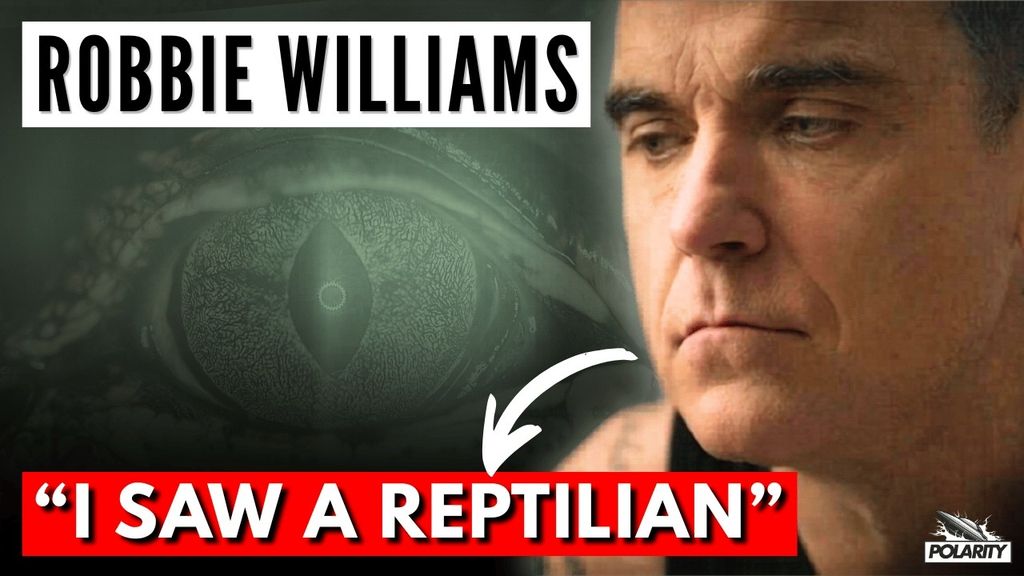
Robbie Williams Recounts Alleged Reptilian Encounter, Renewing Debate Over Celebrity Shapeshifter Claims and UAP Narratives


Celebrity accounts of anomalous encounters continue to intersect with public debates over Unidentified Anomalous Phenomena (UAP) and the limits of evidence. A new anecdote from singer Robbie Williams, delivered during an Australian radio appearance, has revived attention to longstanding claims of so‑called “reptilian” shapeshifters in entertainment circles. The Polarity program positioned Williams’ story within a tapestry of pop‑culture testimonies and esoteric interpretations that, taken together, challenge conventional narratives yet remain primarily anecdotal.
Williams has previously discussed UFO sightings and has engaged with prominent investigators at locations such as Skinwalker Ranch. In the latest account, he described an intimate moment during which a partner’s face appeared “reptilian,” followed by the partner reportedly saying, “I’m not a reptilian.” The show emphasized a pattern it sees across similar testimonies: perceived transformations occurring in heightened emotional or intimate contexts. That motif is echoed in past celebrity anecdotes cited by the program—including reports associated with musician Billy Corgan, a remark by Britney Spears that a date “looked like a lizard,” a story from rapper Lil Tony likening a facial change to a comic‑book character, and an allegation by Epstein accuser Juliet Bryant that his eyes appeared unusually black during climax.
The program situates these stories within broader metaphysical and interdimensional frameworks. A featured clip of researcher Jordan Maxwell describes a spectrum of non‑physical or hybrid entities—labeled variously as archons, jinn, demons, or reptilians—capable of influencing human behavior and culture. Additional references include remarks attributed to aerospace entrepreneur Robert Bigelow, summarized as “they’re walking among us,” and a line from retired U.S. Army Col. Carl Nell suggesting long‑standing non‑human interaction with humanity. The host also invokes cultural critiques of Hollywood’s influence and alludes to high‑profile criminal cases to argue that secrecy, manipulation, and ritualized abuse narratives may be intertwined with claims of anomalous phenomena.
Amid these assertions, the evidentiary basis remains largely testimonial. No independent physical or forensic corroboration is presented for the shapeshifting claims, and scientific counterpoints—ranging from perceptual errors and stress‑induced misinterpretation to suggestibility and pareidolia—are typically raised in mainstream assessments of such reports. While the program notes that multiple individuals describe similar motifs, commonality alone does not establish veracity without corroborating data.
Policy and disclosure questions also surface. The host points to purported registrations of the domains alien.gov and aliens.gov as suggestive of a messaging shift, though such administrative actions, if confirmed, would not in themselves signal policy change. More broadly, the current UAP policy landscape is defined by periodic government reports, scientific panels, and congressional oversight, which prioritize sensor data, calibrated observations, and provenance over anecdote. Conflating esoteric celebrity narratives with formal UAP inquiries risks obscuring the evidentiary thresholds used in official investigations.
Public interest in anomalous accounts remains strong, and Williams’ statement adds to a culturally resonant archive of personal experiences. Moving from viral anecdotes to verifiable knowledge will require primary source verification of interviews, independent confirmation of administrative claims, access to original recordings and metadata, and, where possible, multi‑sensor or clinical evidence. Until then, these narratives remain part of a broader conversation about how society interprets extraordinary experiences in the absence of definitive proof.
Key Moments
- 00:16The host claims the U.S. government registered the domains "alien.gov" and "aliens.gov," raising speculation about potential disclosure-related messaging.
- 01:37Background on Robbie Williams’ longstanding interest in UFOs, including visits to Skinwalker Ranch with Jeremy Corbell and George Knapp.
- 02:21Williams has previously discussed personal UFO sightings, characterized as large craft passing overhead.
- 02:37In a Melbourne radio segment, Williams recounts an intimate moment in which "her face turned into what I could only describe as a reptilian," followed by the woman responding, "I’m not a reptilian."
- 03:33The host highlights a recurring pattern in such reports: perceived shapeshifting or changing facial features often described during intimate encounters or emotional peaks.
- 03:59Reference to musician Billy Corgan’s past claim of witnessing a partner shapeshift, presented as a parallel celebrity anecdote.
- 04:21Epstein accuser Juliet Bryant’s description that Jeffrey Epstein’s eyes appeared "huge [and] black" during climax is cited as another example of perceived transformation.
- 04:35Atlanta rapper Lil Tony’s account of someone’s face changing "like Venom" is introduced as an additional pop-culture testimony.
- 05:24A resurfaced Britney Spears anecdote is noted, in which she said a date "looked like a lizard," with the host suggesting the clip appears sincere despite a laugh track.
- 06:41The host argues many such stories are concentrated around Hollywood and entertainment circles, framing them within concerns about manipulation and mass programming.
- 06:57A Jordan Maxwell clip presents an esoteric view: interdimensional entities—variously labeled archons, jinn, demons, or reptilians—can influence human affairs and culture.
- 09:05Citing retired U.S. Army Col. Carl Nell, the host asserts non-human intelligence has interacted with humanity for a long time, positioning these claims within broader UAP discourse.
- 09:20A Mel Gibson remark about a struggle between good and evil is used to frame a metaphysical contest for human "hearts and souls."
- 13:18An anecdote about Robert Bigelow includes the statement "they’re walking among us," offered as context for why disclosure may be complex.
- 14:16The host invokes the idea of "unlearning" prior assumptions—linking the Epstein case and secrecy taboos around genetics and hybrids—to argue disclosure could challenge social norms.
 Continue with Google