Dark Skies Creators Describe Alleged Naval Intelligence Contact and Probe Hollywood’s Role in UAP Messaging


Claims of covert engagement between U.S. national security entities and the entertainment industry have circulated for decades, usually in the context of military access and image management. When those claims intersect with Unidentified Anomalous Phenomena (UAP), they raise an additional set of questions about who shapes public narratives and why. Two veteran creators at the center of a 1990s network series about UFOs describe a direct approach they say came from someone claiming Office of Naval Intelligence ties who offered to work with them to embed “truths” in primetime television. Their account, coupled with broader reflections on disclosure, cultural influence, and the limits of present-day evidence, illustrates both the persistence of the subject and the difficulties of adjudicating its most consequential assertions.
According to producer Bryce Zabel and writer-producer Brent Friedman, an unknown guest appeared uninvited at a Hollywood launch event for their NBC show Dark Skies in the 1990s and said he had already seen their unaired pilot. The visitor, identified only as “JC,” allegedly proposed an ongoing relationship and later returned with a superior to outline purported factional lines within the military–intelligence space: an “aviary” associated with the Air Force said to resist disclosure, and an “aquarium” associated with the Navy described as more open to incremental public conditioning. The pair emphasize the difficulty of verifying the visitors’ identities and motives, but maintain that the outreach was real and extensive. The episode has fueled their current inquiry into whether Hollywood has at times served as a “slow-drip” vehicle for normalizing UAP concepts—or as a conduit for disinformation.
The possibility of government influence over screen narratives is not inherently far-fetched. For decades, film and television productions have engaged with official liaison offices to secure access to locations, hardware, and expertise. That established collaboration typically concerns conventional military portrayals, not UAP. Yet the creators argue it would be logical for officials holding sensitive UAP information to seek influence over how the public encounters the issue, whether to avoid panic, to deflect attention, or to acclimate audiences to unfamiliar ideas. The challenge, they acknowledge, lies in the evidentiary gap: the most decisive documentation of such arrangements, if it exists, remains out of public reach.
Friedman adds a separate and more personal claim: as a teenager he was told by a senior Reagan-era official that non-human entities are real and present, and that a government-run propaganda effort had seeded disinformation across media for decades. He quotes the official as having “cried himself to sleep every night” while being read into the program, suggesting the material transcended simple confirmation of extraterrestrial life and pointed instead to a destabilizing reframe of reality. Zabel later notes that the official went on to hold a Cabinet-level post, underscoring that however psychologically disruptive the briefings may have been, the individual remained trusted with significant responsibility. Neither Friedman nor Zabel names the official, and no documents are presented to corroborate the briefing details; the story remains anecdotal but is consistent with the pair’s broader contention that multiple information streams—truthful and manipulative—may have coexisted for decades.
The conversation places a spotlight on director Steven Spielberg, whose forthcoming feature Disclosure Day is cited as a possible inflection point for public discourse. They describe the film as carrying Spielberg’s sole story credit and interpret recent trailers as signaling a “hybrid” theme. The significance, they argue, is less about any single plot element and more about an iconic filmmaker’s cumulative framing of the subject over nearly half a century, from Close Encounters and E.T. through War of the Worlds, Men in Black (as producer), and television projects like Taken and Falling Skies. Spielberg has repeatedly denied government collaboration on UFO messaging; the guests acknowledge those denials while observing that few figures have shaped mainstream extraterrestrial imagery as extensively. With a June 12 release date cited for Disclosure Day, they describe it as a potential “closing argument” on the topic from a director in the late phase of a landmark career.
If cultural artifacts can reframe public understanding, recent documentaries provide a test case. Zabel and Friedman praise Age of Disclosure as a clear, high-uptake primer that consolidates voices from pilots to national security figures. They also concede its impact on broader public opinion may have been limited by the modern churn of crisis-driven news cycles. Part of the problem, they suggest, is systemic distrust: a portion of the public regards even credentialed insiders as participants in a directed narrative. The rise of generative AI further complicates matters by degrading confidence in images and video. In their view, simply increasing the number of official testimonies without delivering primary, verifiable data is unlikely to achieve consensus.
That skepticism is heightened by recurrent predictions assigning specific years to disclosure; the year 2027 circulates widely in social media circles. Zabel cautions against date-certain forecasts, noting a long history of missed timelines and emphasizing the absence of primary-source confirmation. Secondary sourcing—sources telling them what their own sources have heard—is insufficient by the standards of conventional journalism, he adds.
Beyond institutional dynamics, Friedman advances the argument that consciousness may sit at the core of the phenomenon. He emphasizes the subjective character of many encounters, including his own near-death experience during a life-threatening illness in which he perceived “light beings,” timelessness, and a volitional decision to return. Zabel recounts a separate out-of-body perception following a severe car collision, returning to awareness as a paramedic urged him to stay awake. The guests connect such episodes to common motifs in both reported abductions and near-death literature: telepathic communication, altered time perception, and powerful affective shifts. Friedman also describes experiences he interpreted as demonic, drawing a continuum across paranormal, spiritual, and UAP events and arguing that science and spirituality may be complementary inquiries into a single underlying reality. As an illustrative analogy, he invokes the quantum double-slit experiment and the unresolved relationship between observer and observed.
From a policy and research standpoint, these perspectives converge on a recurrent bottleneck: access to primary evidence. The guests assert that high-definition sensor data, recovered materials, or other decisive artifacts may exist but are not publicly shared. Without that transparency, they argue, public communications—whether through official statements, documentaries, or fiction—struggle to overcome entrenched skepticism. Meanwhile, if factional divides truly exist within defense and intelligence communities, with some favoring gradual acclimatization and others opposing disclosure on religious or national security grounds, inconsistent messaging would be an expected outcome. The claimed Navy–Air Force split, framed as “aquarium” versus “aviary,” is presented as an example of such internal divergence, though the terminology and substance remain unverified outside their account.
The pair’s new podcast, Sound, Light & Frequency, seeks to investigate the intersection of government secrecy, entertainment, and public belief. They plan to map film and television narratives against shifting official and semi-official UAP storylines, identify possible instances of behind-the-scenes guidance, and encourage industry peers to share experiences. They report that private outreach has already begun, suggesting their Dark Skies encounter was not unique. The project’s underlying premise reflects a broader methodological need: assembling a mosaic from disparate testimonies and cultural products while acknowledging the constraints of non-disclosure agreements, classification, and the fallibility of memory.
For readers tracking the UAP debate, several implications follow. First, the entertainment sector remains a powerful amplifier of ideas; shifts in framing by influential creators can recalibrate public expectations even in the absence of new data. Second, predictions of a definitive “disclosure date” have repeatedly failed; sustained progress likely depends on verifiable releases of records, imagery, and materials rather than timelines. Third, phenomenology tied to consciousness—near-death states, anomalous perception, and the subjective dimensions of experience—continues to challenge research approaches grounded solely in external instrumentation. Bridging those domains without sacrificing rigor is a central scientific and philosophical hurdle.
Ultimately, the accounts presented here are notable, detailed, and consequential if confirmed. They also underscore the evidentiary divide at the heart of the UAP discourse: persuasive testimony versus publicly testable proof. Whether future cultural milestones—such as a major studio film explicitly asserting “they’re here now”—will move opinion in the absence of shared primary data remains uncertain. Without greater transparency from institutional holders of evidence, the debate will continue to oscillate between compelling narratives, earnest investigation, and enduring public doubt.
Key Moments
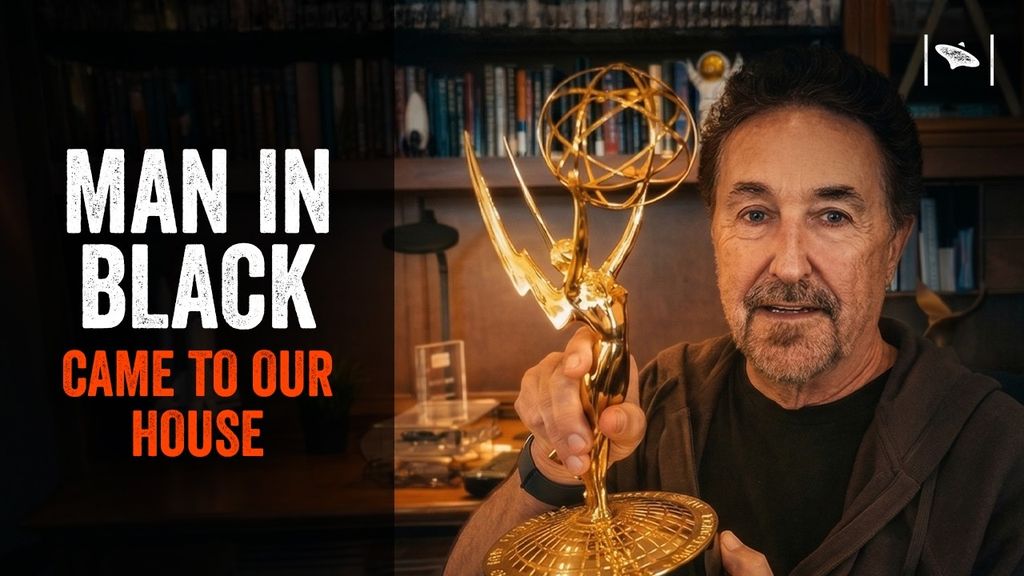
- 01:03Host Chris Lehto introduces guests Bryce Zabel (Emmy-winning producer, former CNN correspondent, co-creator of NBC’s Dark Skies) and Brent Friedman (writer-producer, Dark Skies co-creator), who now co-host Sound, Light & Frequency.
- 03:03Zabel recounts a Hollywood premiere party for Dark Skies where an unknown attendee said, "We’ve already seen your pilot… We’d like to strike a deal with you to have a closer relationship," despite the episode not yet airing.
- 04:06Friedman claims that at age 18 a senior Reagan administration official privately told him that aliens are real, that he had seen them, and that the government ran a long-term disinformation effort through books and materials.
- 05:31The pair frame a core question: whether government-linked outreach to Hollywood aims at a slow-drip conditioning toward truth or at deliberate disinformation.
- 06:00They note documented history of U.S. government and military consultation on film and television productions and argue it would be unsurprising if officials also sought to shape public thinking on UAP.
- 07:25They analyze trailers for Steven Spielberg’s forthcoming film Disclosure Day, suggesting a hybrid theme and describing the project as potentially the director’s "closing argument" on the alien question, given his sole story credit.
- 10:49Spielberg has denied collaborating with government on UFO messaging; the guests nevertheless assess his decades-long influence on the extraterrestrial narrative across Close Encounters, E.T., War of the Worlds, Men in Black, Taken, and more.
- 13:28On the documentary Age of Disclosure, they praise its clarity and reach but say it likely did not "move the needle" culturally amid competing global news.
- 15:48They discuss distrust of institutions, the complicating role of AI fakery, and a perceived narrative flip whereby some now suspect a conspiracy to persuade the public that UAP are real; names like David Grusch and Lue Elizondo are referenced.
- 20:21Friedman advances a consciousness-centric view of the phenomenon, arguing that subjective experiences and the limits of current science make purely objective proofs elusive.
- 30:51Friedman describes a near-death experience during sepsis, reporting encounters with "light beings," timelessness, and a volitional threshold to return, which influenced his decision to publicly share long-held experiences.
- 40:48Zabel recounts an out-of-body perception after a severe car collision, returning to consciousness as a paramedic urged him to stay awake.
- 42:51Friedman outlines episodes he interpreted as demonic, arguing for a spectrum linking paranormal, spiritual, and UAP phenomena; he posits science and spirituality as complementary lenses.
- 45:16The guests say the unnamed visitor called himself "JC" from Naval Intelligence, claimed factional divides (“aviary” for Air Force, “aquarium” for Navy), and asserted the Navy was more open to disclosure; they caution the account is difficult to verify.
- 58:15On 2027 disclosure predictions, Zabel is skeptical, citing a lack of primary sources and a long history of failed timelines.
- 01:03:47They note Spielberg’s public framing shift from "We are not alone" to "They’re here now," with Disclosure Day dated June 12, and anticipate cultural impact while stopping short of forecasting a breakthrough year.
- 01:05:32Sound, Light & Frequency aims to investigate possible government–Hollywood coordination, trace film narratives against official UAP discourse, and encourage other industry witnesses to share experiences.
Related Topics
Links & References
- Official site for Bryce Zabel and Brent Friedman’s Sound, Light & Frequency podcast investigating Hollywood’s role in UAP narratives.
- Homepage for Need to Know, a program featuring Bryce Zabel and Richard Dolan on UAP-related developments.
- Apple Podcasts listing for Sound, Light & Frequency.
- iHeartRadio page for Sound, Light & Frequency.
- Bryce Zabel’s X (Twitter) profile for updates on projects and commentary.
- YouTube channel for Need to Know with Zabel and Dolan.
- Apple Podcasts listing for Need to Know.
 Continue with Google