
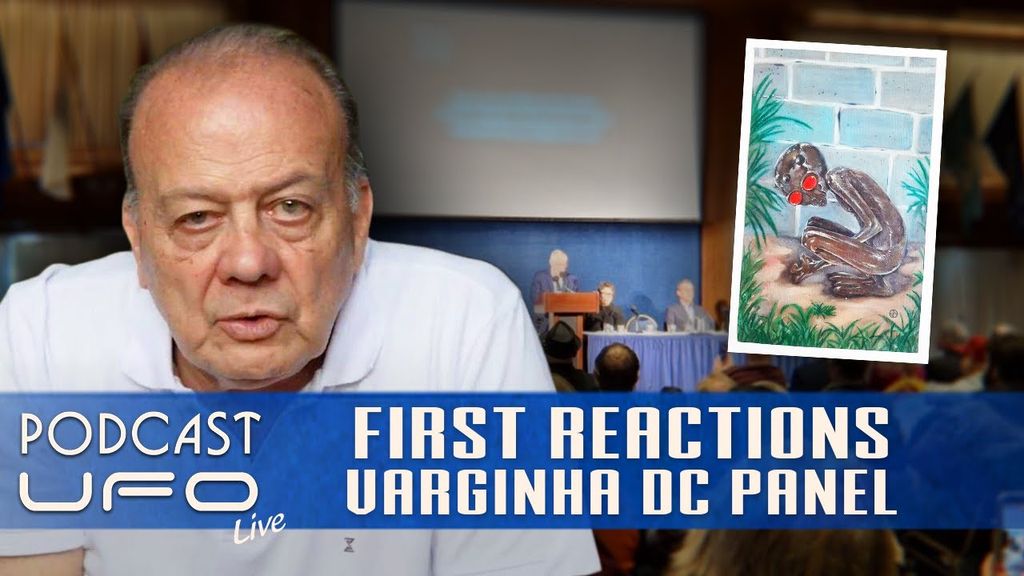
Inside the Varginha UFO Press Conference: Witness Claims, Congressional Signals, and the Hunt for a Paper Trail


The Washington event centered on the 1996 Varginha, Brazil case illustrates the core tensions now defining public discussion of Unidentified Anomalous Phenomena: the collision of striking testimony with stringent demands for verifiable evidence, the uneven pace of government transparency, and emerging proposals for structured archival searches. Attendees Sarah Gamm, a former analyst who supported the UAP Task Force, and activist-podcaster Anthony Miller offered granular impressions of a press conference led by filmmaker James Fox at the National Press Club—framing it as notable not for new documentation but for the concentration of witnesses, international participation, and policy interlocutors in one room. The result was a portrait of a disclosure ecosystem in which moving personal accounts, a handful of high-level policy signals, and calls for cross-border research all coexist with a still-lingering absence of publicly testable “receipts.”
Witness accounts anchored the program. In prepared remarks played and recounted during the discussion, participants said Brazilian civilians and officials in 1996 encountered a craft and living non-human beings. One described crash debris and the immediate aftermath; another—identified as a neurosurgeon—portrayed a small, frail patient with a teardrop-shaped head and lilac eyes who appeared lucid and responsive. Beyond anatomy, the doctor emphasized observational details: an apparent calm, a gaze toward the sky as if longing to depart, and an impression of high intelligence and gratitude conveyed without speech. Such testimony—deeply affective and consistent with earlier accounts recorded in Fox’s documentary work—was contextualized by attendees as emotionally powerful in person. Yet, even sympathetic observers acknowledged that the enduring evidentiary question remains: what records, imaging, or chain-of-custody documentation can be brought forward and authenticated?
A second pillar of the event involved policy and oversight claims presented by veteran congressional staff and current lawmakers. Former Senate staff director Kirk McConnell told the audience that, in the years following the 2017 reporting that rekindled congressional interest, senators from both parties received briefings in secure facilities where credible sources alleged a longstanding pattern of crash retrievals, reverse engineering efforts, and the recovery of non-human remains. McConnell’s remarks did not constitute declassification, but they indicated that the claims encountered by the public at the press conference are not isolated anecdotes; they align with allegations assessed within formal oversight channels. In parallel, Representative Eric Burlison urged swift legislative action, citing a need for whistleblower protections and a comprehensive disclosure statute, and invoking the JFK Records Act as a model for forcing the release of sensitive historical material. His message relied on political dynamics as much as process: he said that sustained public pressure is the decisive force that moves Congress when entrenched agencies resist.
Scientific framing was provided by a recorded statement from Jacques Vallée, who placed the Varginha case within a broader historical pattern and explicitly advocated for more systematic access to data. Vallée described architecting a multi-database “data warehouse” during a Defense Intelligence Agency–sponsored study that aggregated 260,000 screened reports and hundreds of cases involving alleged occupants. He referenced fieldwork tied to historical incidents in the United States and France and said a set of observed creatures across several cases “breathed air normally,” a claim that, if ever corroborated through authenticated records or biological samples, would bear directly on hypotheses about biology and origin. Vallée also cited his role on the scientific advisory board for France’s CNES and noted that GEIPAN, CNES’s UAP office, and independent technical working groups have published case analyses and environmental data. He urged a relaxation of classification barriers—without compromising critical national security assets—to enable multidisciplinary research and international collaboration, even characterizing the phenomenon as appearing “extraterrestrial” and “empowered by advanced artificial intelligence,” a perspective that reflects his assessment rather than a consensus finding.
The evidentiary gap remained the central friction point. While attendees emphasized the depth and poise of Brazilian witnesses, and while Fox highlighted ongoing efforts to assemble a U.S.–Brazil coalition to locate archival records, the absence of public, independently verifiable imagery or forensic records continued to loom large. Fox acknowledged this reality, recognizing that even genuine material faces a steep credibility barrier in an era of synthetic media and sophisticated hoaxes. The conversation openly confronted that challenge: moving testimony and aggregated casework are valuable, but researchers, policymakers, and the public will ultimately require authenticated documentation—whether in the form of official cables, flight records, medical logs, or validated media—to resolve core disputes.
Concrete avenues for locating such documentation were outlined. Retired Colonel Fred Clawson pointed to the likely existence of a paper trail regardless of any special access programs. According to his analysis, an American defense attaché would have reported to the State Department on any Brazilian military activity surrounding a crash response, creating formal cables or memos. Any U.S. transport mission, even if classified in purpose, would still require international flight plans and leave a record at the FAA and Air Force archives, including at Maxwell Air Force Base. The argument did not prove that such records exist for Varginha, but it offered a roadmap for congressional investigators, historians, and transparency advocates to pursue targeted Freedom of Information Act requests and intergovernmental archival searches.
The discussion also addressed the human dimension behind the documentation: stigma and the personal consequences for witnesses. Attendees relayed that Brazilian participants described years of ostracism—ridicule from peers, professional setbacks, and a climate in which the Varginha case was long dismissed as a hoax. The emotional tenor of the press conference, in which some witnesses appeared visibly moved, was interpreted by those present as the product of that prolonged social pressure combined with the gravity of their claims. Attendees contrasted Brazil’s historical skepticism toward UFO claims with a cultural openness to parapsychology and spiritist traditions, a duality that complicates simplistic assumptions about witness credibility. Whatever the ultimate assessment of specific events, the civic stakes of destigmatization are clear: fewer barriers to reporting and a more respectful discourse improve the quality of both scientific inquiry and oversight.
Anecdotal observations beyond Varginha surfaced as well, framed cautiously. Gamm recounted observing luminous orbs near the U.S. Capitol on a prior evening with several others, noting abrupt accelerations, altitude changes, and a figure-eight motion pattern. She said some devices malfunctioned and that she captured video later enhanced by a third-party program. Without corroborating sensor data or independent confirmation, such claims remain provisional, but they illustrate the kind of low-signal, high-ambiguity observations that recur in UAP reports and challenge conventional screening methods.
The political dynamics around transparency surfaced repeatedly. Participants agreed that UAP has garnered unusual bipartisan attention in recent years, though their personal impressions suggested uneven engagement across caucuses and committees. Advocacy groups described a strategic, district-by-district approach that pairs constituent outreach with member education and staff-level briefings to keep the issue from receding amid competing legislative priorities. Those efforts aim to ensure that any records-retrieval mandate prioritizes thorough public release schedules, robust classification review standards, and meaningful protections for personnel who come forward with documentary evidence.
On the science-and-policy interface, the event underscored the importance of making high-quality data accessible to independent investigators. Vallée’s appeal for weakening nonessential classification, paired with references to CNES/GEIPAN’s open case files, suggests a template: a standing archive, structured metadata and provenance standards, and clear processes for external replication and peer review. In the United States, where UAP data is often dispersed across agencies and contractors, replicating that transparency will require reconciling national security equities with scientific norms. Segmenting data behind incompatible stovepipes, as Vallée warned, hinders comparative analysis across cases and limits the ability to test competing hypotheses, whether prosaic or extraordinary.
Attendees did not gloss over government reluctance to acknowledge uncertainty. Fox relayed the logic often voiced by military officials: formally admitting the existence of craft that penetrate sensitive airspace and outperform current systems could amount to disclosing vulnerability without an available mitigation strategy. Whether one agrees with that calculus, it remains a pervasive rationale for secrecy. The counterargument—voiced by advocates and echoed by some lawmakers—is that withholding fundamental information about non-human intelligence, if known, is untenable in a democratic society and that institutional credibility is best preserved by transparent, consistent engagement with the public record.
In practical terms, the path forward outlined by participants blends grassroots pressure, investigative rigor, and international cooperation. On the U.S. side, that includes codifying a disclosure framework with timelines and oversight teeth; clarifying whistleblower rules and protections to reduce personal risk; and directing agencies to conduct targeted archival searches, beginning with defense attaché communications, flight and logistics records, and any intergovernmental memoranda with Brazilian counterparts. On the scientific side, it means creating a venue where qualified researchers can analyze materials, imagery, and medical documentation under chain-of-custody protocols, with results published to the maximum extent possible. For Brazil and other nations, structured partnerships and reciprocal access could reduce duplication and enrich the evidentiary base.
The Varginha-focused gathering did not settle decades-old debates. It did, however, consolidate multiple strands that have been developing in parallel: emotional, detailed witness narratives; assertions from experienced policy hands that similar claims have reached the highest levels of congressional oversight; appeals from scientists for data access and cross-border collaboration; and a legislative push that views public engagement as the indispensable catalyst. Whether this confluence produces decisive, documented breakthroughs will depend on what records can be located and authenticated. Until then, the conversation will continue to oscillate between testimony that many present found persuasive and the verification standards that the broader scientific and policy communities will require.
Key Moments
- 08:23Opening remarks at the National Press Club characterized 'non-human biologics' and previewed testimony about live non-human beings allegedly associated with a 1996 crash in Brazil; reference was made to the post-2017 UAP oversight landscape.
- 14:53Former Senate staff director Kirk McConnell stated senators heard credible sources in secure settings describe alleged crash retrievals, reverse engineering of craft, and recovery of non-human bodies spanning decades.
- 23:22Jacques Vallée said a DIA-sponsored program aggregated 260,000 screened reports and hundreds of cases involving reported occupants; he cited multiple historical cases, asserted the creatures 'breathed air normally,' and urged easing classification to enable scientific study.
- 27:34Vallée called for international cooperation and open archives, noting French CNES/GEIPAN investigations and stating the phenomenon 'appears to be an extraterrestrial phenomenon empowered by advanced artificial intelligence'—a claim presented as his assessment.
- 33:30James Fox described the logistical effort to bring Brazilian witnesses to Washington and asserted that debris and at least one being were flown out of Brazil by the U.S. shortly after the 1996 incident; he advocated a U.S.–Brazil records search.
- 45:39Brazilian crash witness Carlos de Souza recounted seeing a craft and later being threatened to keep silent; he appealed for truth and public disclosure.
- 51:05Attendees discussed how Brazilian witnesses faced social stigma for years, contrasting it with relative openness in Brazil to parapsychology, and described the emotional toll and gratitude for the U.S. audience’s reception.
- 52:38Neurosurgeon 'Dr. Italo' described treating a being: teardrop-shaped head, lilac eyes, three fingers and opposing thumb, small mouth; he perceived gratitude and high intelligence, and said the being gazed toward the blue sky, wanting to leave.
- 01:05:46Retired Colonel Fred Clawson argued a discoverable paper trail should exist via the U.S. defense attaché in Brazil, State Department communications, international flight plans, and archives at Maxwell AFB and the FAA.
- 01:11:54Rep. Eric Burlison urged passage of a UAP Disclosure Act and stronger whistleblower protections, citing the JFK Records Act as a precedent and emphasizing the need for public pressure to compel agency compliance.
- 01:26:06Fox suggested disclosure is likely to be driven by the public rather than formal government announcements, describing national security concerns often cited to justify secrecy.
- 01:30:24Gamm described witnessing luminous 'orbs' near the U.S. Capitol before a prior UAP hearing, noting unusual motion and device malfunctions; she said video exists, though broader corroboration was not detailed.
 Continue with Google