
Project Gravitar Readies S-4 Cinematic and VR Rollout as UAP Oversight, CE5 Claims, and Digital Evidence Debates Intensify


Public engagement with Unidentified Anomalous Phenomena is entering a new phase in which cinematic reconstructions, virtual reality environments, and grassroots media platforms coexist alongside calls for formal oversight. The expanding ecosystem makes the subject more accessible and culturally salient, yet it also raises the evidentiary bar, highlights policy gaps, and intensifies scrutiny of claims that cannot be independently verified. Within this landscape, Project Gravitar’s rollout, debates over CE5 and monetized contact, and a surge of short-form “archive” clips illustrate the tension between public curiosity and the need for rigorous standards.
Project Gravitar and the Lazar Narrative’s Return to Center Stage
Project Gravitar announced an April 3, 2026 release window on Amazon for “S-4: The Bob Lazar Story,” backed by a new trailer that foregrounds high-fidelity CGI recreations of the facility and craft Lazar has long described. According to the discussion, the production team invested in custom hardware and rendering pipelines to reproduce the site’s architecture and the interior of the so‑called “sport model,” paying attention even to period-accurate set details. The project is framed as a three-part effort: a documentary, a book, and a virtual reality experience intended to let users “walk” the facility and step inside the craft environment.
The renewed focus on S-4 underscores a broader dynamic: legacy accounts are being reintroduced to mass audiences through contemporary tools. High-production-value reconstructions do not, in themselves, validate underlying claims. Yet they can clarify narratives, preserve institutional memory of testimony and diagrams, and create shared visual references that standardize what, for decades, lived in text transcripts and sketches. The planned VR module raises additional questions. Immersive media may amplify interest and facilitate intuitive understanding of spatial details. It can also blur lines between documentary dramatization and evidence, intensifying the need for disclaimers, transparent sourcing, and clear differentiation between verified data and illustrative content.
Policy and Oversight: Access, Chain-of-Custody, and the Private-Sector Challenge
Calls for deeper oversight continue to collide with the allegation that the most consequential materials—hardware, data, or biological samples—may sit within private contractors under labyrinthine corporate structures. If accurate, that would complicate congressional access absent targeted legal authorities, specialized auditing, and forensic accounting capable of tracing funds and deliverables through classified, compartmented pathways. In the absence of comprehensive whistleblower protections with real-world career safeguards, potential witnesses face significant disincentives to step forward; the result is a public conversation shaped by a small subset of voices despite claims of broader participation behind the scenes.
Even so, the UAP topic has become normalized to an extent few anticipated. Since the 2017 New York Times reporting, explicit references to UAP and even non-human intelligence appear in legislative language; mainstream networks and major podcasts cover the subject routinely; and members of Congress from both parties have expressed concern about opaque funding flows to programs operating beyond standard oversight mechanisms. That momentum is tempered by uncertainties about what senior executive leaders are actually told, as lawmakers themselves cite longstanding “need-to-know” constraints that can restrict even presidential briefings. In this environment, meaningful progress will likely depend on enforceable reporting obligations, timely inspector general referrals, and a framework that compels custodians of relevant materials—public or private—to preserve chain-of-custody and enable independent review.
CE5, Monetization, and the Demand for Testability
A new trailer from Steven Greer promotes a large-scale CE5 expedition that claims “undeniable” video evidence of contact mediated by group consciousness practices. The broader CE5 proposition—structured meditation, ritualized protocols, and remote viewing techniques coordinated in field settings—remains polarizing. Supporters point to transformative personal experiences. Critics question replicability, selection bias, and whether revenue models create perverse incentives to prioritize spectacle over documentation standards.
The current debate reflects two parallel truths. First, Greer’s early-era efforts helped centralize long-form testimony and catalyze a generation of public interest in official secrecy surrounding UAP, particularly through organized briefings and recorded affidavits. Second, contact claims framed as purchasable “experiences” face a steep credibility curve if they do not provide auditable metadata, calibrated instruments, synchronized sensor logs, and clear criteria for falsification. Absent such controls, apportioning evidentiary weight remains difficult, and audiences newly drawn to the topic by premium media will encounter a familiar dilemma: compelling narratives without commensurate proof.
The Flood of Digital Evidence and the Provenance Problem
Beyond marquee productions, a parallel universe of short-form “alien archive” clips circulates online, blending handheld footage, alleged contractor attributions, and claims of crash retrievals or biologics. This content often arrives without original files, sensor telemetry, or unbroken chains-of-custody. The result is a persistent verification bottleneck in an era when consumer graphics, robotics demonstrations, and AI-assisted editing can mimic extraordinary scenes with minimal telltale artifacts.
A consistent analytical approach favors source authentication over viral replication. If a video purports to originate from a lab or military context, the expectation should be controlled lighting, stabilized capture, documented lenses, synchronized audio, and procedural logs consistent with scientific or forensic documentation. When purported origins imply high-stakes research, shaky or underexposed imagery is not impossible, but it is improbable as the definitive evidentiary record. The burden then shifts to corroboration: multiple independent observers, cross-sensor confirmation, and verifiable time-location stamps. Without those, such clips may inform hypotheses but cannot resolve them.
Competing Hypotheses: Sphere Networks and Ultraterrestrials
As imagery debates unfold, conceptual models continue to diversify. One such framework—the Sphere Network hypothesis—posits that small orbs function as anti-gravity surveillance nodes, communicating via high-power, line-of-sight signaling that can create collateral effects misinterpreted as “hauntings.” It further suggests specialized node types, adaptive camouflage, and environmental interactions that might explain some close-encounter reports. Another line of thought—the ultraterrestrial hypothesis—entertains the possibility of an advanced, subterranean civilization operating an above-ground defensive or monitoring grid.
These models, while provocative, remain speculative. Their utility lies in generating testable predictions: spatial-temporal communication patterns detectable by RF instrumentation, repeatable EM signatures at purported hotspots, or consistent correlations between orb activity and measurable physiological effects at safe exposure levels. Developing field protocols that prioritize instrumented baselines, ethical risk management, and independent replication would allow such ideas to be evaluated on their merits.
Technology Crosswinds: Robotics, CGI, and Immersive Media
Rapid advances in humanoid robotics—exemplified by highly agile demonstrations and sports-like coordination tasks—are reshaping public expectations for what engineered platforms can accomplish. The same trajectory that enables lifelike movement in real-world machines also elevates the realism of computer-generated assets and mixed-reality overlays. For UAP research, this has two immediate implications. First, verification workflows must evolve, emphasizing raw data access, sensor fusion (e.g., optical, thermal, radar), and third-party preservation. Second, immersive educational tools such as VR can responsibly enhance public literacy if they maintain clear boundaries between reconstruction and evidence while citing sources and uncertainties.
Public Engagement and Next Steps
Events like Contact in the Desert and long-form interviews with figures from entertainment and research circles continue to broaden the audience. That can be constructive when paired with critical evaluation, standardized documentation, and open methodological discussion. In the near term, the Project Gravitar release will test whether cinematic and virtual reconstructions can help the public and policymakers navigate historical claims more coherently without overstating what has been proven. Simultaneously, debate over CE5 and retreat-based monetization will likely intensify pressure for transparent study designs, peer-reviewed results, and data-sharing practices that transcend brand loyalty.
For lawmakers and inspectors general, the central policy question remains whether any UAP-related materials, contracts, or data repositories exist beyond regular oversight and, if so, how to compel custodians to produce them. Effective solutions would include explicit mandates for contractor reporting under penalty of law, secure pathways for whistleblowers with enforceable anti-retaliation protections, and resourced audit teams capable of following complex funding trails. For researchers and the public, progress depends on disciplined skepticism that neither dismisses anomalous observations out of hand nor elevates them without proportional proof. Between those poles lies a pragmatic roadmap: instrumented fieldwork, rigorous provenance, method transparency, and reproducibility.
As UAP coverage migrates from niche forums to mainstream platforms, the stakes of getting the process right increase. Project Gravitar’s technical craft, the contested terrain of CE5, the torrent of online clips, and the emergence of competing hypotheses all point to a single requirement that transcends any one claim: evidence must be preserved, contextualized, and tested in ways that allow independent confirmation. Only then can public engagement—amplified by modern media—translate into durable knowledge and informed policy.
Key Moments
- 02:31Weldon announces a multi-part interview with actor Thomas Jane on UAPs, disclosure history since the 2017 Kean/Blumenthal reporting, and Jane’s book-in-progress on alien species and culture.
- 18:24Project Gravitar schedules an April 3, 2026 Amazon release for “S-4: The Bob Lazar Story,” accompanied by a new trailer showcasing detailed CGI reconstructions of the facility and craft interior.
- 23:33The production team reportedly built custom hardware and software to render high-fidelity visualizations; period-accurate set details were emphasized as part of the project’s research rigor.
- 25:32Weldon recounts Lazar’s claim that an attempted cut into a live reactor allegedly led to a fatal explosion later registered as an unannounced underground nuclear test; he adds that the project faced pushback during development.
- 26:55Project Gravitar is described as a three-part initiative: a book, a documentary, and a VR experience enabling users to ‘walk’ through S-4 and explore the craft; the VR release is expected months after the film.
- 31:21On congressional access, Weldon argues that the most sensitive materials may be held by private contractors under opaque arrangements, complicating oversight and necessitating auditors, investigators, and legal authorities.
- 32:59He highlights limited whistleblower protections and career risks that deter testimony, estimating that public voices likely represent a small fraction of potential insiders.
- 34:14Weldon notes the mainstreaming of UAP discourse since 2017, citing major media coverage, references to NHI/UAP in federal legislation, and bipartisan interest among some lawmakers.
- 37:49He references the ‘need-to-know’ limits on presidential briefings noted by Rep. Tim Burchett, underscoring uncertainties about what executive leaders are actually told.
- 48:18A new CE5-focused trailer from Steven Greer prompts discussion of the paid-retreat model, claims of consciousness-based contact, and the promise of “undeniable” video evidence.
- 55:39Weldon reviews Greer’s expedition marketing—meditation, remote viewing, and ritual components—questioning testability, promised outcomes, and the centrality of Greer’s brand.
- 01:01:50He credits Greer’s early long-form whistleblower interviews and public events with helping shape the modern disclosure era while maintaining skepticism about ongoing claims.
- 01:04:47An "Alien Archive" site hosting short-form UAP and entity clips is examined; Weldon is openly skeptical of several videos and argues authentic lab or military “biologics” footage would likely be high-quality and methodically captured.
- 01:24:06Patrick Jackson’s Sphere Network hypothesis is outlined: small ‘orbs’ act as anti-gravity surveillance nodes capable of high-power, line-of-sight communications that may produce perceived ‘poltergeist’ effects.
- 01:29:51Weldon discusses the ultraterrestrial hypothesis—an advanced subterranean civilization with an above-ground security apparatus—while framing it as a compelling but unproven model.
- 01:33:25He spotlights new humanoid robotics demonstrations, arguing rapid capabilities growth will complicate authentication of UAP media yet may also yield beneficial applications.
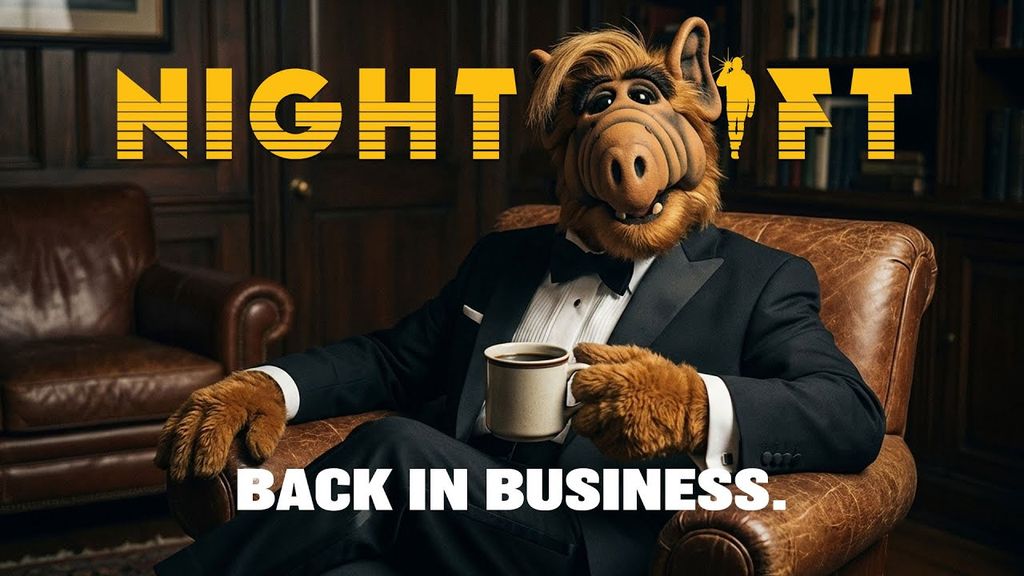
- 01:36:03Night Shift will attend Contact in the Desert; Weldon promotes a discount code and previews additional interviews, including the Thomas Jane series.
Related Topics
Links & References
- Night Shift website with channel information, merchandise, and updates mentioned during the program.
- Night Shift community Discord link shared for ongoing discussion.
- Alternate Night Shift Discord invite provided in the channel metadata.
- Patreon page where early access to the Thomas Jane interview and other material will be posted.
- Project Gravitar website with updates on the S-4 documentary, VR experience, and related media.
 Continue with Google