
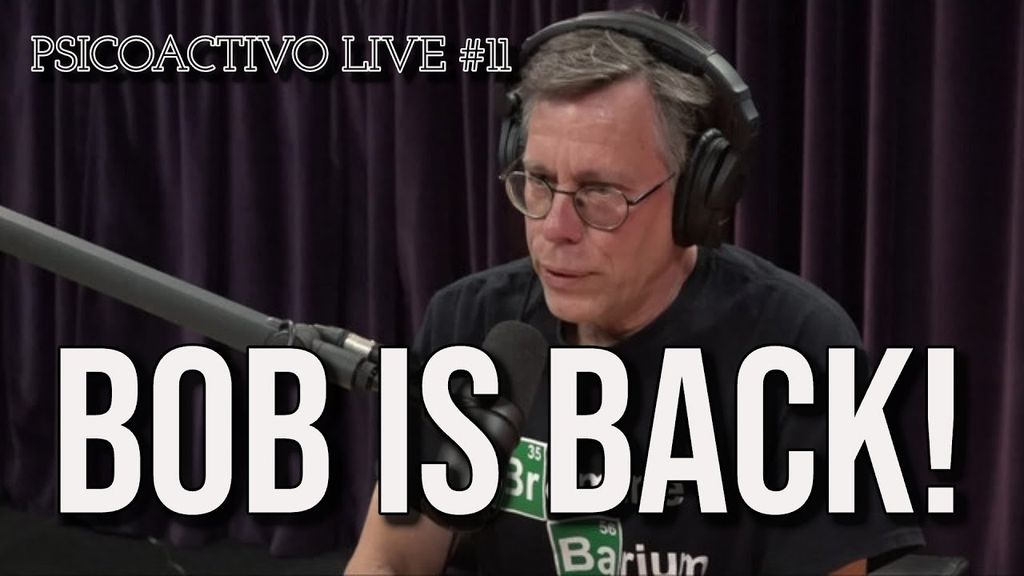
Bob Lazar’s High-Profile Return Aligns with Congressional UAP Oversight Push and Emerging Science Signals


Public attention on Unidentified Anomalous Phenomena (UAP) is intensifying across media, politics, and science. Reports that Bob Lazar will reappear in a long-form conversation with Joe Rogan, coinciding with the release of a new documentary helmed by Luigi Vendittelli, arrive as lawmakers escalate efforts to access and disclose tightly held records. At the same time, scientists continue to probe evidence for life beyond Earth using next-generation telescopes, and NASA advances plans for crewed lunar missions. Together, these developments underscore an enduring tension: how to reconcile a demand for transparency with the realities of compartmentalization, classification, and scientific uncertainty.
Media and documentary developments
Announcements around Lazar’s return to major platforms signal a renewed focus on one of the most controversial figures in modern UAP history. Holly, a commentator associated with Project Nanu, stated that Rogan will host Lazar alongside filmmaker Luigi Vendittelli to mark the April 3 documentary release. Vendittelli has indicated he spent four and a half years interviewing and testing Lazar’s consistency, concluding that Lazar withholds certain details rather than fabricating his account. He described this as an intentional omission strategy: reserving verifying specifics so that future claimants can be vetted against them. That posture may frustrate some observers seeking exhaustive documentation, but it also reflects the collision between personal risk management, legacy stigma, and ongoing controversy surrounding Lazar’s background and claims.
The appearance is expected to be accompanied by additional interviews from independent outlets, continuing a pattern in which mainstream and niche media ecosystems overlap to drive audience interest. For the broader community, the Lazar media cycle has historically catalyzed waves of renewed scrutiny—stimulating skeptics to reiterate concerns over educational records and corroboration, while prompting supporters to highlight consistencies in Lazar’s narrative about restricted facilities and anomalous propulsion. Whichever position one takes, the forthcoming interviews appear likely to recenter debates over witness credibility and the standards of proof appropriate to historically opaque programs.
Policy, oversight, and the national security frame
In parallel, Rep. Eric Burlison’s public engagements have become a focal point for policy watchers. On his Fresh Freedom podcast, Burlison hosted researcher UAP Gerb for a detailed discussion of risk framing, governance, and the legal and procedural barriers to declassification. Gerb urged a pragmatic approach to the “threat” question, noting claims that U.S. personnel have been harmed in encounters and suggesting there have been efforts to compel or down anomalous craft. He advised avoiding both romanticized and overly militarized extremes, proposing that preparedness and caution are warranted even in the absence of a singular, confirmed narrative about intent.
The pair also explored longstanding concerns that UAP-related information has been partitioned across agencies in such a way that even elected leaders and some executive principals may lack complete awareness. Gerb referenced episodes from past administrations and public records such as the 2016–2017 Podesta emails to illustrate how advisory and advocacy networks formed around the topic. Whether or not specific individuals were fully “read in,” the conversation reflected a view shared by many oversight advocates: that highly compartmentalized systems can shield programs from routine checks, contributing to fragmented or delayed policymaker awareness.
Why an executive order may not unlock everything
One of the most substantive segments addressed the legal structure of Department of Energy (DOE) and Atomic Energy Commission (AEC) classifications. Gerb described “Restricted Data” as a born-secret regime governing nuclear-related materials that are not readily subject to executive declassification. Within that architecture—encompassing categories like transclassified foreign nuclear information—he argued that a stroke-of-the-pen order may yield selective releases (for example, some videos or incident reports) without exposing the deeper “legacy program” scaffolding tied to retrieval, storage, and exploitation. In other words, there is a practical difference between public-facing artifacts and the underlying acquisition and technology pathways that government and contractors may have curated for decades.
According to Burlison, his office enlisted David Grusch part time to help identify where and how to look for relevant materials, a move consistent with the congressman’s repeated claims that the terrain is “extremely challenging” to navigate. Gerb complemented that view with a historical frame, likening early postwar non-terrestrial technology efforts to a “Manhattan Project 2.0” that subsequently evolved within the special access program (SAP) environment—adapting to successive oversight waves by using cover offices, creative funding mechanisms, or limited reporting structures. Whether or not one accepts the full scope of that narrative, it captures a fundamental oversight dilemma: programs designed to minimize detection and disclosure can outlast reforms unless Congress and inspectors general gain durable visibility into contracting, archives, and classification rationales.
High-profile disappearances and a call for investigations
Burlison’s recent Fox News appearance extended his oversight posture into an emotionally charged area: reports of missing or deceased scientists and officials with ties—direct or tangential—to advanced technology domains. He cited the case of retired Air Force Maj. Gen. Neil McCasland and the disappearance of scientist Monica Reza, adding that he had asked the FBI to investigate a separate suspicious suicide of a colleague associated with whistleblowers David Grusch and Jake Barber. These statements remain allegations and requests for inquiry; they do not establish causality or UAP linkage. Nonetheless, the cluster of incidents around sensitive research areas highlights why lawmakers and the public frequently default to national security considerations before extraterrestrial hypotheses. The possibility of foreign targeting of high-value expertise, theft of intellectual property, or gray-zone coercion remains a central policy concern irrespective of UAP.
Transparency versus protection of sources and methods
Burlison also advanced a practical rationale for why some UAP imagery is not released: collection platforms and sensors can be among the most sensitive secrets the government holds. He said he had submitted formal requests to multiple departments for access to two to three dozen files and asserted that internal contacts are monitoring for any file movement or alteration following those requests. The account is consistent with a broader Capitol Hill pattern in which members seek to view classified materials in a secure setting, then press for partial public release once national security equities—such as sensor resolution, signatures, or platform deployment—are protected. Whether these processes result in meaningful public disclosures often hinges on balancing public interest with genuine operational risk.
Speculation about official portals and information tactics
Author Annie Jacobson drew attention to the recent registrations of aliens.gov and alien.gov, predicting that the White House could eventually use such a portal to publish selected UFO records and framing the tactic as possible informational “chaff”—a way of directing attention while obscuring more sensitive positions. Her characterization is speculative; no official plan has been announced. Still, the comment illustrates how even the digital infrastructure around government communications can become a canvas for public expectations and narratives about disclosure.
Science frontiers: exoplanet biosignatures inch toward higher confidence
Beyond policy debates, evidence-gathering in mainstream science continues to shape public understanding of life beyond Earth. Physicist Sabine Hossenfelder reviewed accumulating exoplanet data from the James Webb Space Telescope (JWST) and other instruments, focusing on atmospheres where combinations of gases would be difficult to maintain without biological processes. K2-18 b, for example, has shown water vapor and possible methane signatures; earlier analyses raised the prospect of dimethyl sulfide—on Earth predominantly produced biologically—though reanalyses emphasized that the data permit multiple atmospheric models. TOI-270 d has yielded relatively strong signatures of methane, carbon dioxide, carbon disulfide, and ethane across independent teams, again with the caveat that abiotic pathways remain plausible. TRAPPIST-1, a nearby system with multiple rocky worlds in the habitable zone, continues to attract observing time, although flaring behavior and the small, active host star complicate retrieval of clean atmospheric signals.
Hossenfelder’s bottom line is measured but notable: astrophysicists may be nearing a case that meets the community’s high standards for evidentiary significance, though JWST alone may not always suffice. Even if and when such a biosignature is confirmed, this line of inquiry is distinct from UAP: it would not validate non-human craft in Earth’s skies but would profoundly influence the broader context in which the public and policymakers consider anomalous phenomena.
Spaceflight milestones and the Moon’s return
NASA’s Artemis program, including the planned Artemis II crewed flyby of the Moon, continues to advance human exploration goals. Mission materials emphasize that astronaut Christina Koch would become the first woman to travel to lunar distance, and that Artemis II serves as a stepping stone for sustained operations and eventual Mars missions. NASA officials have also previewed ambitions for a surface presence and cislunar infrastructure. While radiation risks and deep-space hazards remain areas of engineering and biomedical focus, sustained investment and international-commercial partnerships reflect a concerted effort to return humans to the lunar neighborhood with greater resilience than in the Apollo era. The renewed lunar push inevitably intersects with UAP-adjacent narratives in the public imagination, but its drivers are strategic, scientific, and technological.
High-strangeness, consciousness, and contested overlap
The program also touched on a spreading cultural conversation about psychedelic experiences, so-called “machine elves,” and whether recurring reports across cultures hint at a deeper layer of reality. A satirical monologue about being “banned from the DMT realm” drew attention precisely because it echoes motifs common in serious trip reports: entity encounters, geometric intelligence, and perceived communications. Commentator Jason Wilde summarized these patterns—elves, mantids, watchers, serpents—arguing that their cross-cultural recurrence suggests a field of consciousness extending beyond the brain, potentially intersecting with mythic traditions and even aspects of UFO encounter lore. These claims remain anecdotal and scientifically unsettled. Still, the dialogue reflects a growing, if controversial, interest in consciousness studies on the periphery of UAP research, where hypotheses occasionally span neuroscience, anthropology, and parapsychology.
Culture and memory: documenting claims and testimony
The community’s effort to catalogue the history of claims was also on display via the Anomalous Cards “Heroes of Truth” series, which featured astronaut Gordon Cooper. Cooper, who spoke publicly after his NASA career, described a 1951 encounter with maneuverable disc-like objects and recounted a 1957 incident at Edwards Air Force Base he said was filmed and sent to Washington. Such materials do not resolve empirical debates, but they contribute to a living archive that helps journalists, researchers, and the public track the evolution of testimony and how it has been received across decades.
What to watch next
If the reported Lazar interviews materialize around the documentary’s April 3 debut, they will likely reset public attention on long-running disputes over witness credibility and evidentiary standards. In Washington, continued requests from members of Congress to view classified videos and program materials could yield incremental disclosures or, at a minimum, clarify the boundaries imposed by DOE and AEC classification statutes. Investigations into missing or deceased scientists, where Burlison has asked for FBI involvement, may provide non-UAP explanations tied to sensitive technology, foreign interference, or unrelated personal factors—areas where careful, fact-driven updates are essential to avoid conflation.
Meanwhile, exoplanet research may soon deliver higher-significance biosignature candidates, establishing a landmark in the search for life while remaining orthogonal to UAP. NASA’s Artemis program will further test the nation’s capacity to manage complex human spaceflight campaigns in the cislunar environment. Across all fronts, the core questions persist: What evidence can be credibly shared without undermining national security? What legacy structures, if any, are obstructing oversight? And how should the scientific community, policymakers, and the public calibrate their expectations as long-running mysteries confront the slow, methodical pace of verification?
A balanced approach—one that separates demonstrable facts from speculation, protects legitimate sources and methods, and sustains investment in rigorous science—remains the most likely path to durable clarity.
Key Moments
- 01:34Holly of Project Nanu reported that Joe Rogan will host a conversation with Bob Lazar and director Luigi Vendittelli in conjunction with the April 3 release of Vendittelli’s new Lazar documentary.
- 06:23Luigi Vendittelli said of Lazar: "Bob Lazar is not lying. Bob Lazar is omitting information," adding that Lazar may hold back details as a way to authenticate future corroborating witnesses.
- 08:46Speculation that multiple Lazar interviews may surface around the film’s release, potentially including Area 52 with Chris Ramsay, in addition to Rogan.
- 10:41On Rep. Eric Burlison’s new Fresh Freedom podcast, UAP Gerb argued the phenomenon should be viewed through a national security lens while cautioning against absolutist threat or "love and light" narratives; he also raised claims of efforts to down anomalous craft and incidents where U.S. personnel were reportedly harmed.
- 14:27Gerb discussed presidential knowledge gaps, referencing Barack Obama’s remarks and citing a history of compartmentalized information across agencies that can limit executive-level insight.
- 18:45Gerb outlined why a presidential executive order may not unlock all UAP records, pointing to Department of Energy ‘Restricted Data’ born-secret classifications and noting a distinction between releasing videos and exposing legacy retrieval/exploitation program structures.
- 20:33Burlison said his office brought on David Grusch part-time to help navigate program structures; Gerb traced these efforts to Cold War-era special access programs that may have evolved to evade oversight.
- 23:32On Fox News, Burlison discussed reports that retired Air Force Maj. Gen. Neil McCasland had gone missing and that scientist Monica Reza disappeared during a hike; he said he asked the FBI to investigate a separate suspicious suicide involving a colleague of David Grusch and Jake Barber.
- 31:15Burlison said some UAP videos remain classified due to sensitive sensor capabilities; he submitted requests to multiple departments for access to two to three dozen files and claimed insiders are monitoring for any movement or alteration of requested materials.
- 33:21Author Annie Jacobson noted the recent registration of aliens.gov/alien.gov and speculated the White House could use it to release selected UFO files; she characterized such a tactic as potential informational chaff.
- 36:32Physicist Sabine Hossenfelder reviewed exoplanet biosignature evidence from JWST and other instruments, discussing K2-18 b, TOI-270 d, and TRAPPIST-1; she argued the field may be approaching credible life indicators, though current datasets remain inconclusive.
- 51:41NASA’s Artemis II promotional material underscored the planned lunar flyby and milestone that astronaut Christina Koch would become the first woman to travel to the Moon’s vicinity.
- 55:35A viral comedic monologue about being "banned from the DMT realm" prompted broader commentary on recurring psychedelic entity reports and their debated relationship, if any, to high-strangeness and UAP-adjacent experiences.
- 01:08:21Anomalous Cards’ "Heroes of Truth" spotlighted astronaut Gordon Cooper’s public statements about 1951 European UFO encounters and a 1957 Edwards AFB incident he said was filmed and sent to Washington.
Related Topics
Links & References
- Project Nanu post reporting Bob Lazar’s upcoming appearance with Joe Rogan tied to the new documentary.
- Luigi Vendittelli interviewed on Somewhere in the Skies discussing the Lazar film and his investigative approach.
- Rep. Eric Burlison’s Fox News appearance addressing missing scientists and calls for investigations.
- Burlison’s Fresh Freedom podcast episode featuring UAP Gerb on UAP threat framing and declassification barriers.
- Sabine Hossenfelder’s analysis video on exoplanet biosignatures and current evidence thresholds.
- NASA Earth social post highlighting Artemis-related content and mission momentum.
- Anomalous Cards site featuring the 'Heroes of Truth' series, including Gordon Cooper.
- Look Up UAP app site mentioned for tracking and researching UAP reports.
- Jason Wilde’s thread on DMT entity reports and their possible cross-cultural patterns.
- Psicoactivo Podcast on Spotify for additional context from the host.
 Continue with Google