
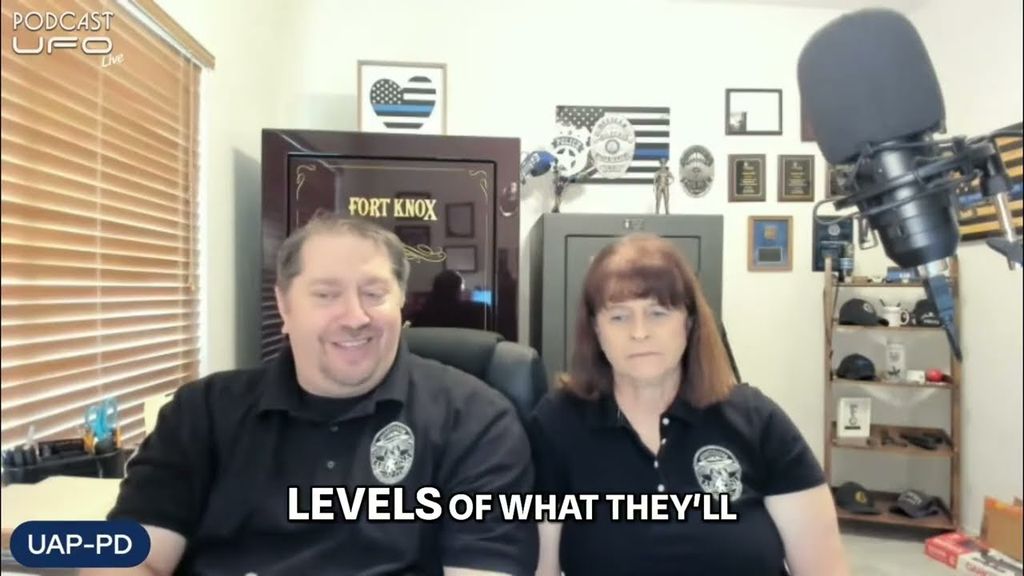
UAPD Creates Confidential Channel for First Responders as Career Fears Suppress UAP and Paranormal Reports


Persistent stigma and career risk continue to deter trained observers from reporting Unidentified Anomalous Phenomena and related experiences, according to organizers of UAPD, a confidential support and reporting channel for first responders. The effort reflects a broader struggle in the UAP domain: institutions want reliable data from credible witnesses, yet many of those witnesses fear ridicule, professional retaliation, or long‑term mental‑health strain if they speak openly. Initiatives modeled on structured aviation reporting, such as those associated with former Navy pilot Ryan Graves, have encouraged parallel safe‑harbor approaches beyond the cockpit.
UAPD’s origin story underscores the stakes. The founders describe a 2017 case in which a police officer—referred to as Dave—was allegedly told by a supervisor that his account was false and that speaking up could end his career. The group delayed launching until Dave retired, citing years of stress on him and his family. UAPD now offers anonymity for active and retired personnel, emphasizing that the goal is not to declare definitive explanations but to validate witnesses, reduce isolation, and mitigate potential psychological harm.
Organizers report gathering roughly 90 original accounts over two and a half years, spanning UFO sightings, cryptid reports, and other paranormal claims. They state that agencies have no leverage to compel disclosure of identities or statements shared with the group, and they facilitate referrals to therapists, counselors, and peers with similar experiences. The approach prioritizes mental‑health support and trust, with any investigative work treated as secondary to well‑being.
An illustrative case involves a retired police constable from Australia who reported multiple life‑stage encounters. One included a brief cell‑phone video of a white, wingless tic‑tac‑like object that appeared to come into focus, then flickered and vanished. Earlier memories included a hovering craft above water during a family outing and a childhood clinical‑room scene with two Nordic‑looking figures allegedly communicating telepathically. UAPD has not released the video and maintains a tiered consent policy to protect witness privacy and preserve organizational credibility.
The accounts highlight a dual challenge for UAP inquiry: safeguarding the careers and mental health of trained witnesses while developing robust, shareable datasets that can inform science and policy. Confidential, witness‑centric reporting channels may help bridge this gap by normalizing reporting behavior, improving data fidelity, and fostering incremental transparency without exposing individuals to undue risk.
Key Moments
- 00:05Trained first responders face intensified fallout from anomalous encounters due to their professional status and expectations as reliable witnesses.
- 00:21Reference to pilot reporting frameworks associated with Ryan Graves underscores the value of safe, stigma‑free reporting channels.
- 00:49UAPD was founded after 'Dave’s' 2017 incident, where a supervisor allegedly accused him of lying and threatened his career, prompting the group to wait until his retirement before launching.
- 02:00UAPD positions itself as a confidential 'safe zone' where active or retired personnel can report without being identified or judged.
- 02:55The group reports about 90 original accounts collected over roughly two and a half years, spanning UFOs, cryptids, and paranormal claims.
- 03:38Organizers assert that agencies have no leverage to compel disclosure of witness identities or statements provided to UAPD.
- 04:08UAPD supports police, firefighters, game wardens, park rangers, and corrections staff, including referrals to therapists and peers with similar experiences.
- 04:35Primary mission is psychological support and recovery for first responders; investigations are secondary to well‑being.
- 05:10At the host’s request, UAPD describes shareable cases without compromising privacy.
- 05:45Case highlight: a retired Australian police constable (Gold Coast/north of Sydney) contacted UAPD after hearing their outreach.
- 06:13She reported three incidents across her life; one included a cell‑phone video of a white, wingless, tic‑tac‑like object.
- 06:44The object reportedly moved steadily, came into focus, then 'flickered' and vanished rather than departing directionally.
- 07:33Additional recollections include a childhood boat encounter with a hovering craft and recurring memories linked to earlier experiences.
- 08:12She described a childhood memory of a clinical room and two 'Nordic‑looking' entities communicating telepathically, noting distinct emotional reactions.
- 10:20UAPD emphasizes the witness’s professional training and the presence of physical evidence (video), while posing open questions about incident relatedness.
- 11:29The video has not been released; UAPD follows tiered consent and will only share material with explicit permission to protect credibility and trust.
Related Topics
Links & References
- Voicemail submission portal for sharing UFO or anomalous encounters.
- Patreon membership page offering ad‑free podcast episodes.
- One‑time donation page supporting Podcast UFO.
- Podcast UFO merchandise storefront.
- Newsletter signup for updates on guests and content.
- Official Podcast UFO website with episodes and resources.
- Podcast UFO on X (Twitter) for social updates.
- Podcast UFO Facebook page.
- YouTube subscription link for Podcast UFO.
 Continue with Google