
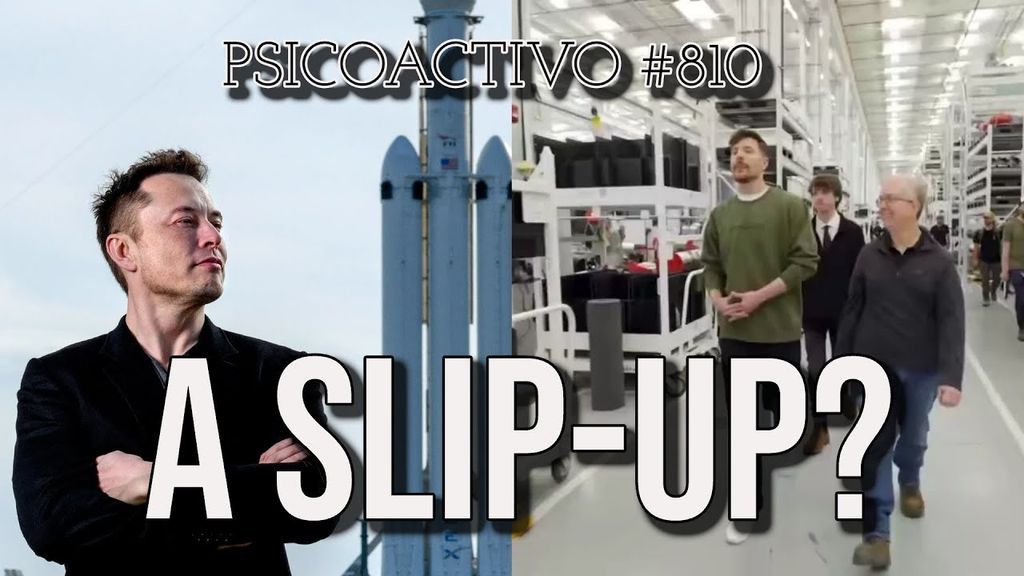
SpaceX Employee’s Cautious Reply on MrBeast Highlights Ongoing Debate Over UFO Encounters Near Launches


The question of UAP data transparency has long been contentious, with prominent technology and media figures often offering sharply different interpretations of the same evidence. In a recent compilation of public clips and commentary, Psicoactivo Podcast juxtaposes Elon Musk’s stance on unidentified phenomena with footage that appears to show objects in proximity to SpaceX vehicles and a newly surfaced exchange involving a SpaceX employee.
In a televised interview, Musk reiterates his view that there is no evidence of alien spacecraft, noting that SpaceX has thousands of satellites in orbit and has never needed to maneuver around an alien vehicle. He differentiates unidentified flying objects from extraterrestrial craft, suggesting that some pilot-reported anomalies may involve classified programs—advanced aircraft or weapons platforms unknown even to portions of the military. Musk adds that any definitive evidence of aliens would be posted immediately to X.
Against that backdrop, the podcast highlights three publicly available videos: a passing object captured by an orbital camera, another object seen near a Falcon 9 during prelaunch, and a 2016 Falcon 9 explosion preceded by a small, fast-moving object. While these clips are frequently cited online, they lack accompanying telemetry, multi-sensor data, or official attribution. Analysts often caution that such visuals can involve space debris, ice, birds, insects, lens artifacts, compression effects, or unrelated operational factors; without complete datasets, causal inferences remain speculative.
The most current flashpoint is an exchange on MrBeast’s channel in which a SpaceX employee, asked whether Starship has encountered unidentified objects, replies, “Not yet. That we can talk about,” and denies that an off-camera answer would differ. The phrasing—common in security-conscious environments—may reflect standard caution around proprietary or classified matters rather than confirmation of hidden encounters. It nonetheless intensifies public curiosity about how private aerospace firms document and report anomalous observations.
The broader policy question centers on how commercial operators communicate about unidentified aerial or spaceborne events that intersect with national security and scientific inquiry. Clearer incident reporting frameworks, shared definitions, and selective disclosure of declassified evidence—while protecting legitimate national security interests—could help distinguish sensor artifacts and routine debris from genuinely unknown cases. Until comprehensive data is released, public interpretations of brief video clips and guarded replies will continue to diverge.
Key Moments
- 00:16The host frames a follow-up to Elon Musk’s prior comments on UFOs, focusing on a new exchange involving a SpaceX employee.
- 01:01Elon Musk is quoted emphasizing he has seen no evidence of aliens and noting SpaceX’s roughly 6,000 satellites have never had to maneuver around an alien craft.
- 03:00Musk distinguishes 'unidentified flying objects' from aliens and suggests pilots may encounter classified aircraft or weapons programs not widely disclosed, even within the military.
- 03:45Musk states he would immediately post any genuine evidence of aliens on X if it ever surfaced.
- 04:22The host highlights a clip purportedly showing a small object passing near a SpaceX vehicle from orbit.
- 05:28A Falcon 9 prelaunch clip is presented in slow motion, with an object appearing to pass the rocket.
- 06:27A 2016 Falcon 9 explosion video is replayed in ultra slow motion; the host points to an object visible just before the blast.
- 07:24In a MrBeast segment, a SpaceX employee is asked if Starship has encountered unidentified objects; the reply is, 'Not yet. That we can talk about.'
- 07:51Pressed whether the answer would be different off-camera, the employee says 'No,' while the host interprets the exchange as a potential 'slip.'
- 10:51The host notes Musk rarely uses the term 'unidentified flying objects' explicitly and argues that the videos merit direct acknowledgment.
Related Topics
Links & References
- MrBeast video featuring the exchange with a SpaceX employee about unidentified objects.
- Clip of Tucker Carlson’s interview with Elon Musk discussing UFOs and classified programs.
- Alleged SpaceX orbital camera clip showing a small object passing by.
- Video of a Falcon 9 prelaunch with an apparent object passing near the rocket.
- 2016 Falcon 9 explosion footage with a fast-moving object visible before the event.
 Continue with Google