
Rep. Eric Burlison Presses for UAP Disclosure Act and Whistleblower Protections Following Varginha Anniversary Event


Government handling of UAP reporting has long oscillated between secrecy and selective disclosure, a dynamic that places unusual weight on credible witnesses, verifiable data, and protective laws that enable both to surface. Against this backdrop, Rep. Eric Burlison used a public forum tied to the 1996 Varginha, Brazil case to urge Congress to pass the UAP Disclosure Act and strengthen whistleblower protections. The remarks underscore a growing policy emphasis on safeguarding sources and obtaining admissible, testable evidence, rather than expanding the volume of anecdotal claims.
The event, hosted by filmmaker James Fox, convened doctors, an ex-military pilot, and other witnesses who assert that nonhuman entities were captured in 1996. Jacques Vallée was among those offering remarks. While the gathering amplified longstanding allegations, Burlison’s stance highlighted the dividing line between testimonial impact and evidentiary thresholds: he stated he remains skeptical until he can examine physical artifacts, explicitly mentioning material and potential biological samples. The emphasis places the burden of proof on tangible items that can be independently analyzed and corroborated, aligning with a broader push in the UAP policy arena for data that can withstand scientific and legal scrutiny.
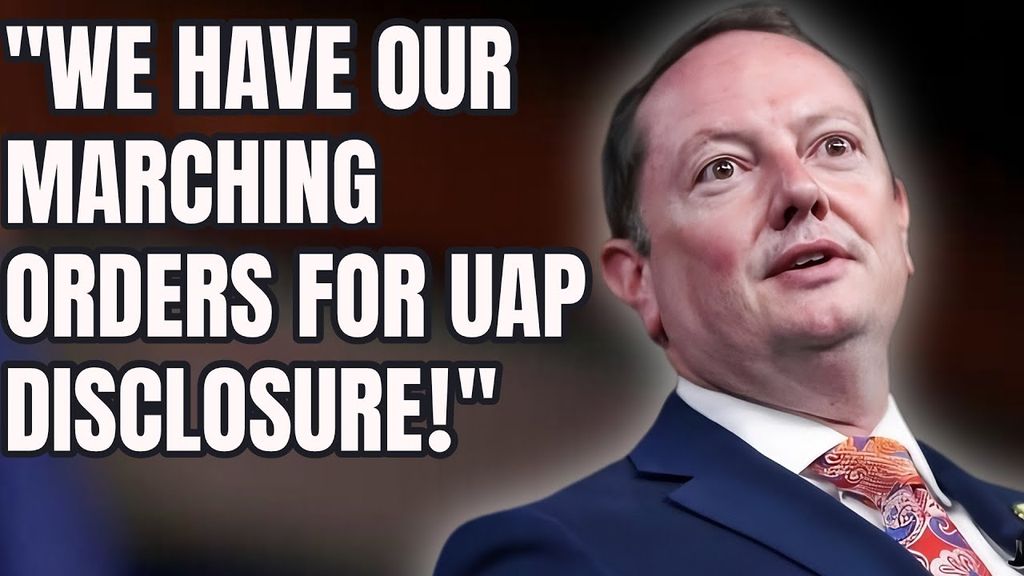
From a governance perspective, Burlison framed the moment as one for action, saying lawmakers have their “marching orders” and calling it “time to get the receipts.” The legislative priority he reiterated—passage of the UAP Disclosure Act and dedicated whistleblower protections—reflects persistent obstacles observed in previous hearings, where witnesses often cited the need to speak in classified environments or lacked firsthand, releasable material. Protective legal frameworks are presented as prerequisites for credible insiders to come forward and for agencies to release higher-quality records without compromising national security protocols.
The discussion also addressed the public-information bottleneck. Despite the presence of an elected official and claims by an ex-military pilot that additional witnesses may exist, broader media attention was limited. Analysts within the UAP community argue that, regardless of perceptions about mainstream media bias, large platforms still shape public understanding and political urgency. The argument advanced here is pragmatic: expanding reach requires professional public-relations strategies, influential advocates, and funding capable of elevating vetted cases to venues where they can be scrutinized at scale.
Historically, UAP-related legislation has encountered setbacks. Observers noted that prior efforts were weakened in negotiation, and previous commentary by whistleblower David Grusch suggested resistance from key members of Congress played a role. The current push appears designed to avoid those pitfalls by coupling a call for transparency with specific mechanisms to protect witnesses and compel the preservation and release of records where appropriate. Whether this approach yields different results will depend on coalition-building, committee dynamics, and the presentation of verifiable evidence that can withstand public and congressional review.
In sum, the path outlined blends policy with evidentiary rigor: legislation to protect and unlock testimony and data, and an insistence on physical proof capable of independent analysis. If successful, such a framework could help resolve long-standing disputes over credibility and secrecy by shifting the center of gravity from anecdote to verifiable fact.
Key Moments
- 00:08Rep. Eric Burlison is quoted as saying the "marching orders" for disclosure have been given and that government action should be pushed forward.
- 00:27James Fox hosted a press event focused on the 1996 Varginha, Brazil case, featuring doctors, an ex-military pilot, other witnesses, and remarks from Jacques Vallée.
- 01:09Harloff notes ongoing congressional difficulties securing direct testimony, with many witnesses routed to classified settings ("skiff") or relying on secondhand accounts.
- 02:37Burlison’s posture since 2023 is described as engaged but cautious; earlier remarks emphasized he had not seen alien evidence and leaned away from an extraterrestrial conclusion.
- 03:23Burlison has been exposed to testimony and claims from figures such as Eric Davis, James Fox, Jeremy Corbell, and David Grusch, and attended the Varginha-focused event.
- 04:22At the conference, Burlison advocated passage of the UAP Disclosure Act (UAPDA) and stronger whistleblower protections to improve transparency and encourage witnesses.
- 04:50Burlison told the Daily Caller News Foundation he seeks "real physical evidence," including potential material or biological samples, and stated, "I remain skeptical" until such evidence is reviewed.
- 05:37Quote attributed to Burlison: "We’ve been given marching orders… It’s time to pass the UAP disclosure act… [and] whistleblower protection within that or a separate act," adding it is "time to get the receipts."
- 05:53James Fox emphasized the value of in-person testimony and human connection, saying there is enough compelling firsthand testimony to warrant an investigation.
- 08:44Harloff argues that, despite compelling stories, the broader public still expects tangible artifacts such as photos, video, or samples to be persuaded.
- 10:23He contends meaningful imagery or samples are unlikely without robust whistleblower protections and safe channels for testimony.
- 11:12Outside niche and community outlets, the conference drew little mainstream coverage; NewsNation and UAP-focused platforms discussed it while larger media largely did not.
- 12:26The analysis stresses the need for professional publicity support and high-profile advocates to secure mass coverage, citing past examples of effective media outreach.
- 14:38Previous legislative pushes are described as stalled or significantly weakened; David Grusch previously suggested opposition from key lawmakers, including Rep. Mike Turner, contributed to outcomes.
 Continue with Google