
UAP, Consciousness, and the Space Age: Esoteric Influences, Disputed Technologies, and the ‘Guardian’ Hypothesis


The question of how Unidentified Anomalous Phenomena, human consciousness, and the development of space technology intersect continues to challenge conventional boundaries between science, history, and belief. A growing body of claims—ranging from ritual-inflected accounts of early rocketry to intelligence-linked parapsychology—suggests that symbolism, altered states, and esoteric worldviews may have played a more prominent role in aerospace culture than is typically acknowledged. While hard proof remains elusive on many points, the pattern of recurring themes invites careful, sober examination.
Esoteric undercurrents in the early space age
Historical accounts frequently note that early space efforts across the United States, the Soviet Union, and Germany were shaped not only by engineering but also by metaphysical visions. In the U.S., pioneering rocketeer Jack Parsons pursued occult ritual alongside propulsion experiments, casting the dawn of the rocket era as a kind of spiritual undertaking. In the Soviet milieu, thinkers such as Konstantin Tsiolkovsky helped seed “Cosmism,” a grand narrative of humanity’s destiny among the stars that blended technological aspiration with religious or philosophical commitments. In Germany, Herman Oberth—credited as a formative influence on rocketry—spoke publicly about UFOs in ways that transcended straightforward propulsion, adding to the impression that foundational figures entertained nonconventional frameworks.
Symbolism in the American program also receives scrutiny. Observers have long noted mission patches, Latin mottoes, and invocations of classical deities within U.S. space culture. One insider’s remark that such elements are for “our sponsors” has fueled speculation about who—or what—those sponsors might be. Supporters of a more esoteric reading point toward a consciously crafted ritual layer; skeptics counter that aesthetic tradition and institutional culture are sufficient explanations. Both interpretations merit documentation and context rather than dismissal or embrace by default.
The ‘guardian class’ and consciousness protocols
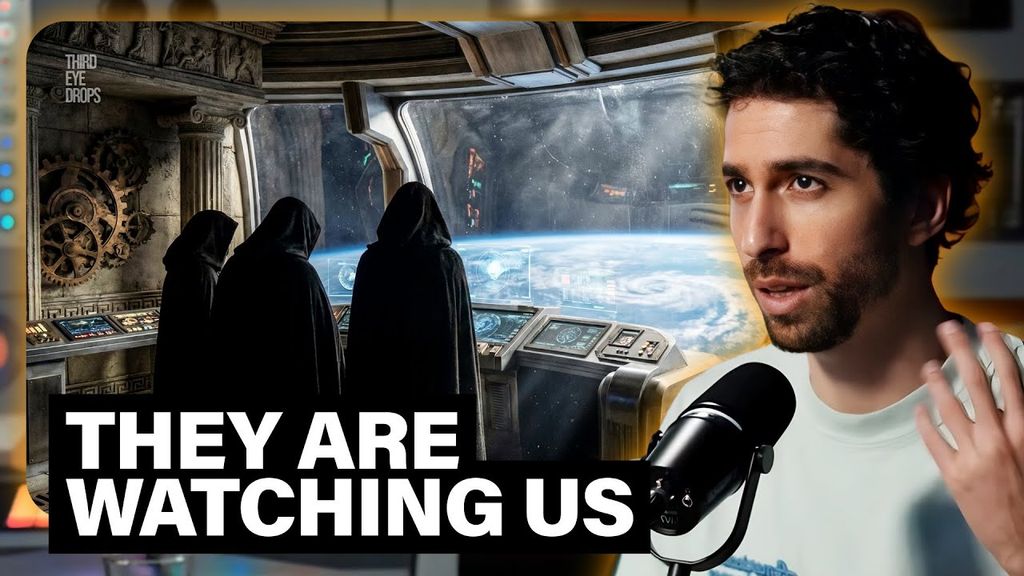
A controversial thread in contemporary literature centers on the idea that humanity operates under the purview of a hidden supervisory layer—variously described as nonhuman intelligences, ultraterrestrials, or advanced human lineages—whose tacit consent is necessary for epochal steps such as off-world expansion. The figure known pseudonymously as “Tyler D.” in Diana Walsh Pasulka’s American Cosmic has been identified publicly as Tim Taylor, a NASA-affiliated technologist. Taylor is said to have advised that aerospace ventures must align with what “they” want, implying the need for specific mental or ritual protocols to establish resonance with a higher-order intelligence. He has also described receiving “downloads”—sudden, complete conceptual blueprints he attributes to a nonhuman source—which he claims have led to patents and practical innovations.
These assertions resist easy classification. On one hand, professionals of record have placed such statements in academic or aerospace settings, suggesting that esoteric ideas circulate beyond fringe venues. On the other, independent corroboration remains thin, and the psychological, cultural, and strategic incentives behind such narratives are difficult to parse. At minimum, the Taylor material exemplifies a broader hypothesis: if consciousness influences physical systems, and if intention-driven protocols can modulate that influence, the boundary between mind and machine might be more porous than industrial science typically assumes.
Nazi-era experiments and postwar echoes
The claim that Nazi researchers experimented with disc-like craft and exotic field effects remains among the most contested in the UAP canon. Writers such as Igor Witkowski and journalist Nick Cook have described the so-called “Die Glocke,” a high-voltage device allegedly producing extreme torsion fields and anomalous time behavior, and they point to a distinctive test structure and underground facilities as circumstantial evidence. Such accounts also cite technicians like Rudolf Schriever and Richard Miethe, and the prewar work of Henri Coandă on lenticular aerodynes. After the war, projects like the Canadian Avrocar and U.S. Project Y investigated saucer geometries—programs which, although documented, did not yield operational breakthroughs analogous to contemporary UAP performance reports.
Mainstream historians view wartime saucer claims with skepticism, noting limited primary documentation, conflicting timelines, and a poor record of postwar replication. Nonetheless, the persistence of these stories has shaped the narrative environment around UAP research, encouraging a closer look at declassified archives, patent trails, and the interplay between wartime mythology, propaganda, and legitimate experimentation. Regardless of ultimate conclusions, sorting the engineering from the legend remains an important scholarly task.
Parapsychology, state interest, and ethical boundaries
The 20th century saw episodic government and academic interest in parapsychology—remote viewing programs, psychokinesis trials, and brain–computer interface research among them. Andrija Puharich sits near the center of that history. Accounts place him with elite patrons and intelligence-adjacent institutes, running experiments with purported psychics and “space kids,” channeling entities such as “The Nine,” and crossing ethical boundaries—including allegations that he administered LSD to subjects like Uri Geller. Whether viewed as a sincere explorer, a skilled manipulator, or a mixture of both, Puharich’s story underscores how easily the search for anomalous capacities can slide into coercion and narrative engineering.
Other contemporary testimonies blur the boundary between psi and UAP. Former U.S. Air Force ELINT specialist Dan Sherman describes being transferred into an NSA-linked program dubbed “Project Preserve Destiny,” where he was trained to “lock in” by collapsing a mental sine wave while under the influence of administered pills, purportedly to communicate with nonhuman intelligences. A Freedom of Information Act request related to the project was reportedly forwarded from the Air Force to the NSA, which issued a national-security-based nonconfirmation—procedural breadcrumbs that neither validate nor negate the claim but warrant additional scrutiny. Sherman's demeanor and record checks have impressed some investigators, yet independent documentary confirmation of the program’s core assertions remains pending.
Esotericism in corporate aerospace
Public remarks from senior aerospace figures occasionally surface that intertwine mysticism and technology. Former Lockheed Martin Skunk Works vice president James Ryder delivered a talk titled “Garment of God” that, according to attendees and later write-ups, linked consciousness, ESP, and a “thinning veil” to technological progress; other lectures reportedly touched directly on UAP. In isolation, such speeches do not prove operational programs or breakthroughs. They do, however, broaden the evidentiary context: esoteric themes are discussed in influential industrial circles, suggesting a cultural readiness to entertain unconventional frameworks.
Ancient architectures and cosmic ascent
The conversation also highlights a mirror tradition in which monumental architecture and funerary practices are interpreted as technologies for spiritual ascent. In this view, pyramids function as “resurrection machines,” astronomically aligned structures intended to channel and elevate the soul through guarded strata of reality—a motif echoed in Orphic funerary lamellae that provide passwords for postmortem passage (e.g., “I am a child of Earth and starry Heaven”). Parallel narratives from Plutarch and later esoteric literature depict a cosmos densely populated with intelligences and waystations; the moon itself appears as an intermediary in certain Middle Platonist accounts. These sources map an ascent model that resonates with modern discussions of near-death experiences and altered-state phenomenology, though they remain outside empirical proof in the contemporary sense.
Science, phenomenology, and the limits of current models
A recurring theme is the mismatch between anomalous reports and established scientific paradigms. Advocates argue that future mathematics and measurement approaches may eventually describe mind–matter interactions, just as classical physics broadened to accommodate electromagnetism and relativity. They point to modern neurocognitive work—such as research on the default mode network in psychedelic states—as a tentative analogue for how altered neural gating can unlock nonordinary cognition and insight. The astronaut “overview effect,” wherein travelers report profound shifts in perspective after viewing Earth from orbit, is cited as an example of how environmental context can catalyze cognitive reframing.
At the same time, participants stress epistemic humility. Cosmology continues to employ provisional placeholders such as dark matter and dark energy while key questions persist about gravity, scaling, and error propagation across domains. It is a leap to imbue the heavens with consciousness, they caution, but it is also premature to insist that subjective, repeatably meaningful experiences have no place in a cumulative body of knowledge. The challenge is to design protocols that bridge lived phenomenology and instrumented, falsifiable observation without collapsing into either naïve credulity or reflexive dismissal.
Signal, noise, and the value of falsification
The episode’s skeptically engaged posture is exemplified by the treatment of the Peruvian “tridactyl mummies,” where new analyses have reportedly lowered confidence in extraordinary interpretations. The point is less about adjudicating one case than about modeling a discipline that absorbs falsification as a feature, not a failure. If most leads carry only moderate priors, investigators expect many to fall away under scrutiny; the aggregate probability that some claims will survive remains high. Meanwhile, the community benefits from elevated debunking standards, disciplined FOIA practice, and the mapping of programmatic codewords (e.g., “fast walker”) that can make public records requests more precise.
Policy, ethics, and research pathways
The claims surveyed here intersect with national security, academic freedom, and human-subjects ethics. If covert programs investigate psi or UAP-adjacent phenomena, independent oversight mechanisms should ensure that participants are protected and results are preserved for eventual scholarly review. Where symbolic or ritual frameworks are operationalized into “protocols,” researchers should be transparent about methods, safety, and expected outcomes. Meanwhile, archivists and historians ought to continue disentangling the esoteric and the empirical in early space history, so that a persistent mythology neither obscures authentically innovative engineering nor erases the cultural forces that accompanied it.
Several tractable research steps emerge. First, catalogue and evaluate claims that “downloads” led to specific patents, using citation networks and laboratory notebooks where available. Second, replicate and expand mind–machine interaction studies with rigorous controls, pre-registration, and independent labs. Third, digitize and cross-index Cold War–era parapsychology and aerospace records to correlate personnel, funding flows, and program objectives. Fourth, document the extent to which esoteric symbolism permeated official space communications and practices, distinguishing aesthetic heritage from operationally meaningful belief.
Context and caution
Nearly every claim in this domain exists on a spectrum running from fully documented history to speculative inference. Parsons, Tsiolkovsky, von Braun, and Oberth are undeniably central to aerospace history; their metaphysical and cultural contexts are likewise matters of record, even if specific anecdotal claims remain debated. Nazi-era saucer experiments are discussed in secondary sources but lack robust primary-document confirmation of performance; postwar Western saucer projects are well documented but did not yield the capabilities attributed to modern UAP reports. Puharich’s work is partly documented and partly legendary; the ethical concerns are real. The Taylor and Sherman narratives remain controversial, with procedural signals and personal credibility assessments keeping them in the evidentiary queue while stronger documentation is sought.
An attainable standard for progress is clear-eyed documentation paired with methodological pluralism. A field that tolerates disciplined uncertainty—welcoming debunking, demanding consent and safety, and remaining open to rigorous study of altered-state data—stands a better chance of sorting transient myths from durable insights. If UAP and consciousness phenomena do connect in ways not yet formalized, the road to clarity will likely involve both archival spadework and incremental, replicable studies rather than revelation by proclamation. In the meantime, understanding how symbolism, belief, and aspiration have shaped the space age is valuable in its own right, illuminating the cultural architecture behind humanity’s reach for the stars.
Key Moments
- 03:49A NASA insider allegedly told a researcher that Latin mottos and Roman deities on mission insignia were aimed at "our sponsors," a cryptic reference some interpret as nonhuman or transcendent patrons.
- 04:37Jack Parsons—an early rocketry pioneer and occult practitioner—reportedly combined ritual magic with rocket tests and claimed anomalous encounters, illustrating a perceived esoteric current in the U.S. space program’s origins.
- 06:27German rocketry figure Herman Oberth publicly discussed UFOs and nonconventional travel concepts and once said, "We were helped," a quote often cited to imply outside assistance to early programs.
- 07:49Wernher von Braun appears in UAP lore via stories about fragments shown to Uri Geller, Freemasonic symbolism (e.g., Launchpad 33), and pop-cultural collaborations suggesting latent UFO narratives around NASA.
- 10:11The phrase "our sponsors" is interpreted by some as pointing to a supervisory "guardian class"—nonhuman intelligences or advanced beings hypothetically gatekeeping human expansion into space.
- 14:04NASA-linked technologist Tim Taylor (pseudonymously "Tyler D.") allegedly advised that aerospace efforts must align with what "they" want, implying consciousness ‘protocols’ and nonhuman guidance.
- 17:30Taylor purportedly described receiving full-form "downloads" from a nonhuman intelligence, claimed a role in an "adjustment team," and was linked—via anecdote—to Thomas Townsend Brown and time-related research.
- 32:42The conversation posits a societal layer of "reality spin doctors" and considers whether parapsychology implies exploitable mind–matter effects that a covert guardian or elite cohort might manipulate.
- 58:28Nazi-era projects like "Die Glocke" are described as high-voltage torsion-field experiments with claims of extreme time dilation; sources include journalist Nick Cook and author Igor Witkowski, though mainstream historians dispute operational success.
- 01:01:50Postwar U.S./Canadian efforts such as Avrocar and Project Y explored saucer-like craft, with references to Rudolf Schriever, Richard Miethe, and Henri Coandă’s lenticular concepts carrying forward contested wartime ideas.
- 01:08:01Andrija Puharich’s "space kids" and channeled entities like "The Nine" are noted alongside allegations he dosed Uri Geller with LSD, raising ethical questions about intelligence-adjacent psychic research.
- 01:21:36A FOIA request for Dan Sherman’s "Project Preserve Destiny" was reportedly forwarded from the Air Force to the NSA, which issued a national security-based nonconfirmation, a procedural breadcrumb that keeps the claim in play.
- 01:53:46Former Lockheed Martin Skunk Works executive James Ryder’s "Garment of God" talk linked mysticism and technology, reportedly stating ESP is real and discussing a "thinning veil," signaling esoteric interest within aerospace leadership.
- 01:57:52Some esoteric frameworks interpret pyramids as "resurrection machines" or etheric portals, aligned to Orion and other targets, blending archaeoastronomy with speculative consciousness-based ascent.
- 02:02:22Ancient Orphic funerary lamellae preserved passwords for postmortem ascent, e.g., "I am a child of Earth and starry Heaven," reflecting a widespread motif of guarded cosmic strata.
Related Topics
Links & References
- Support the Third Eye Drops community on Patreon.
- YouTube channel membership library for Third Eye Drops.
- Jesse Michels’ video exploring alleged occult currents in NASA and the space program.
- Jesse Michels’ Substack, American Alchemy.
- Third Eye Drops website with episodes and resources.
- Michael Phillip’s Instagram for Third Eye Drops.
- Third Eye Drops on Spotify.
- Third Eye Drops on Apple Podcasts.
 Continue with Google