
Bob Lazar Reemerges as Investigators Spotlight Reaper-Recorded UAP Case and Renew Transparency Demands


A renewed spotlight on Bob Lazar and a contested military UAP recording are converging to test longstanding boundaries between public curiosity, scientific inquiry, and government transparency. The discussions underscore an enduring friction: how to reconcile striking sensor data and historical claims with the slow pace—and selective nature—of official acknowledgment.
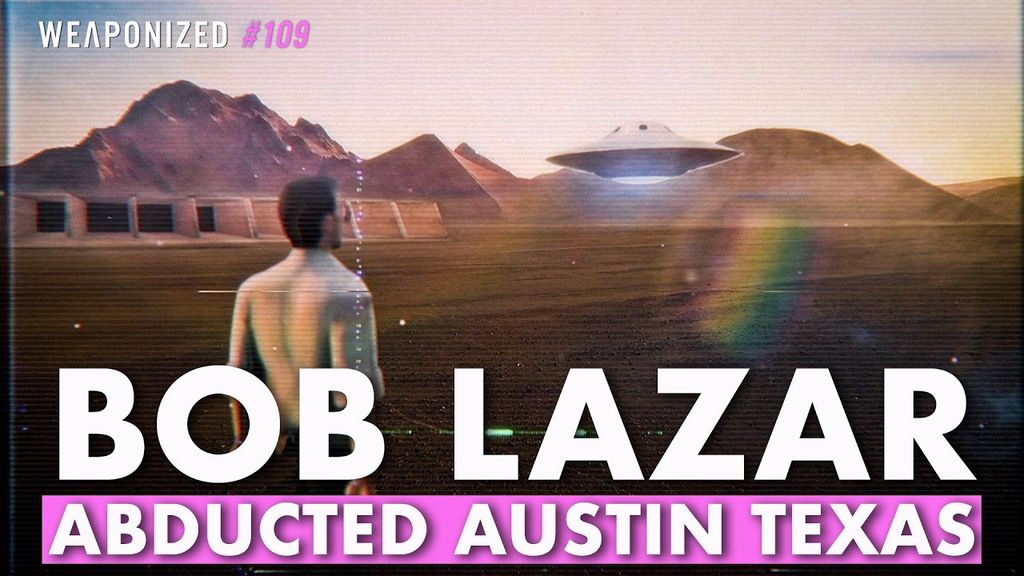
Community and cultural context play a prominent role. In Austin, a live program built around contemporary UAP developments unveiled a trailer for an S-4 documentary and introduced an unexpected guest appearance by Lazar. He reportedly affirmed that the production’s recreation aligns closely with his recollections, a detail that may reanimate a debate stretching back decades. The project’s origin in virtual-reality modeling—meant to digitally rebuild the interior and layout of S-4 based on Lazar’s memory—highlights a shift toward immersive, forensic storytelling, blending archival narratives with modern visualization tools. While Lazar has not sought renewed attention, his influence on the popular understanding of secret test sites and alleged reverse-engineering programs remains significant; organizers positioned the film as a technology-driven attempt to faithfully render his account rather than a publicity campaign.
Policy and oversight threads run in parallel. According to the discussion, congressional interest in on-site verification continues despite practical obstacles. Rep. Eric Burlison has reportedly received clearance from the White House to visit restricted locations associated in public lore with legacy crash-retrieval or analysis programs. Yet expectations are constrained by the likelihood of curated access, and by past episodes—recounted by Knapp—in which even senior officials failed to locate suspected infrastructure under conditions that would have enabled concealment. Separately, Lazar’s potential congressional testimony remains a point of contention. Although he has been asked multiple times and has indicated willingness, Knapp says he advised against it because of the predictable focus on character attacks over data and the risk that a polarizing hearing could obscure substantive issues rather than advance them.
Historical and geographic claims continue to shape the narrative. The Nevada Test Site and Papoose Lake figure prominently in accounts suggesting compartmented activities far from public view. Historian Jerry Freeman’s alleged clandestine traverse—conducted at night to avoid detection—has been cited for years in niche circles. Freeman reported seeing a luminous doorway-like opening on the Papoose lakebed and noted what he interpreted as security activity in an area that officials have long stated contains no facility. The same period saw independent efforts to obtain satellite imagery; Lazar himself is said to have acquired commercial foreign satellite photography, interpreting a lenticular feature near Papoose. Corbell adds that he recorded a 2013 interview with a well-known scientist who claimed involvement with a radar system positioned to assess visibility and radar cross-section characteristics of UAP near Papoose. That material has not been released, and these elements remain unverified in the public record, but they continue to inform the site’s mystique for researchers and lay observers alike.
The most immediate catalyst for wider scrutiny is a 2021 MQ-9 Reaper recording near the Jordan–Syria border. The material, described as an official analysis stream, includes annotations citing “apparent instantaneous acceleration.” Investigators and independent analysts argue that terrain continuity and operator actions—such as multiple zoom-outs followed by a pan—undercut explanations rooted in camera artifacts or lens changes. Public conversation spilled onto social platforms where AI-generated explanations misidentified thermal polarity; independent experts corrected that the imagery’s palette indicated cold as white, not hot, illustrating the hazards of relying on automated tools for technical interpretation.
Government response has so far been narrowly framed. Pentagon statements attributed to spokesperson Susan Gough avoided confirming whether the specific case is known to the All-domain Anomaly Resolution Office or whether any determination has been reached. The lack of acknowledgment, even of basic provenance, has reignited criticism that the government communicates only when confident it can offer a prosaic explanation. Advocates for fuller disclosure argue that confirming location, platform, and an ongoing assessment would not betray sensitive capabilities, especially for a widely-deployed system like the Reaper. Supporters of a cautious posture counter that operational contexts and analysis methods often carry classification concerns, complicating any public comment.
The office at the center of these expectations—AARO—faces escalating skepticism. Former Defense Intelligence Agency program manager James Lacatski has publicly alleged that the office functions as a disinformation effort, a charge that, if unfounded, underscores how fragile trust has become. The broader critique is institutional rather than personal: that the cadence of selective, carefully couched replies erodes confidence precisely when better data and standardized analysis pipelines could build it. Critics contend that absent proactive releases of high-quality cases with transparent methodologies, the evidentiary gap will be filled by leaks, conjecture, and online misreads.
Journalistic process and legal constraints are another focal point. Corbell and Knapp describe a multistep approach for acquiring and vetting defense-sourced material without solicitation, coordinated with legal counsel and external technical reviewers. They emphasize that some content cannot be responsibly released due to national security concerns, and they cite claims from sources that automated filters and custodial practices can sequester or remove sensitive UAP captures before broad analytic circulation. Examples include an alleged incident in which a pyramid-shaped object emerged from water and hovered over critical infrastructure, and a case where a Reaper segment was reportedly re-designated under Department of Energy custodianship—assertions that have not been corroborated by official documentation but which speak to the complexity of retaining and auditing sensor data across multiple agencies and vendors.
Media ecosystem dynamics continue to evolve. Coverage by mainstream outlets has intermittently amplified these cases, while curated archives such as KLAS’s relaunched Mystery Wire portal now offer fuller context via long-form interviews with figures including Lacatski and Lou Elizondo. Such repositories may help standardize the historical record and make baseline materials accessible to new audiences and researchers, mitigating the fragmentation that often impedes serious study.
If the Reaper case withstands scrutiny, its implications are considerable. Clear reference frames in the scene allow for more rigorous kinematic analysis than sky-only thermal captures, potentially enabling independent teams to test claims of acceleration outside conventional aeronautical envelopes. Scientific engagement would likely require open data, precise sensor parameters, and chain-of-custody detail—deliverables that historically have been difficult to obtain. Still, the case has already galvanized analysts who argue that a small subset of UAP incidents demonstrate performance that demands careful, multidisciplinary investigation. Whether official channels embrace or resist that process will determine if the discussion matures into reproducible science or remains a cycle of leaks, denials, and online contention.
Between cultural memory, congressional ambition, and emergent sensor evidence, the UAP debate continues to hinge on verifiable facts. The path forward appears to require what it has always required: authenticated data, transparent methods, and a willingness by both institutions and investigators to let the chips fall where they may—whether that leads to conventional resolution or to questions that challenge current models of flight and observation.
Key Moments
- 06:09A new S-4 documentary trailer was premiered before a live audience, followed by an unexpected appearance by Bob Lazar, who said the film’s recreation closely matches what he remembers.
- 08:24Producers initially pursued a virtual-reality build of S-4 from Lazar’s memory—later evolving into a full film—leveraging tools like Blender and physical modeling of the “sport model.”
- 15:00Lazar has been asked multiple times to testify before Congress; Knapp says Lazar once agreed in principle but was later advised against it due to expected attacks on credibility and distrust of the process.
- 19:06Rep. Eric Burlison was said to have White House permission to visit sensitive sites, with expectations tempered by the likelihood of limited or staged access.
- 20:16Knapp recounted a past high-level attempt to overfly Papoose Lake that was thwarted by a sudden blizzard; years would have elapsed since Lazar’s tenure, allowing any facilities to be concealed.
- 22:36Historian Jerry Freeman allegedly traversed the Nevada Test Site at night and reported a “door of light” opening on the Papoose lakebed, alongside observations of security activity in an area officials say has no facility.
- 23:38Lazar previously purchased Russian satellite imagery and believed it showed a lenticular feature near Papoose; Corbell says he holds archival audio and documents related to Freeman’s account.
- 32:13Corbell says he recorded a 2013 interview with a well-known scientist who claimed to have worked on a radar system over Papoose to assess UAP detectability; the material remains unreleased pending permission.
- 33:57Journalists and outlets seeking Pentagon comment on the 2021 Reaper UAP recording received carefully worded replies that neither confirmed nor denied authenticity or analysis.
- 36:29Public debates included AI-driven misreads of thermal polarity; independent analysts corrected claims that white indicated “hot,” noting the imagery’s cold–hot inversion.
- 37:10Corbell and Knapp say the footage segments constitute an official analysis stream labeling “apparent instantaneous acceleration,” with ground motion continuity used to rebut camera-artifact explanations.
- 39:50Former DIA program manager James Lacatski alleged AARO operates as a disinformation effort, intensifying criticism of the office’s transparency.
- 40:44Corbell argues the Reaper case could become a landmark because the background terrain provides reference for motion, making the observed acceleration unambiguous if validated.
- 49:03Sources cited by Corbell claim automated systems and custodial practices can remove high-value UAP clips from networks before broader review, including an instance attributed to Department of Energy control.
- 51:33KLAS’s Mystery Wire portal relaunched with full-length interviews, including an extended James Lacatski conversation and a compilation of Lou Elizondo interviews.
Related Topics
Links & References
- Official site for the WEAPONIZED investigative series hosted by Jeremy Corbell and George Knapp.
- Official clips channel featuring segments and updates from WEAPONIZED.
- KLAS 8 News Now Mystery Wire portal with archival reporting and full-length interviews.
- Bob Lazar: Area 51 & Flying Saucers — documentary available to stream.
- Marik von Rennenkampff on X, cited in discussions surrounding UAP analysis and public debate.
- Chris Sharp of Liberation Times, noted for inquiries to the Pentagon regarding UAP matters.
- Jeremy Corbell’s official X account for updates and releases.
- George Knapp’s official X account featuring reporting and archival content.
- Merchandise store associated with the WEAPONIZED series.
 Continue with Google