
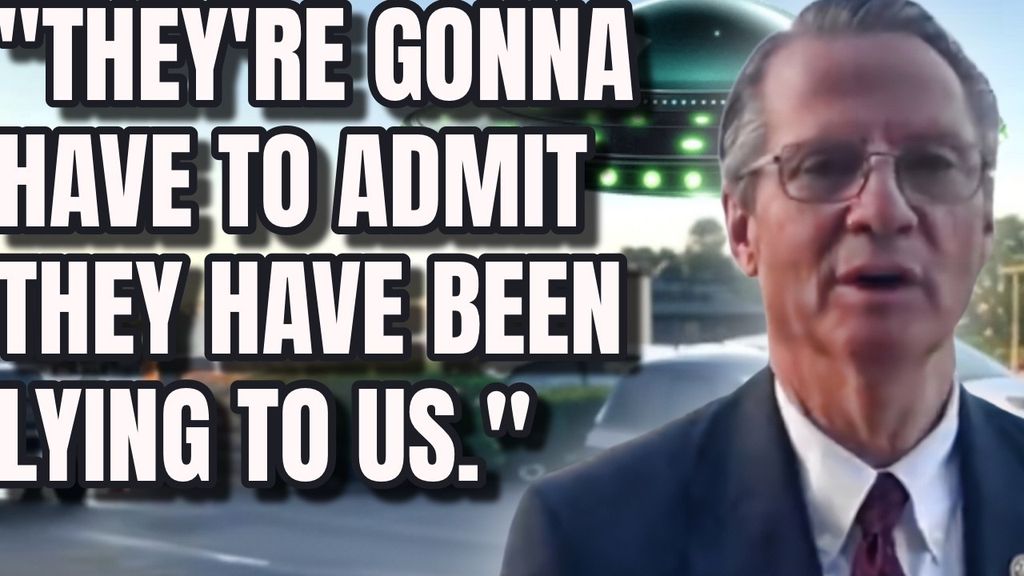
Burchett Claims Deep State Resistance as Trump Seeks UFO Files


Representative Tim Burchett’s claim that a deep state apparatus is resisting President Trump’s efforts to obtain UFO files anchors a broader examination of institutional secrecy, whistleblower pressure, and the limits of current disclosure tactics. In the remarks highlighted by Kristian Harloff, Burchett portrays a president who has, in his view, kept his word on pursuing UAP information, while powerful intelligence and defense elements allegedly slow-walk or obstruct access to sensitive material.
In the segment shared by UAP commentator UAP James, Burchett alleges that “not so friendly comrades” within unnamed alphabet agencies are deliberately delaying the release of UFO-related data. He characterizes the struggle as fundamentally about power and control within Washington, suggesting that entrenched officials weigh the risks of exposure more heavily than presidential directives. Burchett further contends that genuine transparency would require agencies to admit that they have been lying to the public for decades, a step he argues many actors are unwilling to take.
Burchett also speculates about what might be contained in these UFO files. He raises the possibility of documentation related to “zero energy,” anti-gravity experiments, or other advanced concepts, while acknowledging that he does not expect the public to see the totality of what exists. Kristian Harloff uses those comments to revisit long-standing allegations that components of the CIA, FBI, and other intelligence organizations have coordinated multi-decade strategies to manage UAP information, going back 70 to 80 years. Under that scenario, an “old game plan” for damage control, refined over generations, faces intermittent challenges from each new administration’s comparatively improvised approach.
Harloff contrasts this alleged historical playbook with today’s media environment. He argues that social media has sharply reduced the effectiveness of earlier techniques that relied on branding UAP witnesses as unstable or delusional. As a case study, he points to efforts to discredit whistleblower David Grusch through reporting on his mental health history. Harloff maintains that in the 1980s or 1990s, a single damaging print article could have defined the narrative with no effective rebuttal, whereas in the current era, YouTube channels, Twitter posts, TikTok videos, and independent reporting can rapidly challenge and contextualize such attacks.
According to Harloff, viral moments have helped push UAP questions into formal channels. He cites a widely shared clip of former President Obama discussing unidentified objects as an example of how a brief remark can cascade through online platforms, generate sustained public interest, and eventually prompt direct questions to sitting presidents. This, he suggests, can pressure administrations to authorize limited document releases or statements that might not otherwise have occurred, even if agencies behind the scenes seek to narrow or redact what is actually disclosed.
Despite the new pressure created by social media and independent UAP coverage, Harloff underscores that agencies still retain significant structural advantages. He describes them as “really good at blocking stuff” through redaction, compartmentalization, and logistical maneuvers, including relocating materials ahead of expected oversight or FOIA-driven releases. In his view, public announcements that files will be released on a specific schedule risk giving time for sensitive documents or physical evidence to be moved out of reach, much as advance notice of a site visit could allow any alleged craft or hardware to be removed before inspectors arrive.
Harloff notes reporting that a second document dump is expected within days as part of a purported biweekly release cadence. He anticipates that specialized outlets and podcasts will examine the new files for substantive findings, but he remains unsure that mainstream audiences will pay attention unless major news networks treat the contents as a leading story rather than a brief closing item. For disclosure to gain real traction, he argues, information from these files would need to break out of the UAP niche and become unavoidable for viewers who do not actively follow the subject.
One of the most consequential threads in Harloff’s analysis concerns the potential legal and ethical implications if certain allegations embedded in UAP narratives were confirmed in official records. He points to Burchett’s reference to zero energy and anti-gravity concepts and imagines a scenario in which files demonstrate that scientists were working on such programs and were victimized through foul play. Harloff connects this to David Grusch’s sworn testimony that people have been killed or threatened in relation to UAP programs, and to similar statements by figures such as Luis Elizondo. Should any of this be corroborated in released files with a verifiable chain of custody, he argues, it would logically trigger criminal investigations into past actions and into officials who may have ordered or concealed wrongdoing.
From that perspective, Harloff views the desire to avoid legal exposure and institutional scandal as a plausible motive for ongoing secrecy alongside national security arguments. He suggests that organizations allegedly involved in unauthorized programs would have strong incentives to continue minimizing disclosure, discouraging investigations, and signaling that there is “nothing to see here.” Even as he acknowledges that many of these claims remain unproven, he frames them as part of the context in which Burchett’s comments should be understood.
Looking ahead, Harloff plans to evaluate the next set of released files on their merits, publicly summarizing what they contain while maintaining a measure of skepticism about how far they will go. He doubts that many of his friends who do not already follow UAP issues will hear about the files at all unless the releases produce material that mainstream outlets consider impossible to ignore. In his closing reflections, he returns to Burchett’s assertion that even a sitting president faces resistance when knocking on certain doors, and he ties this back to remarks by Senator Marco Rubio and Steven Greer that some classified programs treat presidents as temporary “hired guns” who can be outlasted.
For Harloff, this dynamic raises a central concern: if a president is steered away from specific records or told that information will arrive later while access remains constrained, then the country’s highest elected office may not have decisive control over UAP-related secrecy. As additional document dumps and hearings unfold in the coming months, he suggests that the real test will be whether any release produces information significant enough to force sustained public debate, legislative follow-up, or independent investigative scrutiny beyond the existing community of UAP-focused researchers and commentators.
Key Moments
- 00:06Kristian Harloff introduces Representative Tim Burchett’s assertion that President Trump is being blocked by a deep state apparatus when seeking access to UFO files, suggesting officials fear admitting decades of denial.
- 00:39In a clip credited to UAP James, Burchett states that the deep state is fighting the president on release, accuses certain intelligence 'alphabet agencies' of slow-walking information, and frames the issue as one of power and control in Washington.
- 01:11Burchett speculates that full disclosure would force agencies to admit long-term lying and cover-ups, possibly involving zero-point or 'free' energy research, and doubts that the public will ever see everything in the files, while affirming Trump has kept his word to him personally.
- 01:50Harloff notes Burchett has consistently said he is working inside the administration to push for release but has also warned for years that entrenched actors in agencies like the CIA and FBI will try to block or dilute disclosures.
- 02:22Referencing recent reports and hearings about CIA whistleblowers, Harloff connects Burchett’s comments to broader allegations that intelligence agencies have historically withheld UAP information and coordinated long-term strategies to manage the topic.
- 02:55Harloff outlines the idea of an 'old game plan' for containment, allegedly refined over 70–80 years, in which organizations coordinate to hold information, while each new administration arrives with a new, less-tested strategy that must confront this entrenched system.
- 03:19He argues that social media has eroded the traditional tactic of dismissing UAP witnesses as 'crazy,' using the example of attempts to discredit whistleblower David Grusch, which he says would have succeeded in the pre‑internet era but were countered by decentralized online responses.
- 04:29Harloff cites viral clips, including an Obama UAP comment, as examples of how online dissemination can force questions up the chain to the president, prompting official responses and incremental releases that agencies may find harder to control.
- 05:21Despite this shift, Harloff stresses that agencies remain adept at redacting, relocating, and compartmentalizing sensitive material, and suggests that pre‑announced file releases give officials time to move or sanitize key documents.
- 06:05He argues that if investigators telegraph visits to suspected crash or program sites in advance, any physical craft or critical evidence is unlikely to be present when they arrive, implying a need for less predictable oversight tactics.
- 06:26Harloff notes reports that a second document 'dump' is expected within days as part of a biweekly release schedule, and says UAP-focused shows will scrutinize whether any of the new information is substantively important.
- 07:06Reflecting on covering UAP since 2023, he observes recurring 'ebbs and flows' in public attention but believes current file releases, new footage, and sustained discussion indicate a particularly active moment for the issue.
- 07:51Harloff emphasizes one major theory for continued secrecy: that acknowledging a long-running cover-up, including possible suppression of anti-gravity or zero-point energy work and alleged foul play against scientists and insiders, could trigger criminal investigations and accountability.
- 08:34He references David Grusch’s testimony about killings and threats, along with similar claims by Luis Elizondo and others, as examples of allegations that, if substantiated in released files, would demand formal inquiries and could expose serious misconduct.
- 09:33Looking ahead to the next batch of files, Harloff doubts that casual observers or mainstream audiences will notice the releases unless major outlets elevate them to top-story status, which he sees as necessary to 'move the needle' on public engagement and policy pressure.
- 10:40He closes by asking whether it is cause for concern if even a president encounters locked doors when seeking UAP information, and links this to comments from Marco Rubio and Steven Greer that some entrenched programs treat presidents as temporary 'hired guns' to be outlasted and bypassed.
 Continue with Google