
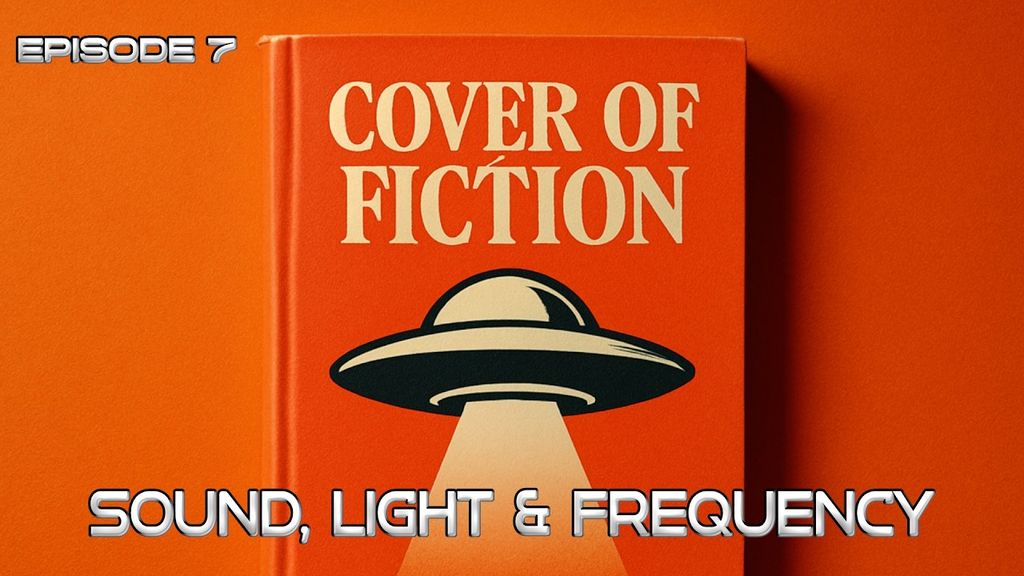
Hollywood’s ‘Cover of Fiction’ and the UAP Debate: How Storytelling Channels Controversial Ideas


The question of how to responsibly communicate anomalous aerospace phenomena has increasingly intersected with the entertainment industry. Rather than relying on formal briefings or abrupt releases of sensitive data, some argue that complex or destabilizing concepts migrate most effectively through stories. This approach—described by creators as the “cover of fiction”—allows controversial ideas to circulate in a protected way, creating distance for legal, reputational, and psychological safety while still engaging mass audiences.
The concept is neither new nor restricted to UAP-related themes. Scripted works frequently mirror the real world while avoiding direct portrayals. Yet the UAP arena adds distinctive complexity: the subject blends military secrecy, sensor ambiguity, and hypotheses about time, consciousness, or nonhuman intelligences—ideas that can be more accessible when embedded in allegory. That framework set the stage for a discussion that connected a series of cultural milestones and personal experiences to the ongoing problem of what, how, and when to disclose.
A striking example centers on the German series Dark, which some investigative reporters were told to watch by multiple intelligence-community sources as a way to “understand the phenomenon,” specifically its treatment of a grim nuclear future. Dark’s plot revolves around a wormhole beneath a nuclear power plant, multi-generational time loops, and meditations on free will and determinism. While it does not depict UAP, its motifs overlap with popular theories in the field—interdimensionality, branching timelines, and reality selection. These threads resonate with persistent reports that nuclear installations have attracted anomalous activity. If such correlations hold, Dark’s preoccupation with nuclear risk becomes more than set dressing; it primes audiences to consider why nuclear capabilities might be of interest to whoever—or whatever—observes us.
The series also foregrounds the bootstrap paradox, a narrative device in which causes and effects form self-originating loops. This is relevant beyond storytelling craft. If elements of UAP involve phenomena outside conventional spacetime—whether time travel, nonlocal causation, or reality overlays—then clear, linear explanations may be impossible without violating common-sense intuitions. That difficulty alone complicates public communication. As one former CIA officer, Jim Semivan, has publicly suggested, reality may be broader than human perception admits, and forces might be capable of manipulating environments and cognition. Taken at face value, such statements challenge prevailing assumptions about agency and free will; they also illustrate why policymakers might frame sudden, unfiltered disclosure as imprudent.
The idea that future humans could be implicated in UAP has gained visibility in mainstream conversation. Steven Spielberg has mused that the most optimistic reading is not visitors from distant stars but anthropologists from far ahead, documenting the last century—an inference that suggests at least partial survival of the species. Popular cinema has long probed similar possibilities. Zabel’s 1993 film Official Denial, a low-budget production that nonetheless assembled a dense catalogue of ufology motifs—Majestic 12, crash retrievals, MILABs, and more—concluded with a twist: “It’s not where they’re from, it’s when—they’re us.” The production’s resource constraints (including a much-criticized creature portrayal) underscored a recurring tension: ambitious ideas can outstrip their means of depiction, yet the concepts persist because they synthesize recognizable patterns from witness accounts and folklore into coherent, if speculative, frameworks.
Cultural impact is not just a matter of plots and twists; it hinges on credibility and lived experience. Whitley Strieber’s Communion, with its unforgettable cover art of a ‘grey’ visage, catalyzed a generation’s imagery of abduction. Director Philippe Mora later recounted being questioned mid-flight by a man who presented a Defense Intelligence Agency badge, a detail that—if accurately remembered—illustrates official curiosity about how such narratives shape public understanding. Whatever one believes about individual cases, Communion offered emotionally grounded testimony that many readers recognized, as evidenced by the sheer volume of letters Strieber and his late wife, Anne, reportedly received. The convergence of personal accounts with fictionalized retellings blurs the borderland where belief, experience, and representation meet.
That deliberate blurring became central to the NBC series Dark Skies, which framed a debate about disclosure ethics through two archetypal positions: the public’s right to know versus the argument that society cannot yet handle the implications. In a meta-layer to the show’s marketing, the creators placed a dramatic “John Loengard letter” at the front of their pitch materials, asserting that truths about UFOs would be revealed “under the cover of fiction.” The device worked as a striking narrative hook and, unexpectedly, foreshadowed a reported encounter with an individual claiming ties to naval intelligence who endorsed the same slow-drip strategy. Researchers such as Robbie Graham later characterized Dark Skies as a uniquely intentional fusion of UFO fact-patterns with Hollywood storytelling.
This approach aligns with the concept of ontological shock: the profound disorientation that can accompany sudden revisions to one’s model of reality. If institutions believe such shock carries risks—for public trust, for social stability, or for strategic posture—they may prefer diffusion through familiar, lower-friction channels like stories and symbols. Even within the UAP research community, figures such as Luis Elizondo have suggested that wide public exposure to certain data might first prompt a collective exhale, then a sobering internal reckoning about identity and status in the broader ecology of intelligence. Questions he has raised about whether humanity is the “apex” presence on Earth exemplify the kind of unsettling reframing that narrative can introduce incrementally.
None of this resolves the core transparency dilemma. Presenting ideas under the cover of fiction can be double-edged. On one hand, it invites curiosity and reflection without demanding premature conclusions or divulging sensitive sources and methods. On the other, it risks muddying the evidentiary waters, as audiences and analysts struggle to separate artistic license from accurate signal. Yet the historical record of entertainment’s engagement with UAP—through novels, films, and series—suggests that storytelling has functioned as a pressure-release valve for generations, acclimating the public to possibilities that, if true, challenge conventional cosmology.
The debate ultimately returns to tone and responsibility. If disclosure involves not just data but deep shifts in worldview, then the manner of communication matters. The closing guidance invoked by the hosts—be “sober, but not somber”—captures a balanced posture: acknowledge hard uncertainties without theatricalizing dread; translate complex hypotheses clearly and conditionally; and favor context over alarm. In that framework, the cover of fiction is not a substitute for evidence, but a cultural instrument that, when used carefully, can prepare society to engage with extraordinary questions on sturdier psychological ground.
Key Moments
- 01:32Definition of the “cover of fiction”: using invented plots and characters to explore or expose real-world facts while protecting creators from legal, professional, or social fallout.
- 02:53Succession cited as an accessible example of veiled real-world commentary; creators publicly distance such works from one-to-one portrayals to reduce legal risk.
- 05:05An investigative reporter relayed that multiple intelligence-community sources advised: “If you really want to understand the phenomenon, watch the German series Dark and pay attention to its focus on a grim nuclear future.”
- 06:30Dark overview: a multigenerational time-travel mystery centered on a wormhole beneath a nuclear power plant, probing fate, free will, and quantum themes.
- 08:53Speculative throughline: UAP as interdimensional or time-traveling agents altering timelines, with nuclear sites historically drawing anomalous interest.
- 11:23Former CIA officer Jim Semivan is quoted as saying, “There’s a whole other reality that surrounds us… There is a force out there that can control our environment… [and] you are not in control of your life,” echoing debates over free will and determinism.
- 12:34The bootstrap paradox is used to illustrate why public comprehension of time-loop narratives—and, by analogy, complex UAP hypotheses—can be inherently difficult.
- 17:10Steven Spielberg publicly floated a time‑travel hypothesis for UAP—future humans documenting recent centuries—adding that the hopeful implication is that at least some of humanity survives far into the future.
- 18:36Case study: Zabel’s 1993 Syfy film Official Denial assembled many recurring ufology motifs (Majestic 12, crash retrievals, MILABs) and ended with the twist, “It’s not where they’re from, it’s when—they’re us.”
- 23:35Production constraints of Official Denial (limited budget, an alien portrayed by a young dancer in a rubber suit) highlight how execution can undercut otherwise substantive concepts.
- 27:23Whitley Strieber’s Communion and its iconic ‘grey’ cover shaped public imagination; director Philippe Mora later recounted being questioned mid‑flight by a man who flashed a Defense Intelligence Agency badge.
- 41:48Ontological shock—profound disorientation when core beliefs about reality shift—is described as a key rationale for filtering disclosure through narrative and symbolism.
- 43:49Dark Skies framed a disclosure ethics debate via two archetypes: the public’s right to know versus ‘you can’t handle the truth,’ presenting a symmetrical argument for and against abrupt transparency.
- 52:39The ‘John Loengard letter’—a crafted device placed atop the Dark Skies pitch bible—urged the creators to reveal truths about UFOs “under the cover of fiction,” blurring fact and marketing.
- 54:31The “boomerang effect”: after invoking cover-of-fiction in their materials, the creators were approached by an alleged intelligence operative (‘JC’) at a premiere who endorsed the same tactic.
- 58:40Luis Elizondo told Theories of Everything host Kurt Jai‑Mangal that public exposure to what he has seen could trigger a brief exhale followed by sobering self‑reflection—raising questions about humanity’s status as ‘apex’ species.
- 01:03:40Closing sentiment: channeling Gregory Peck’s advice to be “sober, but not somber,” the hosts argue for measured communication that reassures the public while confronting difficult ideas.
 Continue with Google