
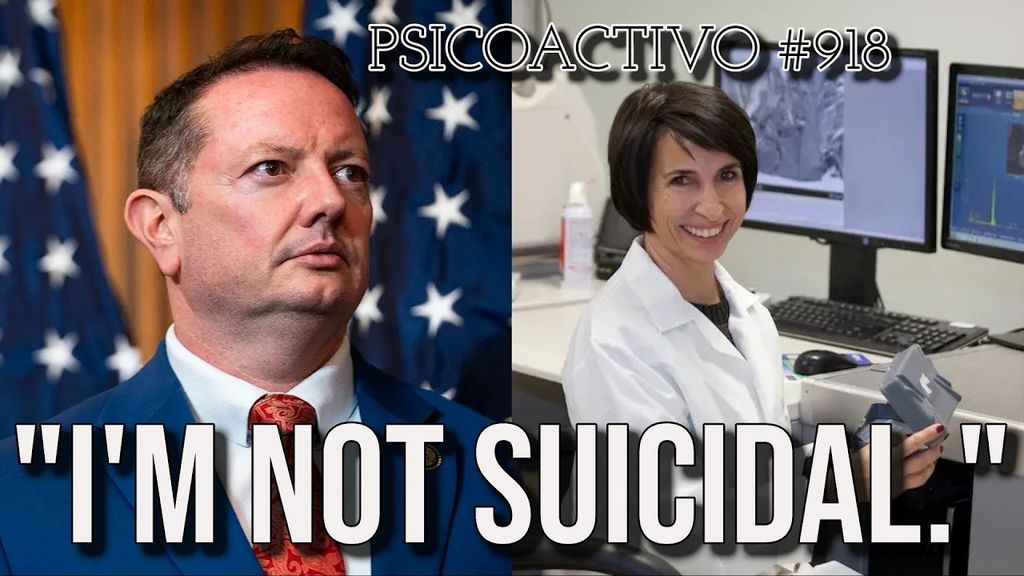
Rep. Eric Burlison Flags Safety Concerns as Disappearances of Aerospace Figures Draw Scrutiny of UAP-Linked Programs


The question of safety for public officials and researchers involved in Unidentified Anomalous Phenomena (UAP) inquiries has intensified amid new statements by Rep. Eric Burlison and unresolved disappearances touching the aerospace community. The environment around these issues remains fraught, with online harassment and warnings about personal risk frequently cited by those who engage with sensitive programs and testimony.
Burlison’s account that he was cautioned against contacting two individuals because they would have no problem having him killed, followed by his public statement, “I am not suicidal,” illustrates the persistent anxieties accompanying UAP oversight efforts. Such declarations, often used by officials and whistleblowers to preempt misinterpretation of potential future harm, underscore concerns that political and investigative work touching classified equities may attract intimidation. The claims also place renewed focus on the adequacy of security protocols for lawmakers, staff, and witnesses active in UAP-related oversight.
In parallel, the disappearances of aerospace engineer Monica Reza and Maj. Gen. William Neil McCasland have drawn attention both for their timing and for references to advanced, government-funded research. Reporting highlighted that Reza, credited with co-inventing a rocket alloy, vanished while hiking in a Los Angeles-area forest approximately nine months earlier. According to NewsNation, a companion saw her only moments before she was no longer visible, and search teams did not recover remains. Reza’s work was said to be government-funded and overseen by McCasland.
NewsNation further reported that McCasland—who previously oversaw a highly classified program connected to UFO research—has also gone missing. At present, there is no confirmed investigative finding linking the two cases, and police comment referenced by a reporter remained pending. The combination of McCasland’s classified background and Reza’s role in advanced materials development has amplified public interest while emphasizing the need for corroborated law enforcement updates.
Broader claims of a trend involving scientists in defense-adjacent specialties who have either disappeared or been killed were raised, with examples cited in Portugal and at MIT. These references were presented cautiously; absent comprehensive public documentation, they remain assertions requiring independent verification. The risk of conflating unrelated incidents under a single narrative highlights the necessity for methodical, evidence-based inquiry and restraint in drawing conclusions without official findings.
Political reaction included a public comment from Rep. Tim Burchett recalling that a president was once described to him as on a need-to-know basis, a remark pointing to enduring concerns about compartmentalization and selective disclosure in national security programs. For policymakers, the practical questions are clear: ensuring consistent safety measures for those engaged in sensitive oversight, establishing reliable channels for vetted reporting, and pressing for timely, factual updates from local and federal authorities.
Advancing clarity in the current cases will likely depend on formal statements from the Bernalillo County Sheriff’s Office and relevant California authorities, publication of search logs and timelines, and any recoveries or forensic analyses. For the wider UAP policy conversation, sustained transparency, standardized witness protection protocols, and rigorous documentation standards remain central to separating substantiated findings from conjecture while safeguarding those working to inform the public record.
Key Moments
- 00:41Concerns were raised that whistleblowers and public figures discussing sensitive topics often face harassment and safety threats, with "I am not suicidal" statements treated as cautionary signals.
- 01:40Rep. Eric Burlison stated he was warned not to contact two people on a list he was reviewing because they "have the capabilities and would have no problem having someone like me killed."
- 02:20Burlison’s public post reading "I am not suicidal" was circulated widely online, drawing significant attention.
- 02:38A Sentinel Network article highlighted the disappearance of aerospace engineer Monica Reza, co-inventor of a rocket alloy, and noted that months later Maj. Gen. William Neil McCasland, who oversaw the program that funded it, also vanished.
- 03:26NewsNation reported that Gen. McCasland oversaw a highly classified program linked to UFO research, prompting questions about whether his past work could be relevant to his disappearance.
- 04:06NewsNation detailed that Reza disappeared about nine months earlier while hiking in a Los Angeles-area forest; she was seen smiling and waving roughly 30 feet behind a companion before she was no longer visible, and no remains were recovered.
- 04:39Reza’s work involved a special metal used in rockets, on a government-funded project overseen by Gen. McCasland.
- 04:56A reporter said the Bernalillo County Sheriff’s Office was tipped about the potential link between the two disappearances and that a response was pending.
- 05:13The conversation referenced a broader pattern claim of scientists in specialized defense-adjacent fields disappearing or being killed, citing cases in Portugal and at MIT; these claims were presented cautiously and without independent verification.
- 07:00Rep. Tim Burchett reacted publicly, recalling being told a president was on a need-to-know basis and calling the situation an "interesting new development."
- 07:44An independent searcher reported covering 8.1 miles on day one and 12.3 miles on day two, including a rugged canyon, without finding signs of Gen. McCasland; NewsNation crews were on scene.
- 08:58The searcher reportedly feared a suicide scenario but acknowledged the possibility of staging, underscoring uncertainty and the need for confirmed investigative findings.
- 09:58Burlison has said UAP matters constitute less than 10% of his day-to-day work, despite receiving disproportionate media attention on the topic.
- 10:42Attention turned to an anticipated interview with Matthew Brown on the Weaponized podcast, potentially addressing recent controversies; details were pending release.
Related Topics
Links & References
- Rep. Eric Burlison’s "I am not suicidal" post amplified by UAP James.
- Sentinel Network article outlining the Monica Reza disappearance and its reported connection to Gen. McCasland.
- Rep. Tim Burchett’s public reaction referencing historical need-to-know constraints.
- Sponsor link mentioned in the program; commercial product unrelated to the investigative claims.
- Podcast distribution link cited for audience access.
 Continue with Google