
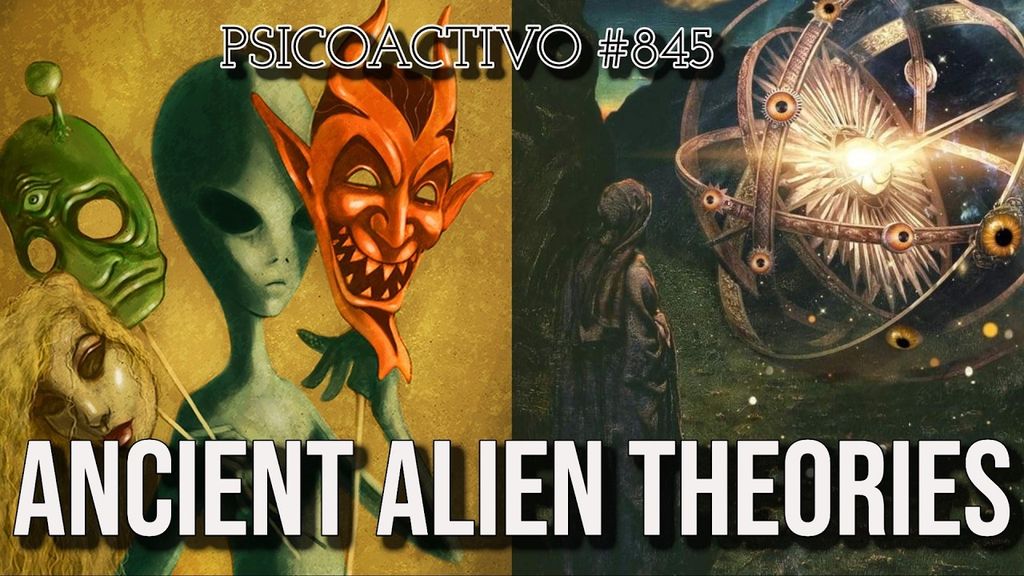
Academic preprint urges rigorous, cross-disciplinary reexamination of ancient celestial myths and their relevance to UAP research


A recurring challenge in UAP studies is how to evaluate ancient accounts of celestial contact without defaulting to either sensationalism or categorical dismissal. A new interdisciplinary preprint, co-authored by Michael P. Masters, Tim Lomas, Steven Brown, and Brandon M. Wheeler, argues that humanity’s long-standing myths about otherworldly origins deserve systematic scholarly attention. Framed within philosophy, cosmology, anthropology, and religious studies, the paper suggests that cross-cultural narratives of contact may contain signals worth analyzing with contemporary tools and an updated understanding of scientific plausibility.
The authors contend that earlier scientific consensus treated extraterrestrial visitation as exceedingly unlikely, leading to ancient accounts being classified as imaginative fictions. In recent years, however, public UAP discourse and limited but notable governmental engagements have prompted some researchers to revisit prior assumptions. The preprint does not endorse a specific explanation; instead, it advocates a research program that treats ancient myths as data—subject to critical, comparative, and testable inquiry where possible—while separating scholarly analysis from entertainment-driven versions of the "Ancient Aliens" narrative.
The discussion highlights a spectrum of explanatory models. On one end are strictly material hypotheses that assume advanced visitors from elsewhere in the cosmos. On the other are frameworks informed by developments in physics and information theory that posit non-human intelligence could be embedded in a shared informational substrate, challenging simple visitor-resident binaries. This broadened conceptual space does not confirm any single model; rather, it expands the set of questions that rigorous scholarship can ask about historical testimonies, symbolism, and persistent cross-cultural motifs such as sky-beings, great floods, culture-bringers, and moralized cosmic conflicts.
In parallel, the conversation underscores a methodological caution: popular media frequently collapses nuanced scholarship into speculative certainty. The preprint and commentary emphasize that claims should be scrutinized with source criticism, linguistic and textual analysis, archaeological context, and cross-cultural comparison. The report also notes that public statements by figures in defense and intelligence, including references to centuries-old accounts of extraordinary phenomena, have fueled interest in whether modern UAP reports and ancient narratives share any continuity of description or symbolism. These statements are not conclusive evidence, but they contribute to a rationale for careful, non-dismissive study.
The cultural dimension is equally important. Belief systems—religious and secular—can shape both advocacy and resistance. The host’s perspective reflects broader concerns about conflating scholarship with ideology, warning against cult-like tendencies and highlighting the need to avoid embedding personal theology or dogma into analysis. Balanced skepticism applies to all sides: uncritical acceptance of religious interpretations, wholesale rejection of anomalous claims, or overconfident technological explanations can each obscure the evidence record.
A constructive path forward emphasizes interdisciplinary collaboration, transparent methods, and clearly articulated standards of evidence. Comparative mythology can map recurrent themes across time and geography; archaeology and physical anthropology can contextualize artifacts and remains; philology can refine translations and semantic nuance; and the philosophy of science can frame testable versus unfalsifiable claims. If pursued with rigor, this agenda could clarify which elements of ancient celestial narratives reflect cultural storytelling, which may correspond to misinterpreted natural phenomena, and whether any subset aligns consistently with patterns described in modern UAP reports. The proposed shift is not toward premature conclusions but toward a durable research framework resilient to both hype and reflexive dismissal.
Key Moments
- 00:17The episode sets out to revisit ancient aspects of the UFO/UAP topic while avoiding anthropomorphism and over-interpretation.
- 01:02Reference to a researcher’s long-term physical-anthropology work proposing signs of genetic 'tempering' in ancient remains, attributed to an unnamed 'anterior being' in The Guardian Theory.
- 02:12A new preprint is introduced as a science- and philosophy-centered approach to humanity’s devotion to ancient alien hypotheses.
- 04:00Authorship detailed: Michael P. Masters (Montana Technological University), Tim Lomas (Harvard), Steven Brown (Ohio State University), and Brandon M. Wheeler (U.S. Naval Academy).
- 04:24Title cited: Celestial Belonging: A Case for Scientific Interest in Humankind’s Yearning for and Potential Origins in the Heavens.
- 05:49Abstract highlights a cross-cultural history of myths about otherworldly contact and suggests these narratives may merit renewed, open-minded investigation.
- 06:40The paper frames a shift from past scientific assumptions deeming extraterrestrial visitation highly unlikely, urging a reassessment.
- 07:29A companion article from Frontier Journalists' Network summarizes the preprint and calls for academia to take such myths more seriously.
- 10:13Timothy Phillips, described as a former acting director of the DoD’s UAP office, is quoted as saying extraordinary phenomena have been referenced since humanity’s origins.
- 10:31Cited public statements include Christopher Mellon’s claim of a growing body of evidence suggesting at least one alien civilization may have found Earth.
- 11:11The preprint notes modern physics theories could allow models where NHI are participants in a shared informational field rather than planetary visitors.
- 12:19The host warns against cultish tendencies and urges a baseline, objective approach, citing influences like John Keel, Jacques Vallée, and Patrick Harpur.
- 13:40Discussion acknowledges dogma on both religious and scientific sides, advocating a middle ground while evidence remains incomplete.
- 16:51Common cross-cultural motifs—floods, giants, wars of good versus evil, and beings from the sky—are noted as recurring themes warranting comparative study.
Related Topics
Links & References
- Preprint of 'Celestial Belonging' advocating scholarly interest in ancient celestial myths and potential human origins in the heavens.
- Frontier Journalists' Network article summarizing the preprint and calling for academic engagement with ancient celestial narratives.
- Lifting The Lamp video discussing historical context for rituals and the figure of Baal, referenced for broader cultural interpretation.
 Continue with Google