
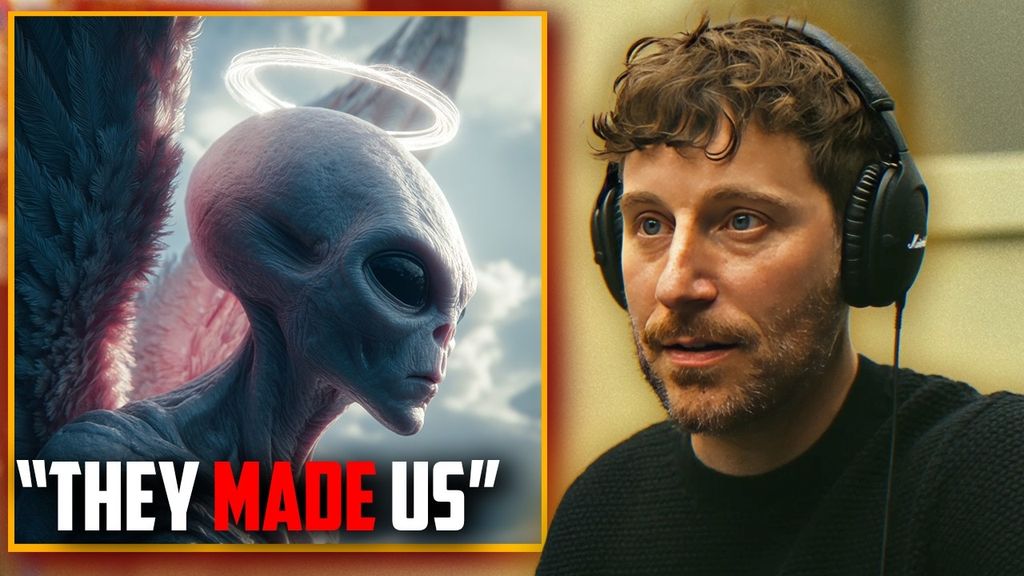
Aliens, Angels and Archetypes: An Inquiry into UAP Through Myth, Mind, and Military Lore


The question of how to interpret Unidentified Anomalous Phenomena sits at a difficult intersection of physics, psychology, history, and belief. For decades, witnesses and researchers have described a mosaic of encounters that resist singular explanation—craft that appear solid one moment and intangible the next, entities that mirror cultural expectations, and symbols that echo across civilizations. Such a landscape invites an integrative inquiry, one that considers whether the roots of modern UAP narratives may entwine with ancient myth, altered states of consciousness, and the evolving frontiers of science.
A central theme emerging from comparative analysis is embodiment: the notion that encounters are shaped by the observer’s mind. Late-antique philosophers such as Iamblichus spoke of luminous beings whose true natures transcend form yet appear to humans as gods, angels, or daemons due to the constraints of human perception. This idea aligns with contemporary psychology, particularly Carl Jung’s suggestion that archetypal patterns within a collective unconscious may inform what witnesses report—craft, entities, and emblems that feel “familiar” because they are filtered through symbol systems we already carry. Such framing offers one reason for the striking heterogeneity of reported entities—“grays,” “mantids,” “reptilians,” and “Nordics”—without presupposing a menagerie of unrelated species.
Mythic templates can further organize these observations. The Prometheus story, in which a transgressive figure is punished for passing “fire” from the divine to humanity, offers a resonant metaphor for forbidden knowledge, illicit technology, or unearned elevation of capability. When this myth is placed beside claims that elements within the U.S. defense apparatus have privately urged researchers to study Greek mythology, it becomes a suggestive—if not definitive—bridge between the symbolic past and today’s contested narratives. The provenance of such claims is often entangled with leaks, hearsay, and incomplete documentation. References to retired Maj. Gen. William McCasland’s name in past email disclosures have circulated widely; some commentators argue they signal a quiet nudge toward mythic frames, while others stress the need for caution, independent verification, and an awareness that misdirection is a perennial hazard in national-security contexts.
The recurrent interest in esotericism among some defense and aerospace figures adds another layer. Public remarks by former officials and executives have touched on Neoplatonism, metaphysics, or symbol-rich interpretations of anomalous reports. While interest does not constitute evidence, the overlap challenges a simplistic dichotomy between “hard” national-security analysis and “soft” spiritual inquiry. A charitable reading is that seasoned insiders, acutely aware of sensor limitations and the ambiguities of classified data, increasingly consider models that incorporate observer effects, cognition, and historical symbolism.
From a scientific vantage, debates over UAP intertwine with unresolved questions in physics and cognitive science. Advocates of analytic idealism and related views argue that consciousness is fundamental and that our familiar world is a constrained interface—an adaptive “headset” evolved for fitness rather than truth. In this view, anomalous events need not be violations of physics so much as interactions from deeper strata of a conscious reality, only anomalous relative to our current perceptual bandwidth. Donald Hoffman’s “conscious agents” framework, which attempts to formalize mind-like dynamics mathematically, pushes this line: if reality’s bedrock is a network of interacting agents, then some UAP events might be encounters across layers of that network, temporarily “rendered” into forms accessible to humans.
Such models also recast long-standing questions about evidence. If perception co-constructs manifestations, then disparate witness descriptions may be expected rather than disqualifying. Symbols reported across cases—serpents, wings, caducei—gain analytical weight not because they confirm a particular species but because they map onto durable archetypes. This is not an argument against empirical rigor; rather, it reframes the target. In addition to pursuing unambiguous sensor data, investigators might systematically catalog and compare symbolic motifs, examining whether certain emblems co-occur with particular settings, witness backgrounds, or psychophysiological states.
Historical case references—Rendlesham Forest, Kecksburg, the late-1970s photographs attributed to Bill Herrmann, and Travis Walton’s account—continue to animate community discussions. Some narratives include detailed observations of uniforms and insignias, occasionally described as winged serpents or glyph systems resembling Greek or East Asian scripts. While these descriptions are not proof of provenance, they highlight patterned recurrences that call for a database-driven approach: symbol libraries cross-referenced against time, geography, and witness clusters could help distinguish cultural contagion from independent emergence.
At the hardware boundary, debates about secrecy and stagnation persist. A common observation is that visible propulsion progress appears to have plateaued relative to historical exponential trends. Commercial aviation still leans on mid-to-late 20th century architectures; breakthrough propulsion systems have not publicly materialized at a cadence suggested by prior leaps from chemical to nuclear domains. Some analysts infer compartmentalization—that advanced methods might exist within black programs or private ventures. Others point to economic path-dependence and infrastructure lock-in, arguing that even promising alternatives face daunting integration hurdles. Either way, the dissonance between expectation and public reality keeps the possibility of undisclosed capability in play, which in turn colors UAP interpretation: unknown craft might be “ours,” “theirs,” or “something else” depending on the lens applied.
Ethical framings further complicate interpretation. Narratives of malevolent control—whether cast in Gnostic “prison planet” terms or the modern “loosh farming” idiom—offer stark explanatory power but disempower the public and may overfit to disturbing experiences. Counterarguments emphasize that truly advanced intelligences may not need exploitive relationships and that what appears harmful from a human vantage might reflect neutral or even beneficial dynamics at another scale. The Platonic tradition offers a middle path: the “demiurge” crafts the physical from the perfect but, by necessity, the translation introduces error—an “errant cause.” Suffering and degradation result not from sadism but from the friction of embodiment, analogous to bugs in a complex program. This neither dismisses harm nor demands cosmic malice; it recognizes that partially-understood systems can produce outcomes that feel unjust without implying intentioned cruelty.
Ritual and collective intention represent another active frontier. Observers have long noted that concentrated attention—whether at mass events like Fatima or in small-group “skywatch” protocols—sometimes correlates with sightings. Esoteric traditions name such cohered intention an egregore; Tibetan accounts speak of tulpas, thought-forms capable, in legend, of gaining temporary solidity. Skeptics counter that group expectancy and suggestibility can generate shared false perceptions. Both mechanisms can coexist: psychological priming may explain some instances, while others may challenge purely intrapsychic accounts. This suggests a research agenda: controlled protocols that blend rigorous documentation, physiological monitoring, and blinded observation could quantify the contribution of expectation while still allowing for the possibility that focused consciousness participates in anomalous displays.
First-person experiential states remain a significant but methodologically difficult dataset. Out-of-body experiences (OBEs), hypnagogic phenomena, and deep-meditative perceptions are frequently cited as contexts in which non-ordinary encounters occur. Robert Monroe’s “Local 2” typology—the astral realm with thought-responsive navigation—and his controversial “pumping station” vision frame a metaphysic in which human experiences contribute energetically to larger systems. These remain hypotheses, not established science; yet the lived force of such reports continues to draw participants to institutions like the Monroe Institute, even as instructors urge post-session integration, grounded decision-making, and caution against over-interpretation.
A related, older lineage concerns the tutelary spirit—the daimon or genius. From Plato’s Republic (the Myth of Er) through Roman and Hermetic writings, traditions describe a personal attendant intelligence that “remembers” one’s pre-incarnational commitments and nudges life toward them. Modern psychology has analogized this to a guiding vocation, as in James Hillman’s “The Soul’s Code,” which posits that ignoring one’s deep calling leads to friction and disarray. Contemporary commentators sometimes extend this schema to UAP: if human beings are already linked to a larger noetic substrate, and if subtle intelligences operate within it, some “contacts” may be intra-system communications rather than fully external intrusions.
Historical crosscurrents deepen still further. Long before 20th-century ideologues appropriated “Hyperborea,” Greek sources spoke of semi-legendary sages from the far north who were wonder-workers, bilocators, or remote viewers. The prospect of a “bridge” civilization—either historical or contemporary—that straddles advanced technology and temple craft is speculative but illustrates how lines blur between mythic history and modern anomalism. In parallel, modern “breakaway civilization” scenarios envision cloistered human groups wielding capabilities outside public view. These notions are frequently criticized for lack of hard evidence and susceptibility to narrative inflation; however, their persistence underscores how many participants seek a solution that preserves human agency within the story of UAP.
Throughout such debates, the risk of false dichotomies remains high. Framing the phenomenon as either purely “nuts-and-bolts” or purely “psychological” has often stalemated inquiry. A more productive posture recognizes that observational data, subjective states, cultural context, and symbolic meaning can be co-causal. An apparently physical craft might stabilize from a subtler substrate under certain conditions; witnesses might render its features through archetypes; emblems might index shared human imagery rather than literal origin. This hybridity neither dismisses radar tracks nor elevates dreams to dogma; it insists that both can contribute to a complex system of appearances.
Implications for future research are practical. First, institutions and independent groups can adopt multi-channel documentation—synchronized video, multispectral sensors, magnetometers, and biosensors—during organized observation attempts to correlate environmental anomalies with human state changes. Second, a centralized, privacy-respecting registry of symbols and insignias, coded for context, witness demographics, and environmental variables, would allow statistical testing of recurrence patterns across time and place. Third, collaborations between physicists exploring information-theoretic or idealist models and cognitive scientists studying perception could clarify how much of what is seen belongs to the world, the mind, or an interplay between them. Finally, ethics must keep pace: however the phenomenon is framed, approaches should minimize harm, respect experiencers’ psychological well-being, and remain transparent about uncertainty.
Even with these steps, a universal explanation may remain elusive. The phenomenon’s stubborn ambiguity may be intrinsic—an emergent property of a reality in which consciousness participates in manifestation and meaning. Greek myths, Jungian archetypes, defense-industry whispers, and avant-garde theories of mind may, in aggregate, function less as answers than as disciplined ways to look. The investigative charge, then, is not to force concordance where the evidence resists it, but to build the interdisciplinary scaffolding—scientific, historical, phenomenological—through which better questions can be asked and better data gathered. In that sense, “aliens,” “angels,” and “daemons” could be less rivals for explanatory dominance than parallel indices pointing toward a larger, still-forming map.
Key Moments
- 00:07The idea that non-human intelligences may be "embodied" by human perception—appearing as gods, angels, daemons, or diverse "entities"—to conform with cognitive expectations.
- 00:23Reference to retired Maj. Gen. William McCasland, associated in public reporting with past UAP-related correspondence, and claims that understanding the phenomenon requires studying Greek mythology.
- 00:59Prometheus emphasized as a key mythic template: a figure punished for delivering "fire"—interpreted as knowledge or power—to humanity without permission.
- 02:05An anecdote of a 1950s Air Force cargo flight transporting a seamless round metal object under guard, accompanied by a subsequent family belief linking the event to a later illness; no corroborating evidence provided.
- 07:20A recurring conclusion among several long-time researchers (e.g., Jacques Vallée, John Keel) that UAP expressions appear to interact with human consciousness at a fundamental level.
- 07:59Historical note that J. Allen Hynek reportedly embraced Rosicrucian symbolism toward the end of his life, illustrating how UAP inquiry can shift researchers toward esoteric or spiritual frameworks.
- 12:20Jungian framing: UAP may manifest via archetypes from a collective unconscious, blending external anomalies with the observer’s psyche and symbolism.
- 18:37Winged serpent symbolism described in ancient traditions and echoed in some experiencer reports of entity insignias, highlighting cross-cultural symbol recurrences.
- 19:48Case references including Bill Herrmann and Travis Walton; discussions of symbols, uniforms, and languages resembling Greek, East Asian scripts, or invented glyphs—without consensus on provenance.
- 26:45Speculative "gift" scenarios: possibilities range from linguistic, technological, or biological interventions to the seeding of ideas—mirrored by references to the Book of Enoch and biblical angelology.
- 27:56Wikileaks emails are cited as the provenance for claims that McCasland highlighted Greek mythology; the speakers note the need to consider misdirection as well as genuine guidance.
- 29:02Reported esoteric interests within defense and aerospace circles (e.g., Jim Semivan, Col. Karl Nell, and a former Lockheed executive), suggesting a non-trivial overlap between national-security professionals and metaphysical inquiry.
- 37:53Idealist theories (Donald Hoffman, Bernardo Kastrup, Federico Faggin) propose consciousness as fundamental; "conscious agents" and a "headset" model are presented as potential frameworks for UAP experiences.
- 43:28If physical reality is a constrained interface, UAP could represent interactions from a deeper stratum of mind, appearing "anomalous" only relative to our perceptual limits.
- 56:26Stagnation in visible propulsion breakthroughs contrasted with exponential expectations; speculation that advanced capabilities may have been developed and compartmentalized.
- 01:36:43Ultraterrestrial hypothesis: intelligences native to a subtler layer of reality may temporarily instantiate as physical craft or beings—bridging "mythic" and "nuts-and-bolts" interpretations.
- 01:43:12Egregore and tulpa concepts: collective attention and ritual may cohere intention into apparent phenomena; parallels drawn to mass apparitions and organized "skywatch" protocols.
- 02:22:12Robert Monroe’s accounts—especially the "pumping station" vision later associated with "loosh"—raise ethical questions about whether human experience is harvested as a resource.
- 02:35:58Plato as an "experiencer": Eleusinian initiation, Pythagorean encoding of texts, and the Divided Line’s elevation of direct knowing (nous) as pathways to higher understanding.
 Continue with Google