
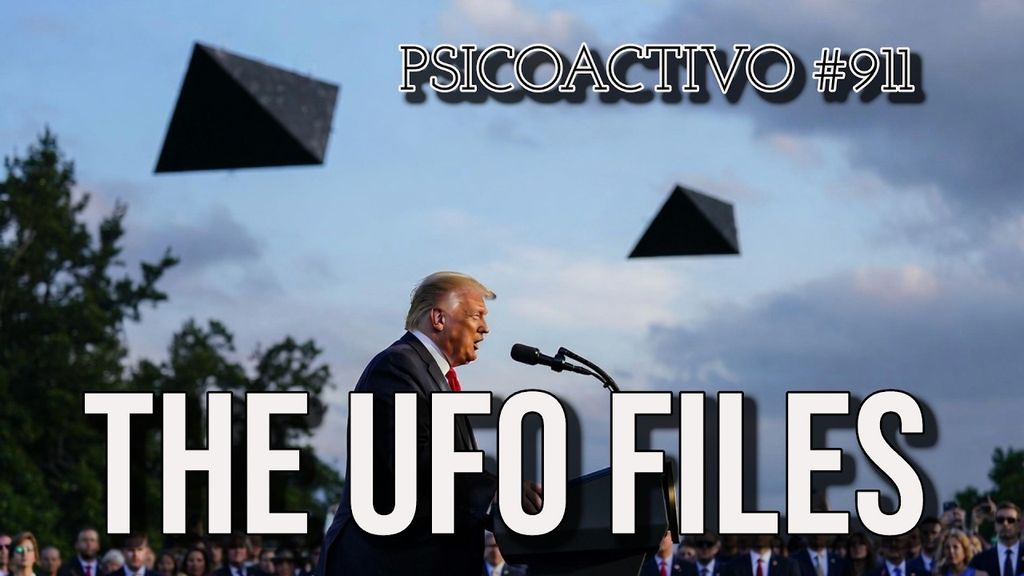
Claims of Satellite Imagery and Withheld Military Videos Surface as UAP File Release Is Weighed


The question of UAP data transparency has long been contentious, with experts presenting differing interpretations of available evidence. A new round of claims—reported by the New York Post and discussed by Psicoactivo—centers on whether a presidential declassification directive could make public satellite imagery and additional military sensor videos purported to show unconventional craft. Former Deputy Assistant Secretary of Defense for Intelligence Christopher Mellon, a central figure in earlier UAP releases, is quoted as saying the government holds imagery of objects not resembling known human-made systems, and that more forward-looking infrared footage from F‑18s judged unclassified in 2018 remains withheld.
The potential contents of such a release, if executed, would build on a period of heightened public interest initiated when three Navy videos—commonly known as Tic Tac, Gimbal, and GoFast—entered mainstream scrutiny in the late 2010s, a process in which Mellon played a key role. Mellon’s assertions align with earlier public statements by former Director of National Intelligence John Ratcliffe that U.S. sensors have captured difficult-to-explain observations. At the same time, Mellon indicates he does not expect files confirming contact with non-human civilizations, suggesting that even a substantial disclosure may emphasize anomalous performance and sensor data over definitive conclusions about origin or intent.
Any large-scale declassification would traverse a complex policy landscape. Multiple agencies—ranging from defense and intelligence organizations to energy and nuclear security components—are believed to hold relevant records. Mellon anticipates a cautious bureaucratic posture and urges strong congressional oversight to prevent piecemeal or selectively curated releases. Senator Mike Rounds, a senior member of the Senate Armed Services Committee and a co-sponsor of the 2023 UAP Disclosure Act with Senator Chuck Schumer, frames the objective as maximizing honesty and transparency while safeguarding sensitive military capabilities and collection methods. That dual mandate reflects longstanding U.S. practice: public disclosure is feasible, but typically requires meticulous review, redaction, and documentation protocols to protect sources and methods.
Institutional skepticism remains prominent. A senior NASA official has publicly stated there is no evidence that intelligent non-human life has visited Earth and that no classified files support such a conclusion, while expressing high confidence that microbial life will eventually be found elsewhere in the solar system or beyond. The program host challenges NASA’s position by alleging that anomalies have been scrubbed from agency video feeds; this claim was presented without corroborating documentation, underscoring the broader difficulty of adjudicating anecdotal reports absent provenance-verified data.
The discussion also touches on movement dynamics within the disclosure ecosystem. Questions are raised about Christopher Mellon’s influence, his connections to former Defense Department official Lue Elizondo, and whether public-facing media projects are being coordinated as part of a larger strategy. These ideas are presented as speculation; there is no substantiating evidence offered of a centralized campaign. Nevertheless, the perception of orchestration can influence public trust, reinforcing the value of transparent disclosures regarding affiliations, funding, and decision-making processes.
If the contemplated release advances, several best practices could help balance public interest with national security: publishing original sensor files with full metadata; documenting chain of custody and analytical methods; issuing redaction logs that explain withheld elements; convening an independent, multidisciplinary review panel; and staging releases on a predictable schedule with clear criteria. Such measures would allow scientists, journalists, and policymakers to examine the strongest available evidence, while enabling informed debate about what the data can—and cannot—conclusively show about UAP.
Key Moments
- 00:38A New York Post exclusive is highlighted for quoting Christopher Mellon on what UAP-related records could be released under a presidential directive.
- 02:14The article asserts the government holds extensive UAP materials, including imagery of craft described as unlike known human-made systems.
- 03:35Mellon is cited as saying satellite imagery exists of craft that do not resemble known domestic technology.
- 04:28Mellon says additional F-18 forward-looking infrared videos judged unclassified in 2018 remain withheld; he claims to have seen some and sees no rational basis for continued withholding.
- 04:50Mellon adds he does not expect files confirming contact with alien civilizations, while noting multiple agencies likely hold relevant records.
- 05:38A NASA leader expresses belief in extraterrestrial life elsewhere but states there is no evidence that intelligent life has visited Earth, nor classified files supporting such a claim.
- 06:51Mellon anticipates slow bureaucratic response and urges congressional vigilance to ensure thorough, effective disclosure.
- 07:13Sen. Mike Rounds, co-sponsor of the 2023 UAP Disclosure Act with Sen. Chuck Schumer, supports broad transparency that does not compromise U.S. military capabilities.
- 08:07The host alleges NASA has scrubbed anomalies from operational video feeds; this is presented as an assertion without independent verification.
- 08:41Despite viewing the outlet as tabloid-style, the host calls the Post piece well written and notes Mellon's decision to engage with the press.
- 09:27Questions are raised about Mellon's role, potential stakes, and ties to Lue Elizondo within broader disclosure efforts.
- 10:12Speculation is voiced about whether media projects and public figures are part of a coordinated disclosure strategy; no evidence is presented.
- 11:28Uncertainty is expressed about the timing of any release and how much priority the topic has amid other national concerns; questions are posed about Mellon's access to senior officials.
- 13:50A sponsor segment promotes a collectible card set documenting notable UAP cases, including references to specific incidents and media reports.
Related Topics
Links & References
- New York Post report citing Christopher Mellon on potential contents of a presidential UAP records release.
- Anomalous Cards website promoted during the program, featuring collectible cards of notable UAP cases.
- Psicoactivo Podcast page at KGRA referenced for the show’s home.
- Spotify link to Psicoactivo for listening access.
- Patreon link for supporting Psicoactivo’s work.
- Host Pavel Ibarrameda’s X (Twitter) profile mentioned for updates.
- Psicoactivo Podcast’s X (Twitter) profile for show news and engagement.
 Continue with Google